

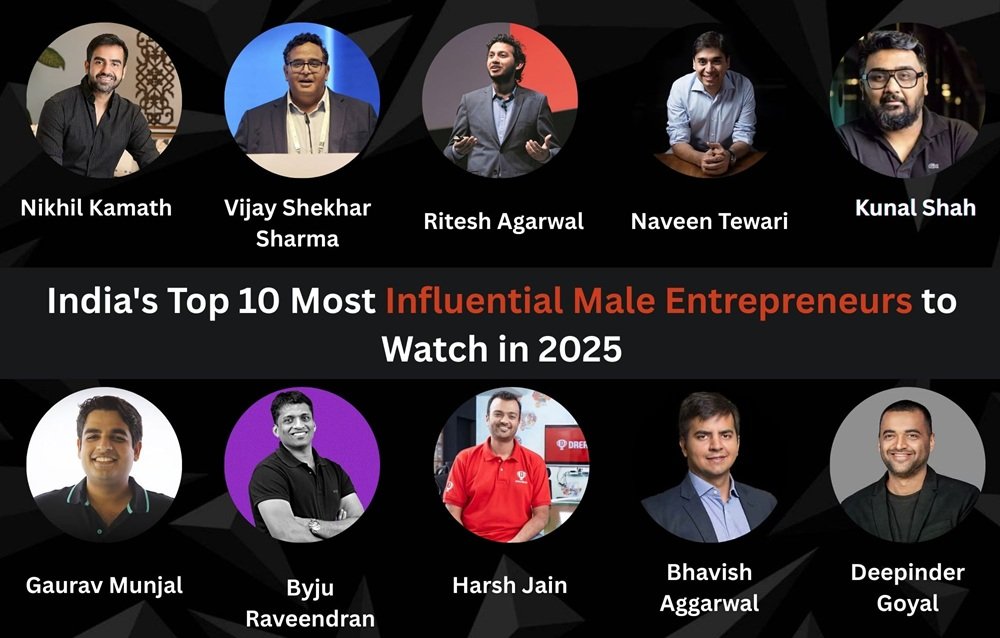
India’s business outlook in 2026 is being shaped by a small group of entrepreneurs who influence capital flows, technology adoption, employment patterns, and consumer behaviour at scale. Their decisions extend beyond company performance and increasingly affect how entire sectors evolve.
India’s business outlook in 2026 reflects a transition phase. Growth is no longer driven only by expansion. It is shaped by profitability focus, global competitiveness, and domestic depth. The entrepreneurs highlighted below matter because their companies sit at critical junctions of technology, manufacturing, finance, energy, and digital consumption. This is an evergreen, forward-looking analysis, grounded in current structural realities rather than short-term news cycles.
Why individual entrepreneurs still shape macro business trends
Large companies move markets, but entrepreneurs shape direction. In India, founder-led firms still drive strategy more directly than board-led conglomerates. Decisions around capital allocation, risk appetite, and long-term vision often rest with individuals.
In 2026, this influence is visible across sectors. Some entrepreneurs define how Indian companies compete globally. Others influence how deeply businesses penetrate non-metro India. Investors, policymakers, and competitors watch these leaders not for statements, but for execution signals.
Mukesh Ambani and the integration of scale
Mukesh Ambani continues to shape India’s business outlook through scale integration. His focus on combining telecom, retail, media, and digital services has created a blueprint for ecosystem-led growth. The emphasis has shifted from expansion to efficiency, monetisation, and technology-led optimisation.
In 2026, his influence lies in how large Indian enterprises use data, infrastructure, and partnerships to defend margins while serving mass markets. This model affects how competitors structure capital-intensive businesses.
Gautam Adani and infrastructure-led ambition
Gautam Adani represents India’s infrastructure-driven growth narrative. Ports, logistics, energy, and airports remain central to national economic ambitions. His entrepreneurial impact comes from the ability to execute large projects at speed.
The business outlook in 2026 continues to link infrastructure build-out with private enterprise leadership. How Adani Group balances leverage, governance scrutiny, and execution discipline sets benchmarks for infrastructure entrepreneurship in India.
Nandan Nilekani and digital public infrastructure
Nandan Nilekani’s influence is indirect but foundational. His work on digital public infrastructure has reshaped how businesses onboard users, process payments, and verify identity. This has lowered entry barriers for startups and improved compliance efficiency for large firms.
In 2026, entrepreneurs and investors still build on this backbone. Fintech, govtech, and platform businesses depend on systems shaped by his vision. The long-term economic effect outweighs short-term business metrics.
Ritesh Agarwal and capital discipline in consumer startups
Ritesh Agarwal represents a generation of founders forced to evolve. Aggressive growth has given way to operational discipline. His journey reflects how consumer internet businesses recalibrate after scale.
In 2026, his impact lies in proving whether Indian consumer startups can achieve sustainable profitability without sacrificing brand reach. This outcome influences funding appetite across hospitality, travel, and consumer services.
Byju Raveendran and lessons from scale stress
Byju Raveendran’s entrepreneurial story continues to shape the business outlook through cautionary lessons. Rapid global expansion, capital intensity, and governance challenges have become reference points for founders and investors.
In 2026, his influence is less about growth leadership and more about structural learning. How education technology stabilises, consolidates, or restructures will affect how future founders approach capital and scale.
Falguni Nayar and profitable consumer internet models
Falguni Nayar has reshaped expectations around consumer internet businesses. Her emphasis on profitability, brand trust, and disciplined growth challenged the notion that scale must come at the cost of margins.
In 2026, her influence is visible in how direct-to-consumer brands, marketplaces, and beauty and lifestyle startups structure operations. Investors increasingly favour this playbook.
Bhavish Aggarwal and the electric mobility transition
Bhavish Aggarwal’s role in electric mobility places him at the intersection of manufacturing, technology, and energy. His entrepreneurial impact goes beyond ride-hailing into how India approaches EV adoption and domestic manufacturing.
In 2026, the success or struggle of this transition affects policy, supply chains, and investor confidence in deep-tech consumer manufacturing.
Vijay Shekhar Sharma and fintech resilience
Vijay Shekhar Sharma continues to influence India’s fintech ecosystem. Payments may be commoditised, but scale, trust, and financial services integration remain complex challenges.
His role in 2026 is tied to how fintech companies build durable revenue models beyond transactions. Lending, insurance, and wealth offerings depend on this evolution.
Nithin Kamath and transparent financial platforms
Nithin Kamath’s approach to broking and financial services has redefined how retail investors participate in markets. Low-cost, transparent platforms have expanded participation without excessive marketing spend.
In 2026, his influence lies in shaping investor education, platform responsibility, and sustainable financial product design.
Sridhar Vembu and decentralised tech leadership
Sridhar Vembu represents a different entrepreneurial philosophy. His focus on profitable software, rural development, and decentralised talent challenges metro-centric assumptions.
In 2026, his impact extends beyond software exports into how India builds resilient, distributed technology organisations.
What this group signals about India’s 2026 business outlook
Collectively, these entrepreneurs signal a shift from growth-at-any-cost to execution credibility. Capital is more selective. Markets reward discipline. Global ambitions are tempered by local depth.
India’s business outlook in 2026 is not about fewer entrepreneurs, but about sharper leadership.
Takeaways
Founder-led decisions continue to shape India’s sectoral direction
Profitability and governance matter more than pure scale in 2026
Digital infrastructure remains a silent force behind business growth
Entrepreneurial influence now includes lessons from failure as well as success
FAQs
Why focus on individual entrepreneurs rather than companies?
In India, founders still directly influence long-term strategy and capital decisions.
Are these entrepreneurs equally relevant across sectors?
No. Each shapes a specific sector, but together they influence the overall business climate.
Does this list include emerging founders?
This analysis focuses on macro-level influence rather than early-stage potential.
Will this group change significantly after 2026?
Yes. As sectors mature and leadership transitions occur, new entrepreneurs will emerge.












Leave a comment