

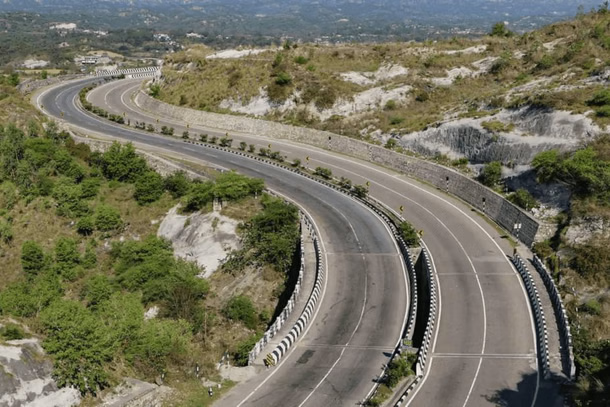
Jammu and Kashmir infrastructure momentum has picked up pace following recent developments around the Indus Waters Treaty framework. The renewed focus on hydropower, roads and connectivity is expected to influence local economies, employment and long term regional stability.
Jammu and Kashmir infrastructure momentum is accelerating in the backdrop of policy updates linked to the Indus Waters Treaty and water resource utilization. The renewed administrative push is centered on maximizing India’s rights under the treaty, fast tracking hydropower projects, and strengthening connectivity in the Union Territory. For local economies, this phase could mark a shift from security driven spending to asset based development.
Indus Waters Treaty Context and Policy Recalibration
The Indus Waters Treaty, signed in 1960 between India and Pakistan with World Bank facilitation, allocates the three eastern rivers to India and the three western rivers to Pakistan, with India retaining limited but defined rights over the western rivers for non consumptive uses such as hydropower and irrigation. In recent years, India has emphasized full utilization of its permissible rights under the treaty.
Policy recalibration has included faster clearances for run of the river hydropower projects, strengthening of dam safety mechanisms, and improved coordination between central ministries and the Union Territory administration. While the treaty itself remains in force, the interpretation and execution of India’s rights have gained renewed administrative urgency.
For Jammu and Kashmir, this means infrastructure investment tied directly to river basin management, energy generation and flood control systems.
Hydropower Projects and Energy Security Boost
Hydropower is central to Jammu and Kashmir infrastructure growth. The region has significant untapped hydro potential, estimated in tens of thousands of megawatts. Projects on rivers such as Chenab and Jhelum have seen renewed activity, including capacity expansion and faster construction timelines.
Increased hydropower capacity has multiple economic implications. First, it enhances local energy security, reducing dependence on costly power imports during winter months. Second, surplus electricity can be sold to other states, generating revenue for the Union Territory. Third, large projects create direct employment during construction and indirect jobs in logistics, materials and services.
For districts like Kishtwar and Ramban, which host major hydro projects, the multiplier effect can be visible in improved roads, local markets and small business growth. However, timely rehabilitation and environmental safeguards remain essential to prevent social friction.
Road, Rail and Tunnel Connectivity Gains
Infrastructure momentum is not limited to hydropower. Road and rail connectivity projects have gained traction, including highway widening, tunnel construction and expansion of all weather connectivity between Jammu and Srinagar. Improved connectivity reduces travel time, lowers transport costs and integrates remote districts into mainstream trade networks.
Better road infrastructure supports horticulture, a backbone of the local economy. Apple growers in Kashmir and farmers in parts of Jammu benefit from faster access to mandis and cold storage hubs. Reduced transit delays mean lower post harvest losses and better price realization.
Rail connectivity expansion into the Kashmir Valley is expected to transform freight movement. Once fully operational, rail links can reduce logistics costs for cement, steel and consumer goods, directly affecting construction activity and retail markets.
Local Employment and MSME Opportunities
Large infrastructure projects generate both skilled and unskilled employment. While specialized technical roles often involve external contractors, ancillary services create opportunities for local youth. Transport operators, food suppliers, equipment maintenance providers and small contractors benefit from sustained project cycles.
Micro, small and medium enterprises in the region stand to gain if procurement policies prioritize local sourcing where feasible. Construction material suppliers, fabrication units and service providers can see increased demand.
There is also potential for skill development. Hydropower and tunnel engineering projects require trained technicians, electricians and safety personnel. Linking infrastructure expansion with vocational training can improve long term employability in the region.
Tourism and Real Estate Spillover Effects
Improved infrastructure has a direct link with tourism revival. Better roads and reliable power supply enhance the visitor experience in destinations such as Gulmarg, Pahalgam and Vaishno Devi. Winter tourism, in particular, depends on consistent electricity and accessible routes.
Real estate activity may also see moderate growth in urban centers like Srinagar and Jammu as connectivity improves. Commercial spaces, hospitality projects and housing developments tend to follow infrastructure upgrades.
However, balanced planning is critical. Unchecked construction can strain fragile mountain ecosystems. Environmental impact assessments and sustainable building practices must accompany economic ambition.
Fiscal and Administrative Challenges Ahead
While the acceleration of Jammu and Kashmir infrastructure projects signals economic intent, fiscal prudence remains necessary. Large hydropower and transport projects require significant capital outlay. Delays, cost overruns and legal disputes can erode expected returns.
Land acquisition, rehabilitation of displaced families and environmental compliance are sensitive issues. Transparent communication and fair compensation mechanisms are vital to maintain public trust.
If managed effectively, infrastructure momentum can strengthen long term economic resilience. If mismanaged, it risks creating financial stress and social resistance.
Takeaways
Full utilization of rights under the Indus Waters Treaty is driving renewed infrastructure investment in Jammu and Kashmir.
Hydropower expansion can boost local revenue, energy security and employment if implemented responsibly.
Improved road and rail connectivity supports horticulture, tourism and small businesses across districts.
Sustainable planning and fiscal discipline are essential to convert infrastructure spending into durable economic gains.
FAQs
What is the link between the Indus Waters Treaty and infrastructure in Jammu and Kashmir.
India’s rights under the treaty allow specific hydropower and irrigation projects on western rivers. Utilizing these rights requires dams, tunnels and related infrastructure.
How does hydropower benefit local economies.
Hydropower projects create construction jobs, generate revenue through electricity sales and reduce power shortages that affect businesses and households.
Will infrastructure growth improve tourism.
Yes. Better roads, reliable electricity and improved connectivity enhance accessibility and visitor experience, which supports tourism driven income.
Are there environmental concerns.
Large infrastructure projects in mountainous regions must address ecological impact, rehabilitation and disaster risk to ensure long term sustainability.











Leave a comment