

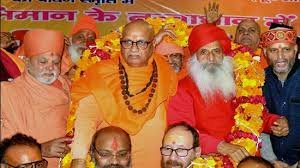
The Haridwar social media FIR has triggered a fresh debate in Uttarakhand over political speech and digital accountability. As administrative action collides with party-level reactions, the episode highlights how online expression in smaller cities is increasingly intersecting with local power dynamics.
The Haridwar social media FIR relates to a case where a political functionary was booked following an online post that allegedly targeted a government official. The development is time sensitive and reflects an ongoing administrative and political confrontation in Uttarakhand. While the legal process will determine individual culpability, the broader implications extend beyond one district. In towns like Haridwar, where political engagement and social media use are both intense, such cases quickly reshape public discourse.
What Triggered the Haridwar Social Media FIR
According to initial reports, the FIR was registered after a complaint by a government official who alleged that defamatory or objectionable content had been circulated online. Police acted under relevant sections of the Indian Penal Code and Information Technology Act provisions that deal with defamation, intimidation, or misuse of digital platforms.
In smaller cities, social media has become a primary arena for political messaging. Local leaders frequently use Facebook, Instagram, and messaging apps to mobilize support, criticize administrative decisions, and shape narratives. Unlike national figures, district-level politicians often operate in tightly connected communities, where online remarks can have immediate offline consequences.
The Haridwar social media FIR therefore reflects a growing pattern across India where digital posts are treated as actionable political speech.
Legal Framework Governing Online Expression in Uttarakhand
The legal framework around digital expression is not unique to Uttarakhand. Across India, law enforcement can register FIRs for online content under sections related to criminal defamation, promoting enmity, or spreading false information. The Information Technology Act also enables action in cases involving electronic communication.
However, courts have repeatedly emphasized the importance of balancing free speech with reasonable restrictions. In smaller towns like Haridwar, awareness of legal boundaries around online commentary is often limited. Political workers, youth activists, and even private citizens may not fully understand how posts can attract legal scrutiny.
This incident has renewed discussion about whether administrative action was proportionate or politically motivated, an argument that often emerges in cases involving party members and local officials.
Impact on Local Politics and Party Dynamics
The Haridwar social media FIR has quickly taken on a political dimension. Opposition leaders have framed the action as an attempt to silence dissent, while supporters of the administration argue that no one is above the law.
In Uttarakhand’s district-level politics, perception matters. Even a single FIR can be used to mobilize cadres, stage protests, or frame a narrative of victimhood. Local party units may leverage such cases to consolidate their support base before elections or internal party contests.
For the administration, the challenge lies in maintaining institutional credibility. If enforcement appears selective, it risks undermining trust. If it appears lenient, it may embolden more aggressive online rhetoric.
Digital Expression in Tier-2 and Religious Towns
Haridwar is not just another district headquarters. It is a major religious and tourism hub, with significant footfall during festivals and pilgrimages. In such towns, online content can quickly escalate into law and order concerns if it touches on sensitive issues.
The Haridwar social media FIR underlines how digital expression in Tier-2 cities carries layered risks. Posts that combine political criticism with references to identity, governance, or local administration can have amplified impact.
At the same time, social media remains one of the few platforms where local grievances find immediate visibility. Citizens often use online channels to highlight civic issues such as road conditions, municipal services, or administrative delays.
Balancing digital accountability with democratic expression is therefore not a theoretical question but a daily governance challenge.
Administrative Accountability Versus Political Messaging
From an administrative standpoint, officials are expected to protect their reputation and ensure that misinformation does not disrupt public order. Filing an FIR is one of the legal remedies available. Yet in politically charged environments, such actions are rarely seen as purely procedural.
The Haridwar social media FIR illustrates the friction between bureaucratic authority and political messaging. When political workers use sharp language or allegations online, administrators may view it as defamatory. Political actors, in turn, often frame it as legitimate criticism.
For smaller towns in Uttarakhand, where personal networks overlap between politicians, officials, and business leaders, these disputes can strain institutional relationships.
Broader Implications for Digital Citizenship
The case serves as a reminder that online speech is not insulated from legal consequences. Digital citizenship requires awareness of what constitutes defamation, misinformation, or incitement.
At the same time, democratic engagement relies on the ability to question and critique those in power. The long term solution lies not in frequent criminalization of speech, but in clearer communication standards, transparent fact checking, and institutional responsiveness.
As the Haridwar social media FIR proceeds through legal channels, its political aftershocks may shape how parties and administrators in Uttarakhand approach online discourse in the future.
Takeaways
The Haridwar social media FIR reflects rising tensions between local political speech and administrative authority
Existing IPC and IT Act provisions allow legal action against objectionable online posts
In Tier-2 towns, digital content can rapidly influence offline political dynamics
Balancing accountability and free expression remains a key governance challenge
FAQs
What is the Haridwar social media FIR about?
It concerns a case where a political functionary was booked following an online post that allegedly targeted or defamed a government official.
Can police register FIRs for social media posts?
Yes, under relevant sections of the IPC and the Information Technology Act, law enforcement can act against posts deemed defamatory, threatening, or unlawful.
Does this case affect free speech rights?
Free speech in India is subject to reasonable restrictions. Courts evaluate whether legal action is justified based on facts and context.
Why is this significant for Uttarakhand politics?
District-level political conflicts often gain momentum through social media, making such FIRs politically sensitive and symbolically important.








Leave a comment