

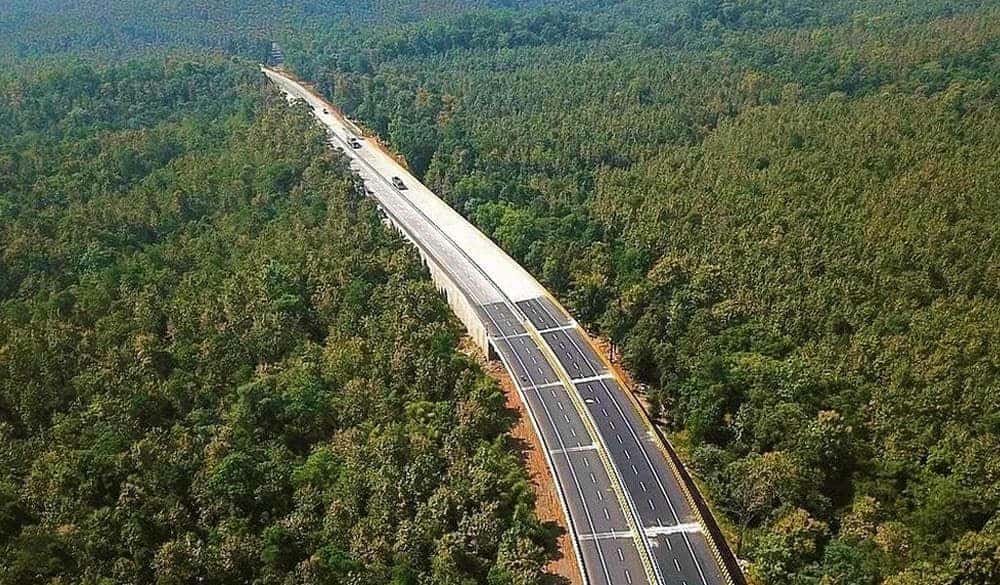
The Kaziranga Elevated Corridor in Assam marks a major infrastructure milestone aimed at reducing wildlife accidents and improving transport efficiency. Inaugurated by Prime Minister Narendra Modi, the project directly impacts road safety, conservation outcomes, and economic activity in surrounding Tier 2 and rural regions.
A strategic response to a long-standing safety problem
Kaziranga National Park sits along National Highway 37, one of the busiest routes in Upper Assam. For years, this stretch has been a high risk zone where speeding vehicles collided with wildlife, especially during the annual floods when animals move to higher ground. The elevated corridor has been designed to physically separate fast moving traffic from animal movement corridors, addressing a problem that signage and speed limits failed to solve.
The structure allows vehicles to pass over critical animal crossing zones while keeping the forest floor open. This significantly lowers the chances of roadkill involving elephants, rhinos, deer, and smaller species. From a safety standpoint, it also reduces sudden braking and accidents involving heavy vehicles, which were common earlier due to unexpected animal crossings.
Engineering design aligned with conservation needs
The corridor is not a standard flyover. Its height, pillar spacing, and drainage planning were aligned with ecological inputs. Adequate gaps between pillars allow animals to move freely and prevent waterlogging during floods. Lighting has been kept minimal to avoid disturbing nocturnal wildlife behavior.
This approach reflects a shift in how infrastructure is planned in ecologically sensitive zones. Instead of rerouting highways entirely, which often leads to deforestation elsewhere, the elevated model balances connectivity with conservation. Similar concepts have been discussed for other wildlife rich corridors in India, but Kaziranga is among the first where it has been executed at this scale.
Impact on local transport and regional connectivity
For local commuters and freight operators, the corridor improves predictability. Traffic snarls during monsoon months used to stretch for kilometers, affecting school transport, emergency services, and supply chains. With smoother vehicle movement, travel time between towns like Bokakhat, Kohora, and Numaligarh is expected to reduce.
This has a direct knock on effect on fuel costs and logistics efficiency. Transporters serving tea estates, oil refineries, and agricultural markets benefit from fewer delays. For a region that depends heavily on road based movement, these gains matter more than headline speed metrics.
Economic upside for tourism and small businesses
Kaziranga is one of Assam’s biggest tourism drivers. Frequent traffic jams and accident reports earlier created negative visitor perceptions. Improved road safety enhances the tourist experience, especially for families and older travelers who prefer predictable travel conditions.
Local businesses such as homestays, safari operators, restaurants, and handicraft sellers stand to gain from increased footfall. Construction of the corridor itself generated short term employment, but the longer term value lies in steady tourism driven income and better market access for nearby villages.
Signal of infrastructure focus beyond metros
The inauguration sends a broader policy signal. High quality infrastructure is no longer restricted to metros or industrial corridors. Tier 2 regions with strategic or ecological importance are increasingly part of national development priorities.
For Assam, this reinforces its positioning as a gateway to the Northeast with modern transport standards. It also sets a precedent for how future highway upgrades near forests, wetlands, and floodplains may be planned across the country.
Takeaways
- The elevated corridor directly reduces wildlife accidents and improves road safety
- Local transport efficiency improves, cutting delays during floods and peak seasons
- Tourism and small businesses near Kaziranga gain from better connectivity
- The project sets a model for eco sensitive infrastructure planning in India
FAQs
What is the main purpose of the Kaziranga Elevated Corridor?
The primary goal is to separate highway traffic from wildlife movement zones to reduce accidents and protect both animals and motorists.
How does the corridor help during floods?
During floods, animals move across the highway to higher ground. The elevated structure allows this movement underneath without stopping traffic or risking collisions.
Will this affect tourism positively?
Yes. Safer and smoother access improves visitor confidence and travel experience, which can increase tourist inflow to Kaziranga.
Can this model be used elsewhere in India?
The design is suitable for other highways passing through wildlife corridors, especially in flood prone or forested regions.










Leave a comment