

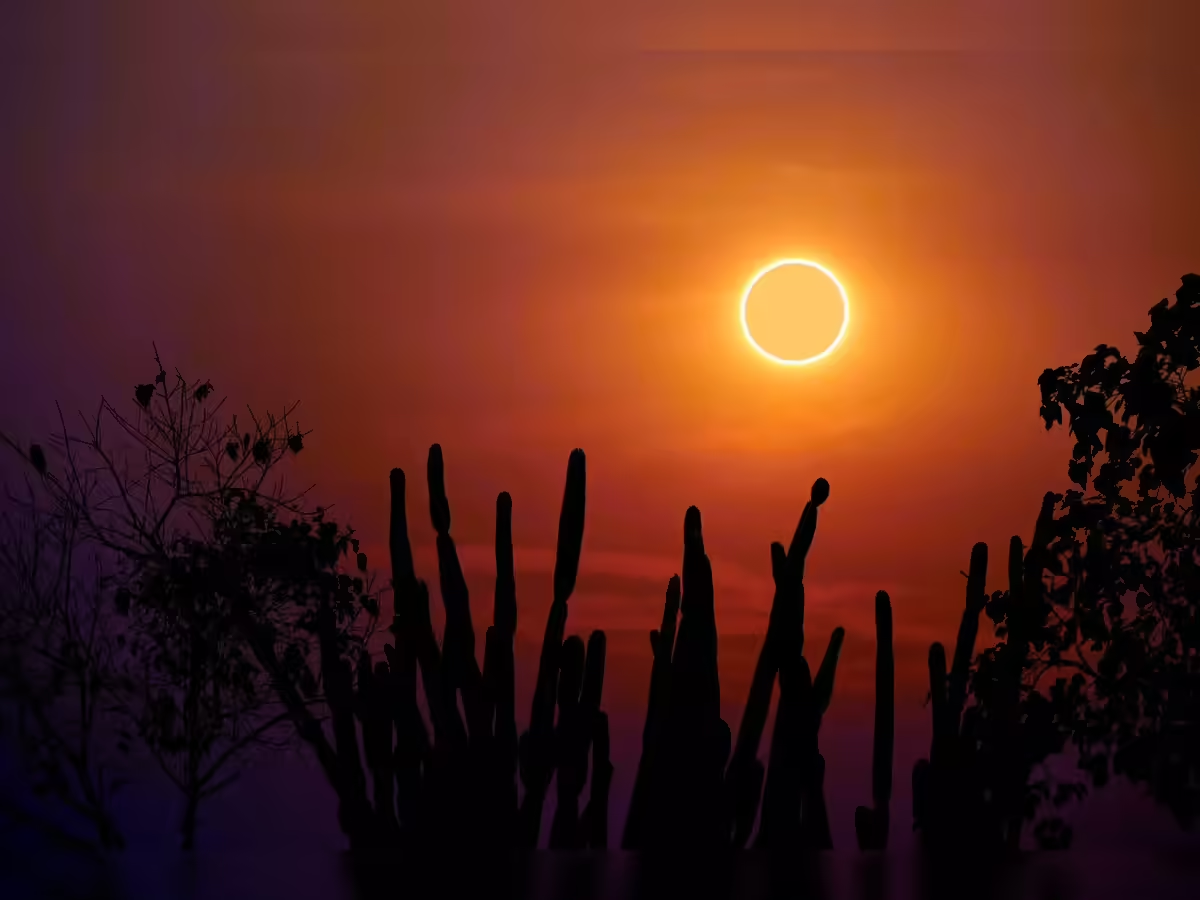
Astrology meets science during every solar eclipse in India, but this year the conversation is increasingly digital. Indian youth are blending traditional beliefs with scientific curiosity, turning eclipse viewing into a live streamed, social media driven cultural event.
Astrology meets science in a visible way whenever a solar eclipse approaches. In India, eclipses carry both astronomical significance and deep rooted cultural beliefs. For Indian youth, especially Gen Z and young millennials, this dual narrative is no longer confined to temples or textbooks. It plays out on YouTube live streams, Instagram reels, science explainers, and astrology discussions. The result is a hybrid engagement model where curiosity, content creation, and cultural identity intersect in real time.
Solar Eclipse Science and Digital Curiosity
A solar eclipse occurs when the Moon passes between the Earth and the Sun, temporarily blocking sunlight either partially or completely depending on alignment. This predictable celestial event is calculated with precision by astronomers and space agencies years in advance. For science oriented youth, eclipses represent an opportunity to observe orbital mechanics in action.
In recent years, Indian youth have increasingly turned to online platforms to watch live eclipse coverage. Astronomy channels, science educators, and space enthusiasts host high resolution live streams using solar filters and telescopic equipment. This digital access is crucial for viewers in regions where the eclipse may not be fully visible or where weather conditions interfere.
Search trends typically spike before an eclipse, with queries about timing, visibility, and safety precautions. Young users often verify whether special glasses are required and whether it is safe to view through phone cameras. Awareness around eye safety has improved significantly due to repeated digital campaigns by educators.
Astrological Beliefs and Cultural Observance
Alongside scientific explanations, astrology maintains a strong presence during solar eclipse conversations. In many Indian traditions, eclipses are associated with spiritual practices such as fasting, chanting, or avoiding certain activities. These beliefs are rooted in ancient texts and passed down across generations.
Indian youth do not uniformly reject these traditions. Instead, many reinterpret them. Some follow family customs while simultaneously watching scientific live streams. Others engage with astrology content creators who explain planetary alignments and zodiac implications during the eclipse.
Social media has amplified this coexistence. Short videos explaining how an eclipse may affect specific zodiac signs often go viral. While scientifically unverified, such content generates high engagement due to personal relevance. The key shift is that youth are consuming both narratives side by side rather than choosing one exclusively.
How Youth Plan to Watch the Solar Eclipse Online
Digital planning around eclipse viewing has become increasingly structured. Many young viewers schedule reminders on streaming platforms or subscribe to astronomy channels in advance. College groups and school communities circulate links to official live feeds to ensure safe viewing.
In Tier 2 and Tier 3 cities where access to telescopes is limited, online streams act as equalizers. High quality visuals allow students to witness phenomena like the ring of fire in an annular eclipse or the corona during a total eclipse without expensive equipment.
Some youth also participate interactively by posting reaction videos, time lapse clips, or educational explainers. Influencers create countdown content days before the event, building anticipation. Polls, quizzes, and Q and A sessions during live streams further increase engagement.
Engagement Trends Across Platforms
Engagement trends show that eclipse related hashtags trend strongly on Instagram, YouTube, and X during peak visibility hours. Live chat features on streaming platforms record thousands of simultaneous comments when major celestial events occur.
Memes also play a role. Humorous posts about skipping work to watch the eclipse or joking about astrological predictions often circulate widely. This light hearted layer does not necessarily undermine seriousness. Instead, it reflects how digital natives process major events.
Educational institutions and science communicators have become more proactive online. They release infographics explaining the difference between partial, total, and annular eclipses. These posts are widely shared by students, indicating rising scientific literacy.
The Balance Between Faith and Evidence
The intersection of astrology and astronomy during a solar eclipse reflects a broader pattern in Indian youth culture. Rather than rejecting tradition, many young people attempt to reconcile it with scientific understanding. They may acknowledge mythological narratives while also understanding gravitational mechanics.
This dual approach highlights a shift from rigid belief systems to exploratory thinking. Access to information has expanded dramatically through smartphones and affordable data plans. Youth can compare multiple viewpoints instantly and form personal conclusions.
Importantly, safety messaging has gained traction. Scientific advisories against looking at the Sun without proper protection are widely circulated, even among astrology focused accounts. This suggests that public health communication during celestial events is becoming more effective.
As eclipse viewing becomes increasingly digital, the line between spiritual observance and scientific spectacle continues to blur. For Indian youth, the experience is less about choosing sides and more about participating in a shared moment amplified by technology.
Takeaways
• Indian youth engage with both scientific and astrological narratives during solar eclipses
• Online live streams make eclipse viewing accessible across cities and towns
• Social media trends amplify awareness, memes, and educational content
• Digital platforms are improving safety awareness and scientific literacy
FAQs
Is it safe to watch a solar eclipse online
Yes. Watching a live stream is completely safe and does not pose any risk to eyesight.
Do Indian youth believe in eclipse related astrology
Beliefs vary. Many young people explore astrological interpretations while also understanding the scientific explanation.
Why do eclipse hashtags trend on social media
Celestial events are rare and visually striking, which drives curiosity, discussion, and high engagement online.
Can smartphones capture a solar eclipse safely
Directly pointing a phone camera at the Sun without a proper solar filter can damage the sensor. It is safer to rely on filtered equipment or professional live streams.











Leave a comment