

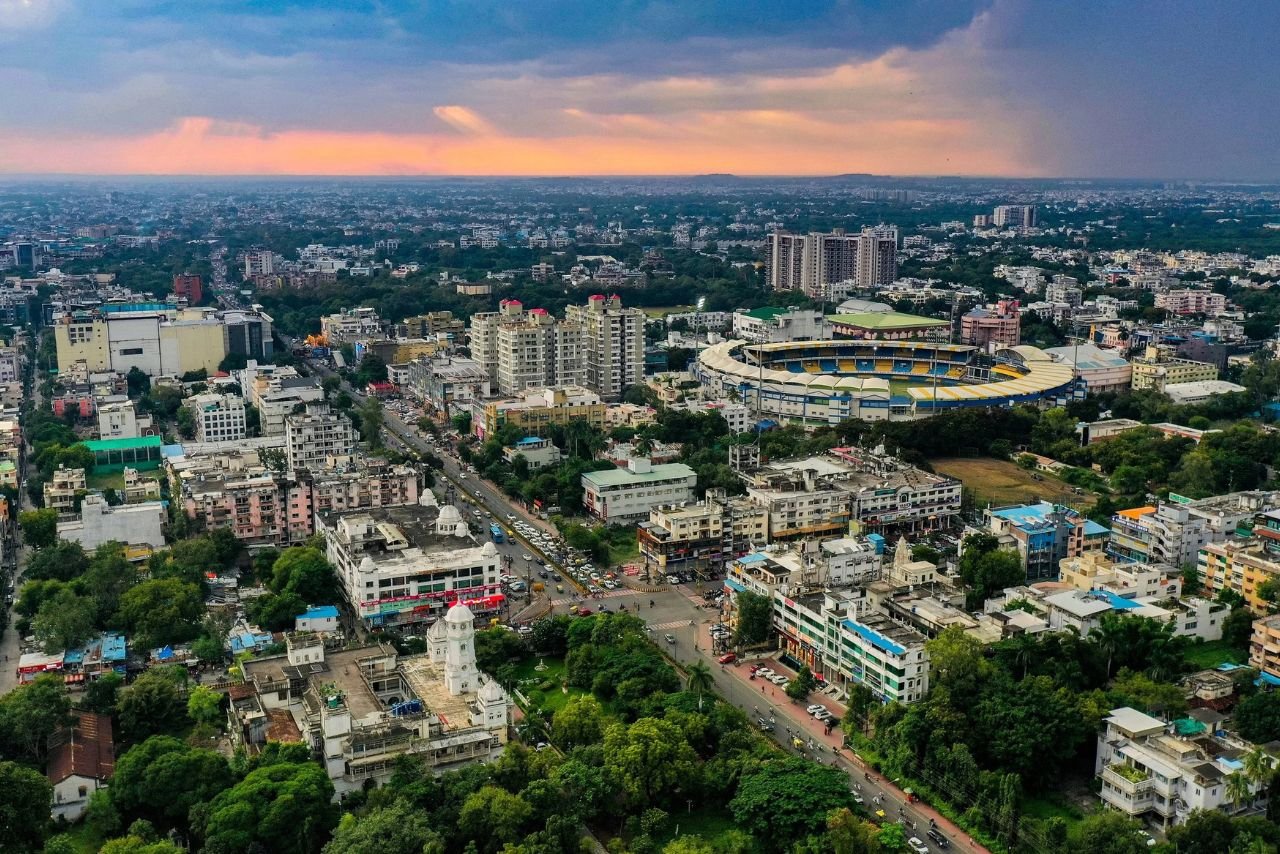
India’s economic geography is being redrawn. Tier-2 cities—once viewed as secondary business centers—are now becoming the core of new investments in infrastructure, logistics, and startups. With rapid urbanization, better connectivity, and state-led industrial policies, cities like Indore, Surat, Coimbatore, and Lucknow are positioning themselves as the engines of India’s next growth wave.
Intent and Context: A Structural Economic Trend
This topic is evergreen but backed by ongoing data and policy activity. The investment focus beyond metros is part of India’s broader decentralization strategy—moving economic growth closer to emerging urban clusters. Government initiatives such as the PM Gati Shakti National Master Plan, Smart Cities Mission, and industrial corridor development are redirecting capital flows to mid-sized cities. Investors, meanwhile, see Tier-2 cities as offering high ROI due to lower land costs, supportive local governance, and rising demand for urban services.
Infrastructure Is Driving Economic Gravity Away from Metros
India’s infrastructure boom is no longer limited to Delhi, Mumbai, or Bengaluru. The expansion of airports, expressways, and dedicated freight corridors is turning smaller cities into regional economic hubs. The Delhi-Mumbai Industrial Corridor (DMIC), Chennai-Bengaluru Industrial Corridor, and Amritsar-Kolkata Corridor are anchoring investments in logistics and industrial parks around cities like Jaipur, Nagpur, and Bhubaneswar. According to DPIIT data, over 60 percent of new industrial park proposals approved in 2024–25 were located outside traditional metro areas. For investors, these cities offer proximity to consumption markets without the congestion and cost pressures of Tier-1 hubs.
Logistics and Warehousing: The New Growth Backbone
The logistics sector is one of the biggest beneficiaries of this Tier-2 shift. E-commerce demand, combined with India’s expanding road and air networks, has turned smaller cities into vital warehousing and distribution points. Amazon, Flipkart, and Reliance Retail have set up large fulfillment centers in cities like Surat, Bhopal, and Patna. The expansion of multimodal logistics parks (MMLPs) under the Gati Shakti plan is also transforming cities like Nagpur and Coimbatore into national transit hubs. With the logistics industry projected to reach $380 billion by 2027, Tier-2 and Tier-3 locations are expected to handle nearly half of all new capacity.
Why Startups Are Setting Up Beyond Metros
India’s startup ecosystem is now expanding where the customers are. Founders are building businesses closer to Tier-2 markets, where digital adoption and local consumption are accelerating. Startups like Meesho (social commerce), ElasticRun (rural logistics), and DealShare (retail tech) have built scalable models from smaller cities. Investors are following suit—venture capital funding into Tier-2-founded startups grew by 35 percent year-on-year in 2025, according to Tracxn. This shift is also enabled by local talent availability, affordable office space, and hybrid work models that make remote collaboration viable. In short, building in Bharat has become both viable and profitable.
The Role of State Policies and Local Governance
State governments are central to this Tier-2 growth story. Uttar Pradesh, Tamil Nadu, and Gujarat have rolled out targeted industrial and logistics policies offering tax breaks, land subsidies, and single-window clearances for investors. For instance, Tamil Nadu’s “Regional Industrial Cluster” initiative has made Coimbatore and Tiruppur magnets for textile and EV component investments. Similarly, Uttar Pradesh’s Defence Industrial Corridor, anchored around Lucknow and Kanpur, has already attracted over ₹25,000 crore in committed investments. Improved coordination between state and central schemes is also streamlining approvals and reducing project risk, giving investors more confidence to enter non-metro markets.
Cost Advantage Meets Market Potential
One of the biggest reasons investors are moving beyond metros is the dual advantage of lower operational costs and growing consumption power. Real estate in cities like Indore or Surat costs a fraction of Mumbai’s, while skilled labor pools are expanding as young professionals return to smaller hometowns post-pandemic. Meanwhile, Tier-2 and Tier-3 consumers now account for over 60 percent of India’s e-commerce demand. This combination of affordability and scale is reshaping investment logic—why battle saturation in metros when Tier-2 India offers both cost efficiency and untapped growth?
The Emerging Regional Clusters to Watch
Several cities are already emerging as sector-specific hotspots. Coimbatore is developing into a hub for electric vehicle components and renewable energy. Indore has become a clean-industry and fintech startup center, aided by its high ease-of-doing-business ranking. Surat is leveraging its textile and diamond expertise to attract logistics and trade-tech firms. Lucknow, Bhubaneswar, and Jaipur are seeing increasing investments in IT services, education, and data centers. The trend is clear: investors are betting on regional specialization, not just urban expansion.
The Long-Term Economic Impact
The shift to Tier-2 and Tier-3 investment is not just about growth—it’s about balance. India’s urban policy goals emphasize equitable regional development, and private capital is now aligning with that agenda. By 2030, analysts estimate that non-metro cities could contribute nearly 45 percent of India’s total GDP, up from around 35 percent today. As digital infrastructure deepens and supply chains localize, the line between “metro” and “non-metro” will blur. For India’s economic future, decentralization isn’t just a policy—it’s the next competitive advantage.
Takeaways:
- Tier-2 cities like Indore, Surat, and Coimbatore are becoming high-return investment hubs.
- Infrastructure, logistics, and startup ecosystems are driving the shift beyond metros.
- State policies and industrial corridors are enabling large-scale decentralization.
- Lower costs and rising consumption make smaller cities the next economic growth engines.
FAQs
Q: Why are Tier-2 and Tier-3 cities attracting investors now?
A: Improved infrastructure, affordable operations, and government incentives are making smaller cities more competitive for industries and startups.
Q: Which sectors are leading this regional expansion?
A: Infrastructure, logistics, manufacturing, renewable energy, and digital startups are driving most of the new investment activity.
Q: How are state governments supporting this trend?
A: Through policies that provide tax incentives, land support, and single-window clearances to attract private investment into regional clusters.
Q: What does this mean for India’s long-term growth?
A: The expansion beyond metros will create new employment hubs, reduce urban concentration, and make India’s growth more regionally balanced.











Leave a comment