

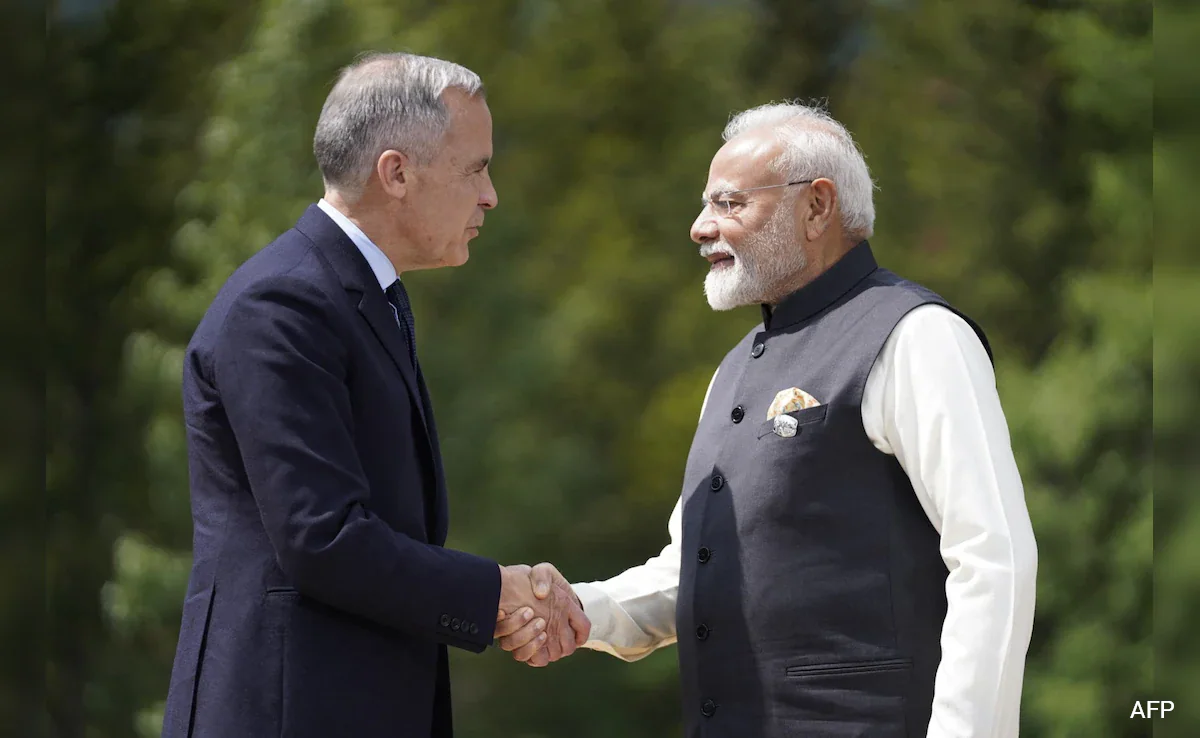
Canada PM Mark Carney’s India visit has drawn attention beyond diplomatic optics. As he prepares for talks with Prime Minister Narendra Modi, the economic undertones of this engagement could carry practical implications for India’s Tier-2 cities seeking investment, trade access, and technology partnerships.
Canada PM Mark Carney’s India visit comes at a time when bilateral relations are being recalibrated around trade, clean energy, education, and supply chain diversification. As a former central banker and a leader with a strong economic background, Carney’s engagement is expected to focus heavily on financial cooperation, sustainable investment, and innovation ecosystems. For Tier-2 cities across India, this is not abstract diplomacy. It is about where capital flows next.
Resetting India-Canada Economic Ties
India and Canada share a trade relationship that spans energy, agriculture, education, and financial services. Bilateral trade has grown steadily in recent years, even amid political tensions. Canada is a major supplier of pulses to India and an important source of potash used in fertilizers. India exports pharmaceuticals, IT services, textiles, and machinery to Canada.
The renewed engagement signals an attempt to stabilize and deepen this economic relationship. For Tier-2 cities such as Indore, Coimbatore, Lucknow, and Nagpur, stronger trade ties could translate into expanded export opportunities, especially in agro-processing, textiles, engineering goods, and IT services.
Discussions around reviving trade negotiations, including broader market access frameworks, could benefit small and medium enterprises that form the backbone of non-metro economies.
Clean Energy and Climate Finance Opportunities
One of the key strategic economic takeaways from Canada PM Mark Carney’s India visit is likely to revolve around climate finance and clean energy collaboration. Canada has significant expertise in renewable energy financing, carbon markets, and green bonds. India, on the other hand, has ambitious renewable energy targets and growing demand for climate capital.
Tier-2 cities are increasingly positioning themselves as renewable energy hubs. Cities in Gujarat, Tamil Nadu, and Maharashtra are seeing investments in solar parks, wind corridors, and EV manufacturing clusters. If Canada expands green investment pipelines into India, local industrial clusters in these cities could gain access to concessional finance, technology partnerships, and joint ventures.
This is especially relevant for MSMEs transitioning toward energy efficiency and sustainability compliance to access global supply chains.
Education, Talent Mobility, and Tier-2 Aspirations
Canada remains one of the top destinations for Indian students. A significant share of these students come from Tier-2 and Tier-3 cities. Discussions between Carney and Prime Minister Modi are expected to touch on education cooperation, student mobility, and research partnerships.
For families in smaller cities, clarity on visa processes, academic collaboration, and post-study work pathways matters directly. Beyond outbound education, there is scope for Canadian institutions to partner with Indian universities in emerging cities, offering joint degrees or research programs in AI, clean tech, and advanced manufacturing.
Such collaborations could help Tier-2 cities retain talent by creating global-quality education ecosystems locally.
Financial Services and Investment Channels
Mark Carney’s background in central banking and global finance places financial cooperation at the center of this visit. Canada’s pension funds are among the largest institutional investors globally and already have exposure in Indian infrastructure, including roads, real estate, and renewable energy.
Further expansion of Canadian pension and sovereign investments into India’s infrastructure pipeline could unlock capital for logistics parks, urban transport, and industrial corridors in Tier-2 cities. The government’s push for manufacturing under the Production Linked Incentive schemes and the development of industrial corridors such as the Delhi Mumbai Industrial Corridor make smaller cities attractive for foreign investors seeking long-term returns.
For local governments, this signals the importance of improving ease of doing business, land acquisition transparency, and regulatory stability.
Strategic Signaling Amid Global Realignment
The broader context of Canada PM Mark Carney’s India visit lies in global supply chain diversification and geopolitical shifts. Both countries are seeking to reduce overdependence on single markets and build resilient economic partnerships.
For India, attracting investment into Tier-2 cities aligns with its strategy of decentralizing growth beyond metros. For Canada, diversifying trade and investment partnerships in Asia strengthens economic resilience.
If the talks lead to clearer trade pathways, regulatory alignment, and sector-specific partnerships, Tier-2 cities could emerge as direct beneficiaries rather than peripheral observers.
What Tier-2 Businesses Should Watch
Local exporters, startup founders, education institutions, and renewable energy players should monitor announcements emerging from the talks. Even incremental policy changes in trade facilitation, double taxation avoidance, or startup collaboration frameworks can open new doors.
The visit underscores that global diplomacy increasingly translates into subnational economic opportunity. For Tier-2 India, the message is clear: preparedness determines who captures the next wave of foreign capital and trade growth.
Takeaways
Stronger India-Canada economic ties could expand export and investment opportunities for Tier-2 cities
Clean energy and climate finance collaboration may benefit renewable clusters outside metros
Education and talent mobility discussions directly impact students from smaller cities
Infrastructure and pension fund investments could accelerate non-metro industrial growth
FAQs
Why is Canada PM Mark Carney’s India visit significant economically?
His economic background and focus on trade, climate finance, and investment make the visit strategically important for expanding bilateral economic cooperation.
How can Tier-2 cities benefit from India-Canada talks?
Through increased exports, infrastructure investment, renewable energy partnerships, and education collaborations that strengthen local ecosystems.
Will this visit impact Indian students planning to study in Canada?
Potentially yes. Discussions on mobility and education cooperation can influence visa clarity, institutional tie-ups, and research partnerships.
Is this visit mainly political or economic in nature?
While diplomacy is central, the emphasis is strongly economic, focusing on trade stability, investment flows, and long-term cooperation.









Leave a comment