

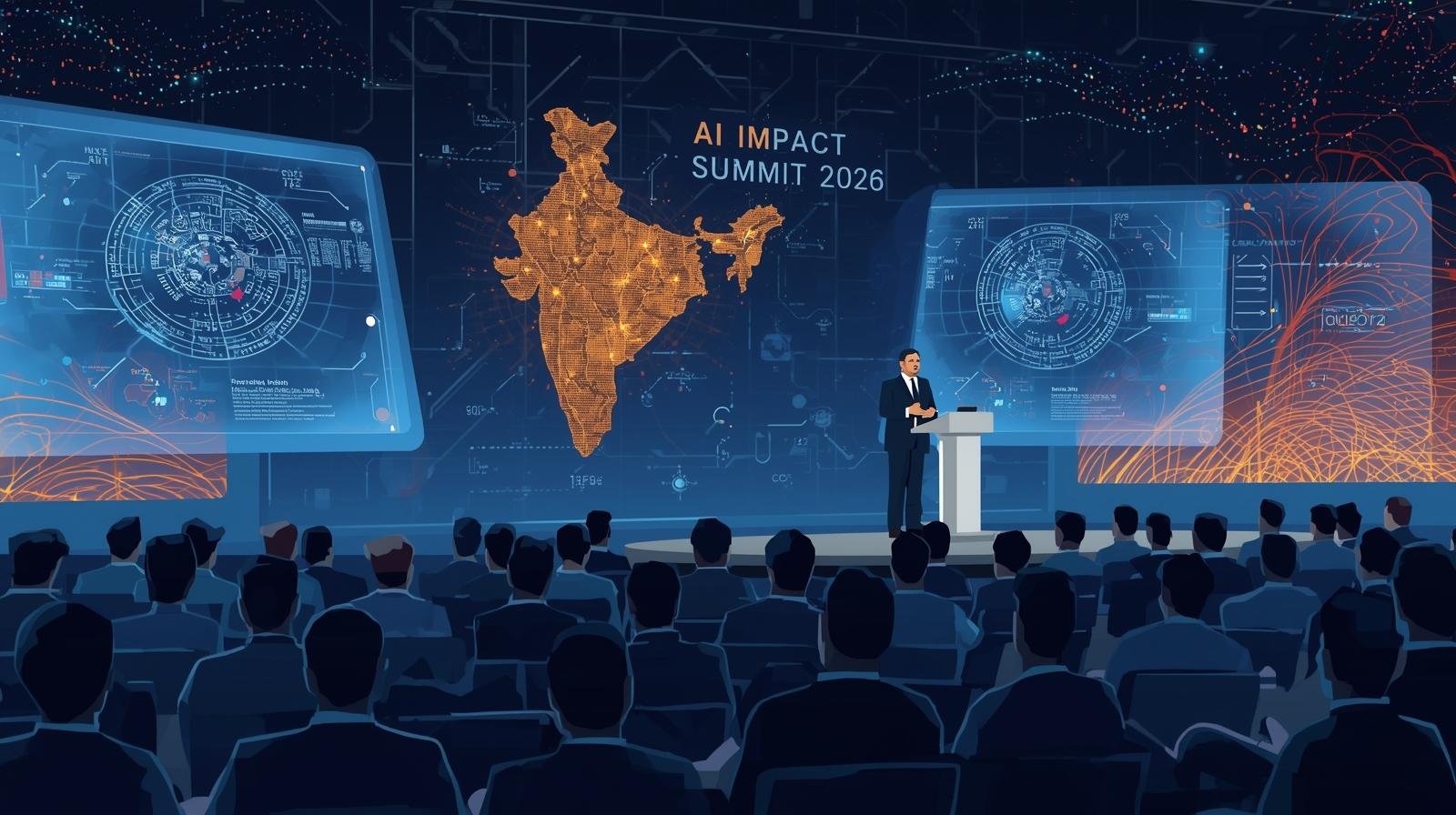
Deep tech at the India AI Impact Summit showcased how electric air taxis, autonomous robots and advanced AI platforms are moving from prototype to pilot stage. Indian startups presented real world deployments focused on urban mobility, manufacturing automation and public infrastructure solutions.
Deep tech at the India AI Impact Summit reflects a broader shift in India’s innovation landscape, where startups are building hardware plus AI systems rather than only software platforms. The event highlighted electric vertical take off and landing aircraft, autonomous ground robots, AI powered surveillance tools and industrial robotics platforms. These technologies are no longer theoretical. Several are in testing phases with state governments, airports and private industrial parks. The summit underscored India’s ambition to become a global deep tech manufacturing and AI deployment hub.
Electric Air Taxis and Urban Air Mobility in India
One of the most discussed segments at the summit was electric air taxis, also known as eVTOL aircraft. These battery powered aircraft are designed for short urban commutes and airport transfers. Indian aerospace startups are working on indigenous designs that align with civil aviation regulations and urban air mobility frameworks.
The Directorate General of Civil Aviation has already initiated policy discussions around certification standards for eVTOL systems. Startups are collaborating with airport operators and state governments to test feasibility for routes connecting metro cities with satellite towns. The goal is to reduce travel time in congested corridors such as airport to business district routes. While commercial launch timelines depend on regulatory approvals and battery efficiency improvements, prototype testing and simulation trials are underway.
Autonomous Robots for Manufacturing and Logistics
Autonomous robots formed the second major pillar of deep tech at the summit. Indian robotics startups demonstrated warehouse automation systems, autonomous mobile robots for factory floors and AI powered inspection robots. These machines use computer vision, sensor fusion and real time mapping to navigate industrial environments without manual control.
In manufacturing clusters across states like Tamil Nadu, Gujarat and Maharashtra, pilot projects are already running in automotive and electronics plants. Robots are being used for material handling, quality inspection and hazardous environment monitoring. This reduces workplace risk and improves precision. Logistics companies are also testing autonomous sorting systems in fulfillment centers to manage rising ecommerce demand. The emphasis is on scalable hardware built locally to reduce import dependency.
AI Driven Surveillance and Public Infrastructure Systems
Another category highlighted at the India AI Impact Summit was AI powered surveillance and smart infrastructure. Startups showcased facial recognition systems compliant with domestic privacy regulations, crowd analytics platforms and traffic optimization software. These systems are designed to integrate with existing CCTV networks and urban command centers.
Smart city missions across India have already created digital infrastructure in several Tier 1 and Tier 2 cities. Deep tech startups are building AI layers on top of this infrastructure to enable predictive traffic control, automated incident detection and public safety alerts. The focus is shifting from installing cameras to generating actionable intelligence. Such deployments require strong data governance mechanisms and secure cloud or edge computing frameworks.
Defense and Aerospace Applications of Indian Deep Tech
Deep tech innovation in India is also extending into defense and aerospace. At the summit, startups presented unmanned ground vehicles, AI enabled reconnaissance drones and advanced simulation platforms. These systems are aligned with the government’s push for defense indigenization and reduced reliance on imports.
Autonomous navigation algorithms, secure communication modules and edge AI processing are key features of these solutions. Defense procurement processes are long and highly regulated, but pilot programs and technology trials are expanding. Collaboration between startups, public sector units and research institutions is accelerating product validation cycles.
Funding, Policy and Ecosystem Support
The growth of deep tech startups in India is supported by a mix of government initiatives and private capital. Production linked incentive schemes, startup seed funds and innovation grants have improved access to early stage funding. Venture capital interest in robotics, aerospace and AI hardware has increased over the past few years, although investors remain selective due to longer gestation periods compared to software startups.
Policy clarity around drone rules, data protection and AI governance has also reduced uncertainty. However, challenges remain. Deep tech requires high capital expenditure, skilled engineers and strong supply chains. Semiconductor availability and advanced battery technology are critical dependencies. The summit discussions emphasized the need for stronger academia industry collaboration to build specialized talent.
What This Means for India’s Technology Future
Deep tech at the India AI Impact Summit signals a transition from service driven IT growth to product led innovation. Electric air taxis, autonomous robots and AI powered infrastructure systems demonstrate that Indian startups are building complex, high value technologies with global potential.
Commercial scalability will depend on regulatory approvals, manufacturing capability and export competitiveness. If these elements align, India could position itself not just as an AI software powerhouse but as a deep tech manufacturing and deployment hub. The summit provided a snapshot of that ambition taking shape.
Takeaways
Electric air taxis and eVTOL aircraft are progressing from concept to pilot testing in India.
Autonomous robots are being deployed in manufacturing and logistics clusters.
AI powered surveillance and smart infrastructure systems are expanding under urban digital initiatives.
Deep tech growth depends on policy clarity, funding access and strong hardware supply chains.
FAQs
What is meant by deep tech in the Indian context?
Deep tech refers to advanced technology innovations based on scientific research and engineering, including robotics, aerospace systems, AI hardware and autonomous vehicles.
Are electric air taxis operational in India?
Electric air taxis are currently in prototype and testing stages. Commercial operations will depend on regulatory approvals and safety certifications.
How are autonomous robots being used in India?
Autonomous robots are being deployed in factories and warehouses for material handling, inspection and automation of repetitive tasks.
Is the government supporting deep tech startups?
Yes, through policy initiatives, funding schemes and regulatory frameworks aimed at promoting indigenous innovation and reducing import dependency.












Leave a comment