

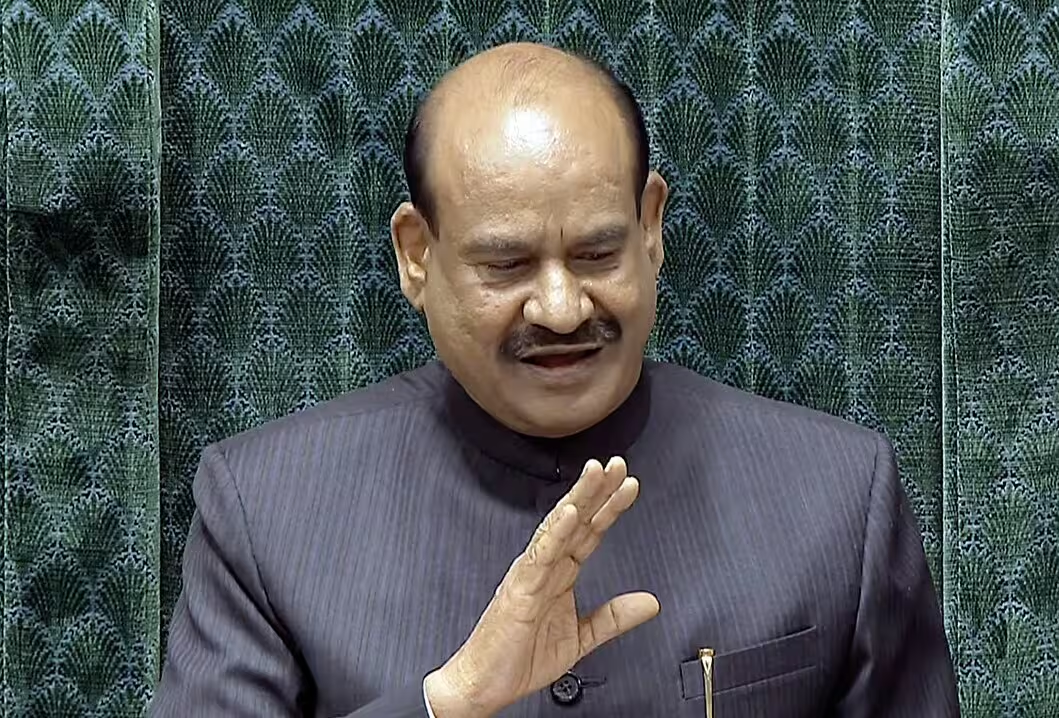
A no confidence motion against the Lok Sabha Speaker has triggered intense debate in Delhi’s political circles. This development is significant not just for Parliament but also for smaller states that rely heavily on procedural fairness to amplify their voices in national lawmaking.
The Delhi no confidence motion against Lok Sabha Speaker has become a major political flashpoint, raising questions about parliamentary stability and federal balance. While such motions are rare, they carry symbolic and procedural weight. The issue is not only about one individual holding office, but about how the House functions and how regional interests are represented within India’s parliamentary democracy.
What Is a No Confidence Motion Against the Speaker
In the Lok Sabha, the Speaker is elected by members of the House and is expected to function impartially. Under the Constitution and the Rules of Procedure, a resolution to remove the Speaker can be moved with prior notice. If admitted, it is debated and put to vote. A simple majority of members present and voting is required for removal.
Unlike a no confidence motion against the government, which tests the majority of the ruling party, a motion against the Speaker questions the conduct or neutrality of the presiding officer. It is procedural but politically charged. The Speaker plays a crucial role in deciding who speaks, whether a bill is classified as a Money Bill, and how disruptions are handled.
For smaller states, these procedural powers matter. Floor time, recognition during debates, and admission of adjournment motions can influence how effectively regional issues are raised.
Why This Motion Matters for Parliamentary Dynamics
The current motion reflects deeper political tensions between the ruling alliance and the opposition. When the opposition alleges bias in allowing or disallowing discussions, suspensions, or legislative procedures, the Speaker becomes central to the dispute.
Parliamentary dynamics shift when trust in the Chair is questioned. The Speaker is meant to ensure order and equal opportunity. If opposition parties feel sidelined, legislative cooperation can decline. This often leads to more adjournments, protests, and reduced productive hours.
In such a climate, smaller states can become collateral damage. Members from less populous states already have fewer seats. Their influence depends on coalition politics and fair procedural space. If debates become polarized, nuanced regional demands may receive less attention.
Impact on Smaller States and Regional Representation
Smaller states rely on Parliament to address issues such as special category status, disaster relief, infrastructure funding, and regional language rights. When the functioning of the Lok Sabha becomes contentious, these priorities risk being overshadowed by national political battles.
For example, states in the Northeast, hill states, and Union Territories depend heavily on central allocations. Their MPs often use Zero Hour, Question Hour, and short duration discussions to highlight urgent concerns. The Speaker’s discretion in allowing these interventions is critical.
If a no confidence motion results in leadership change or prolonged procedural standoff, legislative schedules can be disrupted. Budget discussions, grant approvals, and bill debates may face delays. Smaller states that depend on timely financial clearances could feel the impact more acutely.
At the same time, such motions can also strengthen institutional accountability. If debated constructively, they reinforce the principle that even high constitutional offices are subject to parliamentary oversight.
Constitutional Position of the Lok Sabha Speaker
The Speaker’s office is protected by constitutional safeguards. Once elected, the Speaker is expected to rise above party lines. In practice, however, political alignments often shape perceptions.
The Speaker has authority over anti defection decisions under the Tenth Schedule, recognition of party groups, and certification of Money Bills. These powers can influence the fate of state specific legislation and regional party strategies.
A motion to remove the Speaker does not automatically paralyze Parliament. The Deputy Speaker or another designated member can preside during the process. However, the optics of such a move can deepen political divides.
For smaller regional parties, this moment is strategic. They may align with national blocs or negotiate support in exchange for assurances on state interests.
Broader Federal Implications
India’s federal structure depends on cooperation between the Union and the states. Parliamentary procedures are one channel through which state concerns enter national policy.
If the controversy escalates, it could affect legislative consensus on key reforms. Bills related to cooperative federalism, fiscal devolution, and centrally sponsored schemes require smooth floor management.
For citizens in smaller states, the concern is practical. Will their MPs get adequate time to speak. Will regional bills be prioritized. Will committee work continue without disruption.
While the motion itself is a constitutional tool, its political handling will determine whether it weakens or strengthens parliamentary culture.
Takeaways
A no confidence motion against the Lok Sabha Speaker is a serious procedural step that questions neutrality, not government majority.
Parliamentary disruptions can disproportionately affect smaller states that depend on procedural fairness for representation.
The Speaker’s constitutional powers influence debate time, bill classification, and anti defection rulings.
How this motion is resolved will shape trust in parliamentary institutions and federal balance.
FAQs
Can the Lok Sabha Speaker be removed easily.
The Speaker can be removed through a resolution passed by a simple majority of members present and voting, provided due notice is given.
Does this motion affect the stability of the central government.
No. A motion against the Speaker is different from a no confidence motion against the government and does not directly test the ruling party’s majority.
Why are smaller states particularly concerned.
Smaller states have fewer MPs and rely on fair procedural access to raise regional issues. Any disruption or perceived bias can limit their parliamentary voice.
What happens if the motion fails.
If the motion does not secure majority support, the Speaker continues in office. However, political tensions may persist depending on the nature of the debate.








Leave a comment