

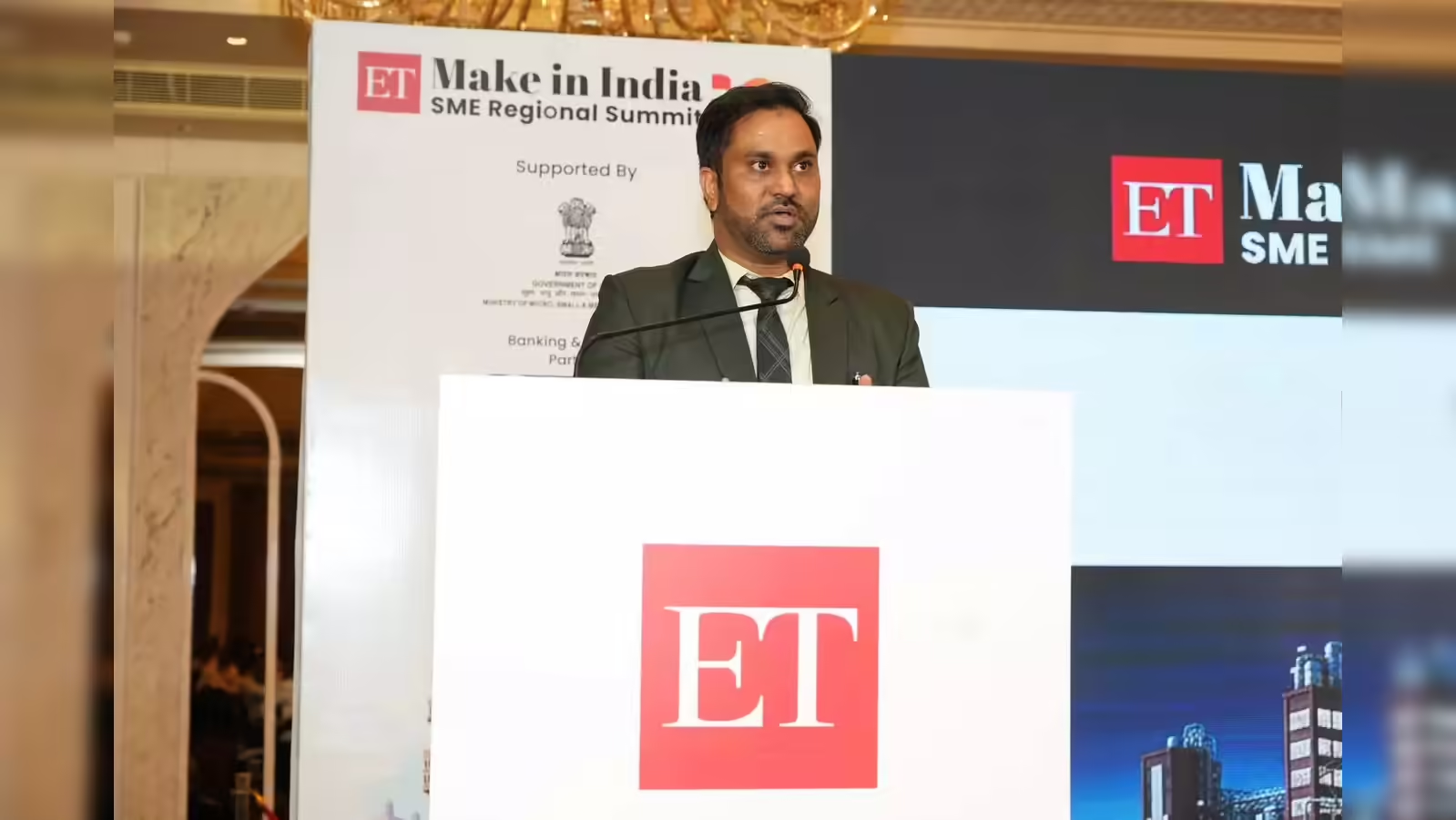
The ET Make in India SME Summit in Chhatrapati Sambhajinagar highlights how micro businesses in emerging industrial cities are positioning themselves for national scale. The event places focus on manufacturing, credit access, digitisation and regional supply chain integration.
The ET Make in India SME Summit in Chhatrapati Sambhajinagar brings attention to regional growth routes for micro businesses at a time when India’s manufacturing and small enterprise ecosystem is expanding beyond metro hubs. With policy support under Make in India and rising demand for localised production, Tier 2 cities are emerging as serious economic contributors.
Chhatrapati Sambhajinagar, formerly Aurangabad, has long held industrial relevance due to its manufacturing base in automotive, pharmaceuticals and engineering components. Hosting a summit focused on small and medium enterprises reinforces its strategic positioning within Maharashtra’s industrial corridor.
Why Chhatrapati Sambhajinagar Matters for SMEs
Chhatrapati Sambhajinagar is part of a well established industrial belt with connectivity to Pune, Nashik and Mumbai. It houses industrial estates developed by state agencies and has attracted domestic and international manufacturers over the years.
For micro businesses, proximity to larger manufacturing units creates supplier opportunities. Ancillary units providing tooling, packaging, fabrication and logistics services benefit from cluster driven growth. Events like the ET Make in India SME Summit provide networking access that smaller firms typically lack.
The city’s infrastructure, including road connectivity and industrial parks, makes it a logical venue for discussions on regional manufacturing scale. As government incentives increasingly target decentralised industrial growth, non metro hubs such as Sambhajinagar gain relevance.
Access to Credit and MSME Financing
One central theme at SME focused forums is credit access. Micro businesses often face working capital constraints and limited collateral. Despite schemes under the MSME umbrella, credit penetration remains uneven.
The summit discussions typically revolve around improving formal financing channels, digital lending adoption and better credit scoring for small enterprises. With the rise of fintech platforms, alternative data based lending models are expanding access.
For businesses in Chhatrapati Sambhajinagar and similar cities, formalisation through GST compliance and digital invoicing improves credit eligibility. This shift toward structured financial records is critical for long term growth.
Digital Transformation and Industry 4.0 Adoption
Digital adoption is no longer optional for micro businesses. From inventory management software to e commerce integration, technology improves efficiency and market reach.
Summits under the Make in India theme often spotlight Industry 4.0 tools such as automation, IoT based monitoring and cloud accounting. While these technologies may appear metro centric, their cost is gradually declining, making them accessible to smaller firms.
In manufacturing clusters around Sambhajinagar, digital process optimisation can reduce waste and improve supply chain transparency. Micro businesses that adopt basic digital tools gain competitive advantage when supplying to larger national brands.
Export Potential and Regional Supply Chains
Make in India initiatives emphasize export competitiveness. Maharashtra remains one of India’s leading exporting states, and industrial cities beyond Mumbai contribute significantly to this performance.
Micro businesses integrated into export supply chains benefit from currency advantages and global demand diversification. However, compliance standards and quality certification requirements often pose barriers.
Industry forums help clarify export documentation, quality audits and government incentive schemes. For entrepreneurs in Tier 2 cities, exposure to export oriented strategies can unlock new revenue streams beyond domestic markets.
Skilling, Workforce and Local Employment
Another dimension of regional growth routes is workforce development. Micro businesses depend heavily on skilled technicians and semi skilled workers. Industrial training institutes and polytechnics in and around Sambhajinagar play a role in meeting this demand.
Summits create dialogue between industry leaders and training institutions. Aligning curriculum with current industrial needs ensures a steady pipeline of job ready workers.
Local employment generation has multiplier effects. As micro businesses expand, they stimulate ancillary services such as transport, warehousing and maintenance. This strengthens the broader regional economy.
Policy Support and Ease of Doing Business
The Make in India framework focuses on improving ease of doing business through simplified compliance and digital governance. For SMEs, reduced paperwork and faster approvals directly affect operating efficiency.
State level policies in Maharashtra have targeted industrial expansion in secondary cities to reduce congestion in Mumbai and Pune. Incentives related to land acquisition, power tariffs and logistics support influence investment decisions.
Events like the ET Make in India SME Summit act as feedback platforms where entrepreneurs articulate regulatory bottlenecks. Constructive dialogue between policymakers and industry stakeholders improves policy design.
Future Outlook for Micro Businesses in Tier 2 India
India’s economic growth strategy increasingly recognises the role of micro and small enterprises. With rising domestic consumption and government backed infrastructure expansion, regional industrial centres are positioned for steady growth.
Chhatrapati Sambhajinagar’s industrial ecosystem, combined with targeted SME support, presents a replicable model for other Tier 2 cities. The long term success of such regions will depend on sustained credit access, digital adoption and export readiness.
Micro businesses that embrace formalisation, invest in technology and build supply chain partnerships are likely to scale more effectively. Regional summits accelerate this transition by connecting policy vision with ground realities.
Takeaways
Chhatrapati Sambhajinagar is emerging as a key non metro industrial hub
Access to credit and digital adoption remain critical growth drivers for SMEs
Export integration offers new revenue opportunities for micro businesses
Policy dialogue at regional summits strengthens ease of doing business
FAQs
Q1. What is the focus of the ET Make in India SME Summit
The summit concentrates on manufacturing growth, MSME financing, digital transformation and regional industrial expansion.
Q2. Why is Chhatrapati Sambhajinagar important for SMEs
It has an established industrial base, strong connectivity and supplier networks that support micro and small enterprises.
Q3. How can micro businesses benefit from such summits
They gain networking access, policy clarity, financing insights and exposure to technology adoption strategies.
Q4. What are the main challenges for SMEs in Tier 2 cities
Limited credit access, compliance complexity and slower digital adoption are common barriers.








Leave a comment