

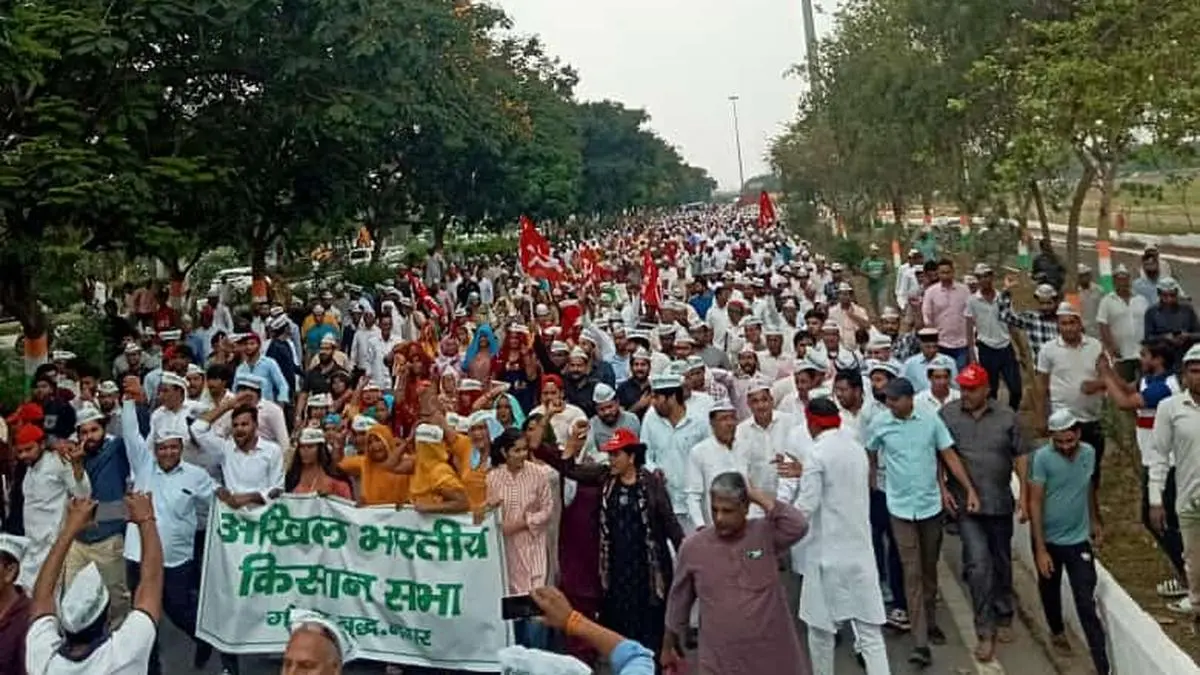
New expressway land acquisition protests in Western UP have intensified as farmers push back against compensation rates, rehabilitation terms, and land use changes. The agitation reflects deeper concerns over livelihood security, transparency, and the long term impact of infrastructure projects on agrarian communities.
Why Expressway Land Acquisition Is Triggering Protests Now
This topic is time sensitive and rooted in ongoing developments. Multiple expressway projects in Western Uttar Pradesh have entered advanced stages of land acquisition, triggering protests from affected farmers. As surveys, notifications, and possession timelines accelerate, resistance has grown in districts where agriculture remains the primary income source.
Farmers argue that compensation assessments do not reflect current market values or future income loss. Many land parcels being acquired are fertile, irrigated, and multi-crop, which raises the economic stakes. The speed of acquisition has also limited negotiation windows, adding to local anger and distrust toward authorities.
Key Demands Raised by Farmers in Western UP
At the core of the protests are demands for fair compensation and stronger safeguards. Farmers are seeking higher per acre rates aligned with prevailing circle rates and private market transactions. Many are also demanding compensation based on developed land value rather than agricultural classification.
Another major demand is job security. Families that lose most or all of their cultivable land want assured employment or skill based rehabilitation packages. There is also pressure for one member per affected household to be absorbed into project related work or allied services.
Farmers are additionally asking for timely payments, written assurances on rehabilitation, and transparent grievance redress mechanisms at the district level.
Concerns Over Livelihood and Land Fragmentation
Land acquisition for expressways affects more than ownership. In Western UP, farming is often done on contiguous plots that support economies of scale. Partial acquisition fragments holdings, making remaining land less productive and increasing operational costs.
Small and marginal farmers face the highest risk. Compensation money, once spent, does not guarantee recurring income. Many protestors point to earlier projects where lump sum payouts failed to secure long term livelihoods, forcing families into informal work or migration.
There is also concern over rising land prices near expressway corridors, which benefits investors but excludes original landowners from future development gains.
Administrative Response and Negotiation Efforts
District administrations have responded with a mix of dialogue and enforcement. Officials have held meetings to explain compensation formulas, solatium components, and legal provisions under land acquisition laws. In some cases, revised packages and additional benefits have been announced to ease tensions.
However, trust remains fragile. Protestors argue that verbal assurances are insufficient without written guarantees. Delays in payment processing and lack of clarity on rehabilitation timelines have further complicated negotiations.
Law and order concerns have prompted increased police presence at protest sites, though authorities are cautious to avoid escalation given the political sensitivity of farmer movements in the region.
Political and Economic Implications
The protests have wider political implications in Western UP, where farming communities play a decisive electoral role. Opposition parties are amplifying farmer grievances, framing the issue as development at the cost of agriculture.
Economically, delays in land acquisition can push project timelines and increase costs. Expressways are positioned as growth drivers, linking industrial hubs, logistics corridors, and urban centres. Resistance on the ground highlights the tension between infrastructure expansion and rural stability.
For policymakers, the challenge is balancing speed with consent, and infrastructure goals with social equity.
What This Means for Future Infrastructure Projects
The current protests may influence how future expressway projects are planned in Uttar Pradesh. There is growing recognition that early consultation, transparent valuation, and participatory rehabilitation plans are critical.
Experts suggest linking compensation to inflation indexed annuities or offering equity like stakes in commercial developments along expressway corridors. Such models could align farmer interests with long term project success.
Without these adjustments, similar protests are likely to recur as infrastructure expansion continues across agrarian regions.
Takeaways
Farmers are protesting compensation and rehabilitation terms, not development itself
Livelihood security remains the biggest concern in expressway land acquisition
Fragmentation of farmland adds long term economic risk for small farmers
Future projects may need more inclusive compensation models to avoid delays
FAQs
Why are farmers protesting expressway projects in Western UP?
Farmers are concerned about low compensation, loss of livelihood, and lack of long term rehabilitation assurances.
Are farmers opposing expressway development entirely?
No. Most protests focus on fair terms and security rather than rejection of infrastructure projects.
What compensation are farmers demanding?
Higher market linked rates, timely payments, and additional benefits such as jobs or annuity based income support.
Can these protests delay expressway construction?
Yes. Prolonged resistance can slow land acquisition, increase costs, and impact project timelines.











Leave a comment