

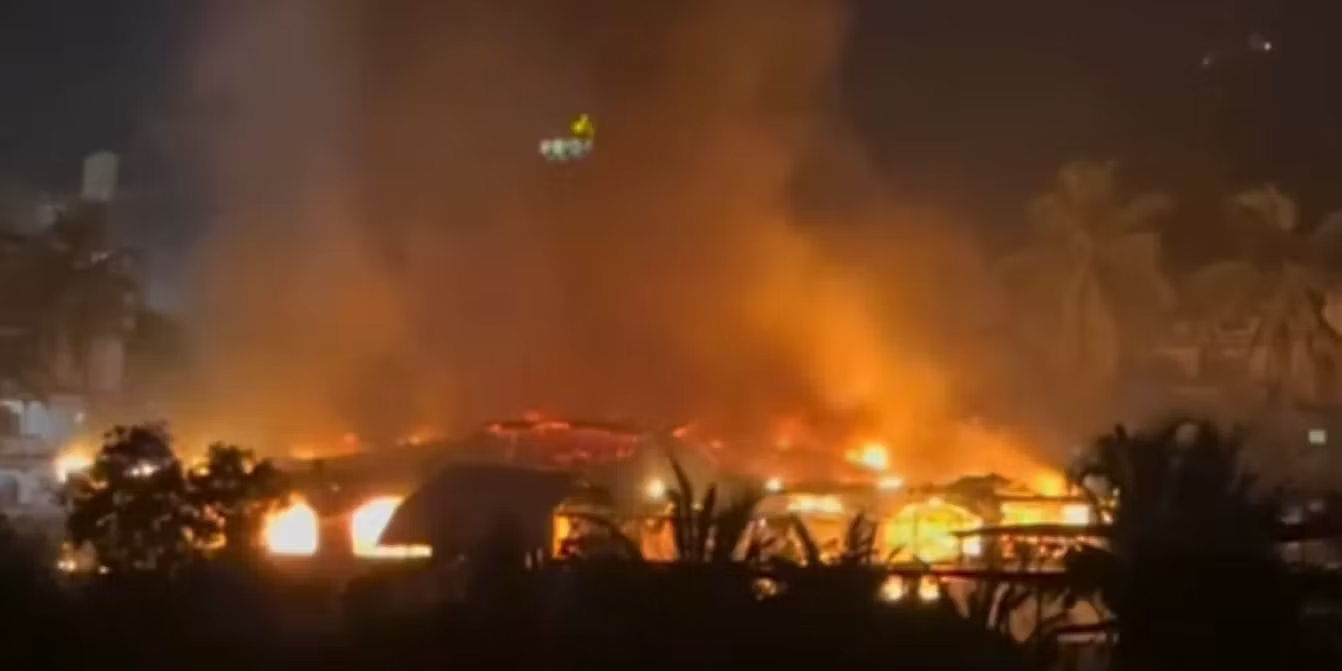
The Goa nightclub fire fallout has intensified after the deportation of the Luthra brothers, shifting attention from immediate tragedy to deeper questions around legal accountability, licensing enforcement, and public safety failures in one of India’s busiest nightlife destinations.
The incident has triggered parallel administrative, criminal, and policy responses, with state authorities under pressure to demonstrate that accountability will extend beyond symbolic action and address systemic lapses that allowed the tragedy to occur.
Goa nightclub fire fallout and sequence of events
The Goa nightclub fire fallout began after a late night blaze broke out at a popular coastal venue, leading to fatalities, injuries, and chaos during evacuation. Preliminary findings indicated that the fire spread rapidly due to overcrowding, flammable interior materials, and delayed emergency response.
Within days, investigators identified multiple violations related to fire safety clearances, crowd capacity norms, and emergency exits. The spotlight soon turned to the promoters linked to the establishment, including the Luthra brothers, whose role in ownership and operational control became central to the probe.
Authorities initiated legal proceedings while also invoking immigration and administrative provisions, culminating in their deportation. This move signaled an aggressive stance by the state, even as questions emerged about whether deportation alone addressed the full scope of responsibility.
Deportation of the Luthra brothers and legal implications
The deportation of the Luthra brothers has become a defining moment in the Goa nightclub fire fallout. Officials confirmed that immigration laws were applied after determining violations linked to their stay and business operations.
From a legal standpoint, deportation removes the individuals from Indian jurisdiction for certain proceedings, but it does not automatically close criminal liability. Legal experts note that criminal cases linked to negligence, culpable conduct, or violations under local laws can continue, subject to extradition frameworks and cooperation mechanisms.
The move has drawn mixed reactions. Supporters argue it demonstrates swift administrative action, while critics contend that deportation risks weakening long-term prosecution and accountability. The debate reflects a broader concern about whether regulatory enforcement focuses more on optics than structural correction.
Public safety failures exposed by the incident
Beyond individual liability, the Goa nightclub fire fallout has exposed recurring public safety failures in nightlife hubs. Investigations revealed lapses in fire safety audits, irregular renewal of licenses, and weak enforcement of occupancy limits.
Goa’s nightlife economy thrives on seasonal tourism and high footfall, often stretching local enforcement capacity. In this case, emergency exits were reportedly inadequate for the crowd size, and fire suppression systems were either absent or non-functional.
The incident has renewed scrutiny of how entertainment venues are inspected, how frequently compliance is verified, and whether penalties are sufficient to deter violations. Public safety experts argue that reactive checks after tragedies are not a substitute for continuous monitoring.
Administrative response and regulatory tightening
In response to the Goa nightclub fire fallout, the state government ordered a comprehensive review of nightclub and event venue licenses. Fire safety inspections were intensified across coastal belts, with several establishments temporarily shut for non-compliance.
Authorities announced plans to digitise licensing records, introduce random inspections, and mandate clearer accountability between owners, operators, and event organisers. There is also discussion around stricter penalties, including permanent license cancellation for serious violations.
For local administrations, the challenge lies in balancing tourism-driven economic activity with enforceable safety standards. Officials have acknowledged that fragmented oversight between municipal bodies, fire departments, and tourism authorities creates gaps that need urgent coordination.
Impact on Goa’s tourism and nightlife industry
The fallout from the fire has had immediate reputational consequences for Goa’s nightlife industry. Tour operators, hospitality associations, and event organisers have expressed concern about cancellations and heightened scrutiny during peak season.
While safety upgrades are broadly welcomed, industry stakeholders warn against blanket shutdowns without clear compliance roadmaps. Many argue that inconsistent enforcement in the past encouraged risk-taking, and sudden crackdowns now threaten livelihoods.
At the same time, public sentiment has shifted in favour of stricter norms. Residents and frequent visitors have voiced concerns over noise, overcrowding, and safety long before the incident, suggesting that reform was overdue.
Broader legal and policy questions emerging
The Goa nightclub fire fallout raises wider policy questions relevant beyond the state. These include whether existing fire safety laws are adequate, how responsibility is apportioned between owners and operators, and whether penalties reflect the severity of risk posed to the public.
There is also renewed debate on the accountability of local officials who approve or overlook safety clearances. Legal observers note that without consequences for regulatory failure, enforcement cycles tend to repeat.
The case may influence future judicial interpretations of negligence in commercial entertainment spaces, especially where profit-driven overcrowding directly compromises safety.
What happens next in the case
As investigations continue, authorities are expected to file detailed charges based on forensic findings, witness statements, and compliance records. The deportation of the Luthra brothers is likely to be tested legally if further proceedings require their presence.
Policy changes announced in the aftermath will be closely monitored for implementation rather than intent. For victims’ families, the focus remains on justice, compensation, and assurances that similar tragedies will not recur.
The Goa nightclub fire fallout has moved beyond a single incident, becoming a test case for how Indian states regulate high-risk entertainment environments.
Takeaways
- The Goa nightclub fire fallout has shifted focus from tragedy to systemic safety failures.
- Deportation of the Luthra brothers raises questions about long-term legal accountability.
- Regulatory gaps in licensing and inspections have been exposed.
- The incident may reshape nightlife safety norms and enforcement across states.
FAQs
Why were the Luthra brothers deported
Authorities applied immigration provisions after identifying violations linked to business operations and legal status.
Does deportation end criminal liability
No, criminal investigations can continue, subject to legal procedures and cooperation mechanisms.
What safety lapses were identified
Overcrowding, inadequate exits, and non-compliance with fire safety norms were flagged.
Will Goa tighten nightclub regulations
Yes, the state has announced stricter inspections, licensing reviews, and enforcement measures.










Leave a comment