

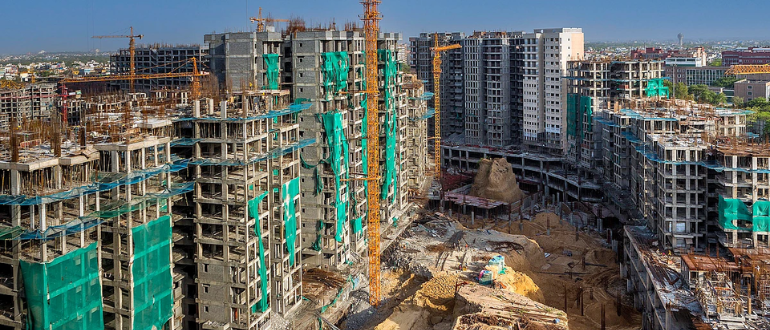
Housing sales in top 15 Tier II cities have declined by around 10 percent, even as premium homes continue to gain market share. The shift reflects changing buyer preferences, rising property prices and evolving demand patterns in India’s fast growing non metro real estate markets.
Housing sales in Tier II cities have slowed in recent quarters, with overall transactions falling by nearly 10 percent across the top 15 markets. Despite the dip in volume, premium homes priced at the higher end of the market are capturing a larger share of total sales. This divergence highlights a structural shift in India’s Tier II real estate market rather than a uniform slowdown.
The trend is visible across emerging hubs such as Lucknow, Coimbatore, Indore, Jaipur, Nagpur and Bhubaneswar, where residential activity had surged after the pandemic.
What Is Driving the 10 Percent Decline in Housing Sales
The decline in housing sales in Tier II cities can be linked to a mix of affordability concerns and higher borrowing costs. Over the past two years, property prices have steadily increased due to rising input costs such as cement, steel and labor. At the same time, home loan interest rates moved upward following monetary tightening cycles.
For middle income buyers, this combination has stretched affordability. Monthly EMI outflows have increased, forcing many first time buyers to postpone purchase decisions. In cities where price growth outpaced income growth, demand has softened more visibly.
Another factor is supply discipline. Developers in Tier II markets are launching projects cautiously, focusing on inventory absorption rather than aggressive expansion. This controlled supply environment can limit transaction numbers even if demand remains stable in select segments.
Premium Homes Gain Market Share in Tier II Real Estate
While overall sales volumes have dipped, premium homes in Tier II cities are gaining market share. Premium typically refers to larger units, gated communities and properties with enhanced amenities such as clubhouses, security systems and landscaped spaces.
The rise in premium housing demand reflects the changing profile of buyers. Many Tier II cities have seen growth in professionals working in IT services, education, healthcare and small scale manufacturing. Higher disposable incomes and hybrid work models have encouraged buyers to seek spacious homes.
Non resident Indians and investors are also contributing to premium demand. With improved infrastructure and better connectivity, Tier II markets are increasingly seen as viable long term investment destinations.
Affordability Challenges for Mid Segment Buyers
The most pressure is visible in the mid income and affordable housing segment. Affordable housing in Tier II cities was a major driver of sales growth between 2018 and 2022. However, land acquisition costs and compliance expenses have made it harder for developers to maintain low price points.
When property prices rise even by 5 to 8 percent, the impact on total ticket size becomes significant. For a family earning a moderate income, the down payment requirement and higher EMI can become barriers.
Government incentives and subsidies under housing schemes have helped in the past, but eligibility and documentation requirements sometimes limit their reach. As a result, mid segment buyers are adopting a wait and watch approach.
Impact on Developers and New Project Launches
Developers operating in Tier II cities are adjusting their strategies. Instead of focusing on high volume affordable projects, many are shifting toward premium and upper mid segment offerings where margins are relatively better.
This shift partly explains why premium homes are gaining market share even when overall sales dip. If new launches are skewed toward higher price brackets, the proportion of premium transactions naturally rises.
At the same time, inventory levels in certain cities remain manageable. Unlike earlier real estate cycles marked by oversupply, many Tier II markets have seen more measured expansion. This reduces the risk of a sharp price correction but also limits rapid growth in transaction volumes.
Long Term Outlook for Tier II Housing Market
The 10 percent dip in housing sales should be viewed in context. Tier II cities remain critical to India’s urban growth story. Improved highways, airport expansion and digital infrastructure have strengthened their appeal.
Demand fundamentals such as population growth, urban migration and rising household formation remain intact. However, affordability will determine the pace of recovery. If home loan rates stabilize and income growth improves, sales could regain momentum.
Premium housing demand is likely to remain resilient as aspirational buyers prioritize lifestyle upgrades. The key question is whether affordable and mid segment housing can regain traction through policy support and cost rationalization.
Takeaways
Housing sales in top Tier II cities have declined by around 10 percent in recent quarters
Premium homes are gaining market share due to changing buyer preferences and higher income groups
Affordability pressures and higher home loan rates are impacting mid segment demand
Long term growth potential remains strong if financing conditions improve
FAQs
Q1. Why have housing sales in Tier II cities declined?
Rising property prices, higher home loan interest rates and affordability challenges have led many buyers to delay purchase decisions.
Q2. What defines a premium home in Tier II markets?
Premium homes usually include larger units, better amenities, gated communities and higher quality construction compared to standard housing.
Q3. Are property prices falling due to lower sales?
In many Tier II cities, prices have remained relatively stable because developers are controlling supply and focusing on premium segments.
Q4. Is this a long term slowdown in real estate?
The dip appears cyclical rather than structural. Demand fundamentals remain positive, but recovery depends on interest rates and income growth.











Leave a comment