

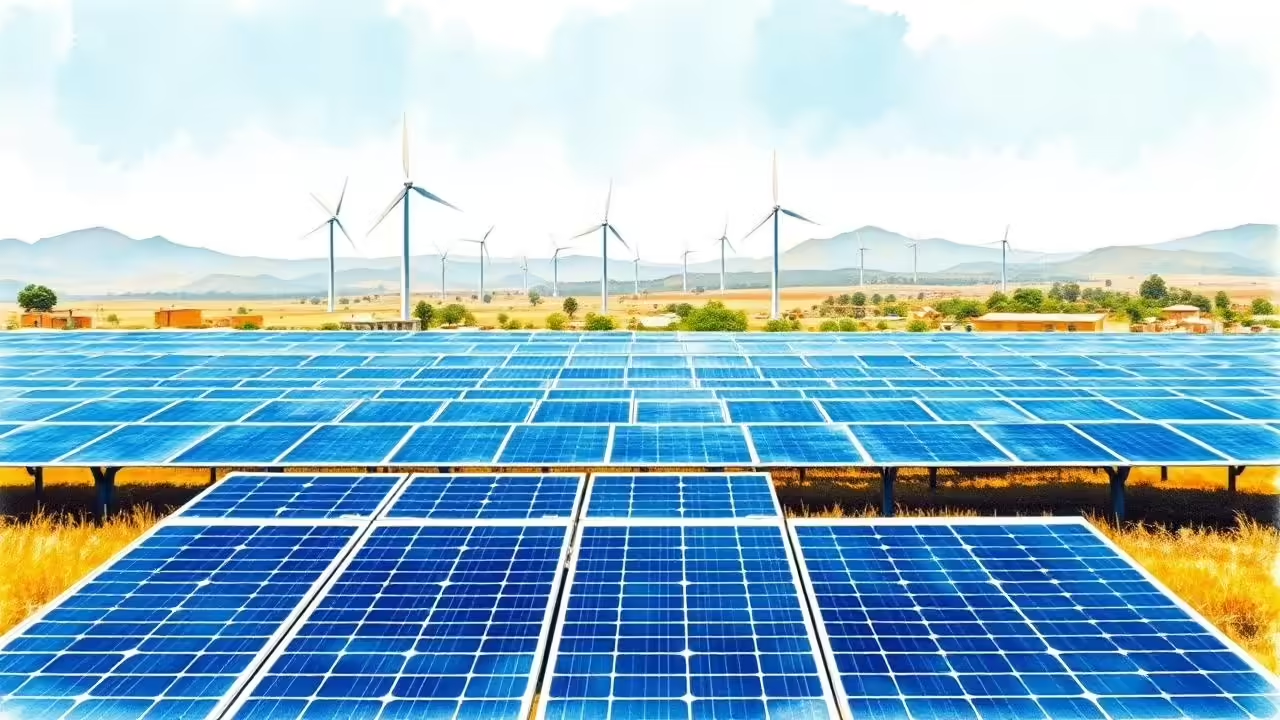
Energy transition in non metro India is gaining momentum as renewable projects expand into Tier 2 and Tier 3 towns. The main keyword appears naturally while setting a detailed and informational tone because the topic is evergreen and rooted in long term structural change rather than immediate news.
India’s push for clean energy is no longer centred only around major industrial hubs. Smaller cities are emerging as critical zones where solar parks, rooftop installations, bioenergy projects and distributed renewable systems are being deployed at scale. As Tier 2 and Tier 3 towns modernise and electricity demand rises, state governments and private developers are accelerating renewable adoption to reduce dependence on fossil fuels and improve grid stability.
Why smaller cities matter in India’s energy transition
Rising electricity demand and distributed consumption
Non metro India is experiencing rapid urbanisation, industrial expansion and a steady rise in household electrification. New residential colonies, MSME manufacturing clusters, warehouses and commercial buildings are increasing the load on local grids.
Renewables help address this growth without overwhelming existing power infrastructure. Distributed solar and hybrid systems allow smaller cities to generate part of their energy demand locally. This reduces transmission losses, cuts costs and supports more stable day to day consumption patterns.
States are encouraging this shift because it aligns with national climate goals while improving energy access for semi urban and rural households. Smaller cities also offer more available land for solar farms and easier logistics for project deployment compared to dense metropolitan areas.
Solar power leads the clean energy expansion
Utility scale parks and rooftop adoption in Tier 2 cities
Solar power has become the backbone of renewable adoption in emerging cities. State renewable agencies are allocating large tracts for utility scale parks near towns such as Kadapa, Anantapur, Bikaner, Rewa, Dholera, Satara, Solapur and Jhansi. These projects supply significant power to state grids at competitive tariffs.
Rooftop solar is growing rapidly in cities like Coimbatore, Jaipur, Nagpur, Nashik, Surat, Ludhiana and Bhubaneswar. Residential societies are installing grid connected systems to offset electricity costs, while MSMEs use rooftop plants to stabilise power supply and reduce diesel generator dependence.
Government incentives, net metering policies and lower equipment prices are accelerating this trend. Solar pump programs in agricultural belts near secondary cities further strengthen the distributed energy ecosystem.
Wind and hybrid projects expand in semi urban belts
Complementary generation and better capacity utilisation
Wind power has traditionally been strong in states like Tamil Nadu, Karnataka, Gujarat and Maharashtra. As newer hybrid policies take shape, developers are combining wind and solar in areas near emerging Tier 2 hubs. This improves capacity utilisation by balancing daytime solar output with nighttime wind generation.
Towns located near wind corridors such as Tirunelveli, Tuticorin, Chitradurga, Bhuj and Osmanabad are seeing investment in hybrid clusters. These systems deliver more predictable energy, reduce intermittency and help state utilities manage peak loads more efficiently.
Bioenergy and waste to power systems gain relevance
Localised energy solutions for growing towns
Secondary cities generate significant organic waste from markets, food processing units and agricultural supply chains. This creates strong potential for bioenergy plants that convert waste into electricity, compressed biogas or industrial grade fuel.
Cities like Indore, Pune, Kanpur, Trichy and Jabalpur have begun scaling waste to energy and bio CNG systems that support municipal operations and transport fleets. These models reduce landfill pressure and provide cost effective fuel alternatives, making them increasingly relevant for smaller cities that struggle with solid waste management.
Biomass based power plants near agricultural belts also supply stable energy to regional industries during peak demand periods.
How state governments are enabling renewable adoption
Policy incentives, industrial clusters and grid upgrades
States are upgrading local grids, creating open access frameworks and modifying tariffs to encourage renewable integration. Several governments offer subsidies for rooftop systems, viability gap funding for utility scale plants and concessional land rates for developers.
Industrial clusters in Tier 2 towns are being encouraged to adopt captive solar and group captive models to reduce energy expenses. Distribution companies are strengthening feeder lines, introducing smart metering and enabling easier approvals for renewable interconnections.
These interventions are designed to support both reliability and affordability as smaller cities modernise and expand.
Long term impact on energy security and local economies
Lower costs, cleaner grids and resilient power supply
As renewables take root in secondary cities, they strengthen overall energy security. Local generation reduces dependence on long distance coal transport, lowers emissions and decreases long term electricity costs for households and businesses.
Renewable clusters also create new jobs in installation, maintenance, manufacturing, logistics and engineering. Training programs for solar technicians, wind turbine operators and energy auditors are expanding opportunities for skilled youth in smaller towns.
Over the next decade, Tier 2 and Tier 3 cities are likely to play a decisive role in shaping India’s transition to a cleaner and more decentralised power system.
Takeaways
Secondary cities are becoming essential hubs for renewable energy expansion as demand rises.
Solar power, both rooftop and utility scale, is driving the fastest adoption.
Hybrid wind solar and bioenergy projects are strengthening local energy resilience.
State policies and grid upgrades are enabling faster renewable integration in smaller towns.
FAQs
Why are renewable projects expanding rapidly in Tier 2 and Tier 3 cities?
Because these cities offer available land, rising demand, lower installation barriers and strong policy support for distributed energy systems.
Which renewable sources are most common in these regions?
Solar leads adoption, followed by hybrid wind solar projects, bioenergy systems and waste to power facilities.
Do MSMEs benefit from renewable adoption in smaller cities?
Yes. Rooftop solar and captive plants help MSMEs reduce operating costs, stabilise power supply and avoid diesel based backup systems.
How will this shift affect long term energy security?
It will decentralise power generation, reduce fossil fuel dependence and strengthen grid stability across India’s fast growing non metro regions.










Leave a comment