

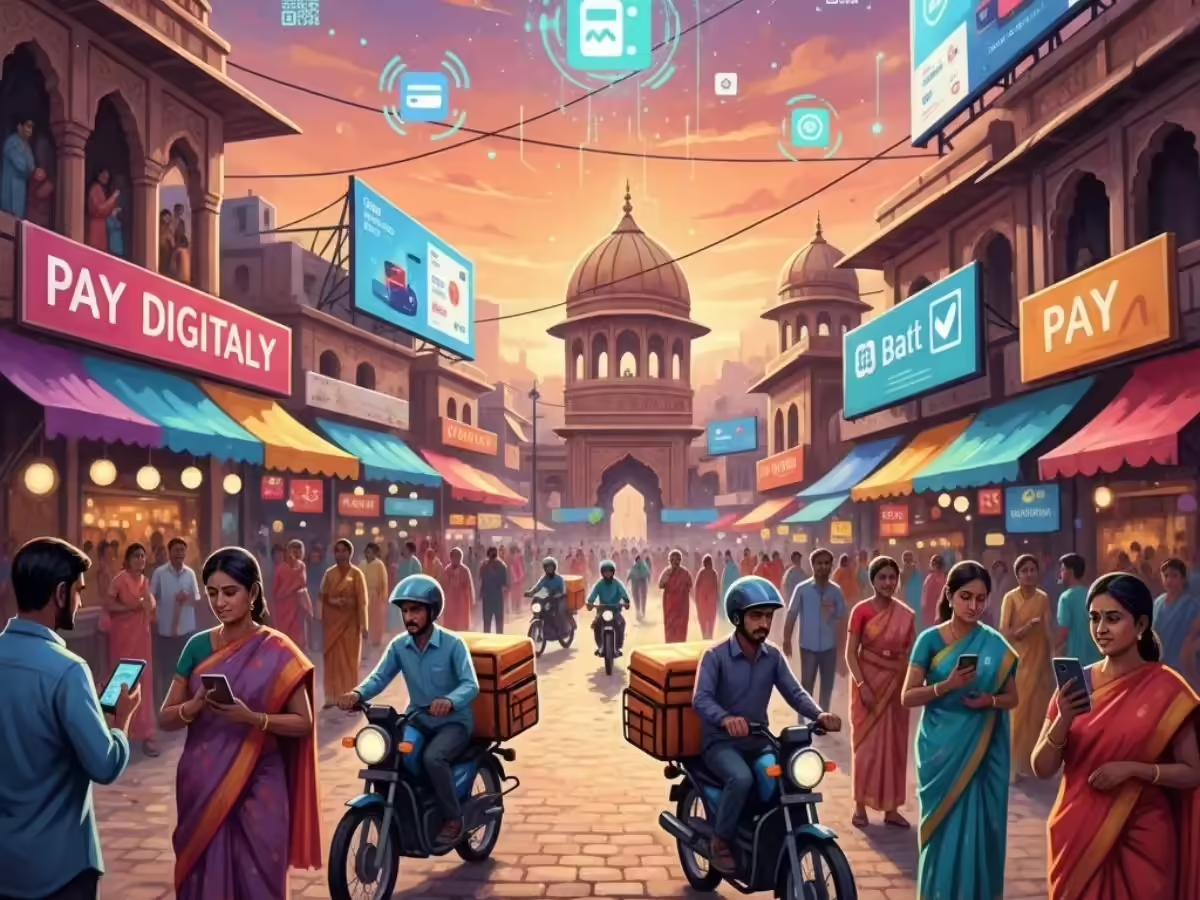
India’s digital network expansion is rapidly reaching small cities and rural regions, reshaping connectivity, governance, and economic opportunities. Government programs and private telecom investment are bringing high speed internet and digital services to communities that previously had limited access to modern infrastructure.
India’s digital network expansion in small cities and rural regions has become a major part of the country’s infrastructure development strategy. Over the past decade, initiatives aimed at improving broadband connectivity, expanding mobile networks, and strengthening digital services have begun transforming how people in smaller towns access information, education, and financial services. As digital infrastructure spreads beyond metropolitan areas, it is reshaping economic activity, governance, and everyday life across large parts of the country.
BharatNet and Rural Broadband Connectivity Expansion
One of the most significant drivers of India’s digital network expansion is the BharatNet project. The government launched BharatNet to provide broadband connectivity to more than 250,000 gram panchayats across the country through optical fiber networks.
The project aims to create a high speed internet backbone connecting villages to national digital infrastructure. Once connected, local institutions such as schools, healthcare centers, and government offices gain access to reliable internet services.
BharatNet has already expanded connectivity to many rural districts and smaller towns. Internet service providers can use this fiber infrastructure to deliver broadband services to households and businesses in surrounding areas.
This initiative is particularly important for regions where private telecom companies previously found it difficult to invest due to lower population density and limited commercial returns.
Rise of 4G and 5G Networks in Tier-2 and Tier-3 Cities
The rapid expansion of mobile networks has also played a critical role in connecting small cities to the digital economy. Telecom operators across India have expanded 4G coverage and begun rolling out 5G networks in several Tier-2 and Tier-3 cities.
Affordable smartphones and lower data costs have made mobile internet widely accessible. According to telecom industry data, India has one of the highest rates of mobile data consumption globally.
Cities such as Indore, Nagpur, Jaipur, Lucknow, and Coimbatore have seen significant growth in mobile internet usage. Residents use digital services for communication, online payments, education platforms, and entertainment streaming.
The rollout of 5G technology is expected to further improve connectivity by enabling faster data speeds and supporting emerging technologies such as smart infrastructure and digital healthcare systems.
Digital Services and E-Governance in Rural India
Improved internet connectivity has enabled the growth of digital governance services in rural regions. Government platforms now allow citizens to access services such as identity verification, digital payments, land records, and welfare program applications online.
Digital initiatives such as the Unified Payments Interface have significantly expanded financial inclusion in smaller towns. Many local businesses now accept digital payments, reducing dependence on cash transactions.
Rural entrepreneurs are also benefiting from digital marketplaces and e commerce platforms that allow them to sell products beyond their immediate geographic area.
Village level entrepreneurs often operate common service centers that help residents access online government services. These centers have become essential links between digital infrastructure and local communities.
Impact on Education, Healthcare, and Local Economies
Digital connectivity is transforming essential services in rural regions. Online education platforms have become accessible to students in smaller towns who previously had limited access to quality learning resources.
Schools and colleges are increasingly using digital tools for remote learning, exam preparation, and skill development courses. This has created new opportunities for students to access educational content from institutions across the country.
Healthcare services are also benefiting from improved connectivity. Telemedicine platforms allow doctors in urban hospitals to consult patients in remote areas through digital communication tools.
Local economies are experiencing new forms of digital entrepreneurship as well. Small businesses use social media platforms and e commerce websites to reach customers across different regions.
These changes are gradually reducing the economic gap between metropolitan cities and smaller urban centers.
Challenges in Expanding Digital Infrastructure
Despite significant progress, challenges remain in expanding digital networks across rural India. Geographic barriers, infrastructure costs, and maintenance issues can slow the rollout of connectivity projects.
Some regions still face inconsistent internet speeds or limited network coverage. Power supply interruptions in rural areas can also affect digital services.
Digital literacy is another important challenge. Many people in rural communities require training to effectively use online platforms, financial technology, and digital government services.
Government agencies and non profit organizations have started programs aimed at improving digital literacy among rural populations. Training initiatives focus on teaching basic smartphone usage, online safety practices, and digital financial tools.
Addressing these challenges is essential to ensure that the benefits of digital infrastructure reach all sections of society.
Future of Digital Connectivity in Rural and Small City India
India’s digital network expansion is expected to accelerate further in the coming years. Continued investment in fiber networks, mobile technology, and satellite connectivity could significantly improve internet access across remote areas.
Emerging technologies such as artificial intelligence, smart agriculture systems, and digital healthcare platforms may increasingly rely on reliable rural connectivity.
Policy makers also view digital infrastructure as a key component of economic development. By improving access to information, markets, and services, connectivity can create new opportunities for entrepreneurship and employment.
As more small cities and villages become digitally connected, the transformation of India’s digital economy is likely to extend far beyond major metropolitan areas.
Takeaways
• India’s digital network expansion is bringing broadband and mobile connectivity to small cities and rural regions.
• Government initiatives such as BharatNet aim to connect thousands of gram panchayats through fiber networks.
• Improved internet access is enabling digital services in education, healthcare, and financial inclusion.
• Challenges such as infrastructure costs and digital literacy still need to be addressed for wider adoption.
FAQs
What is BharatNet in India?
BharatNet is a government initiative designed to provide high speed broadband connectivity to over 250,000 gram panchayats through optical fiber networks.
How does digital connectivity benefit rural regions?
Improved internet access allows rural residents to use online education platforms, digital payment systems, telemedicine services, and government portals.
Are 5G networks reaching smaller cities in India?
Yes, telecom operators have begun expanding 5G networks to several Tier-2 and Tier-3 cities as part of India’s broader digital infrastructure rollout.
What challenges exist in rural digital expansion?
Key challenges include infrastructure costs, inconsistent network coverage, power supply issues, and the need for greater digital literacy.









Leave a comment