

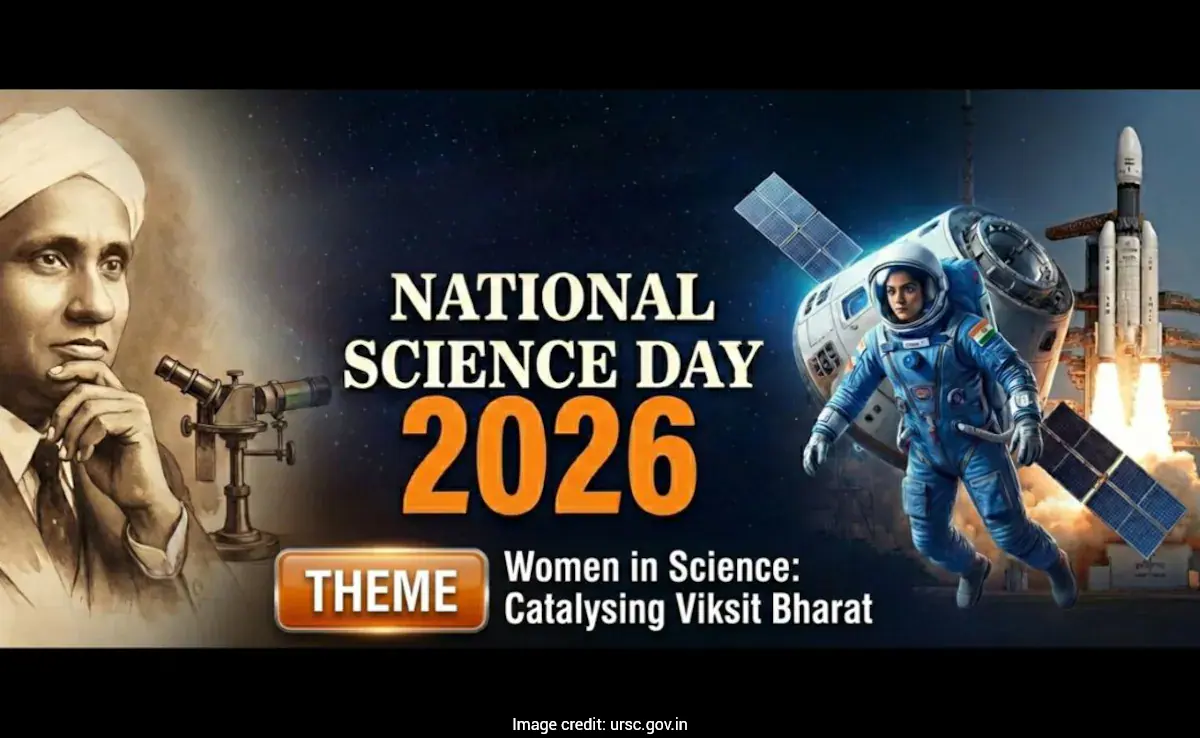
National Science Day 2026 is being observed on February 28 across India, with schools in Tier-2 cities organizing exhibitions, innovation fairs and community outreach events. The day commemorates the discovery of the Raman Effect and promotes scientific temper among students and local communities.
National Science Day 2026 marks the anniversary of physicist C V Raman’s discovery of the Raman Effect in 1928, a breakthrough that earned him the Nobel Prize in Physics in 1930. Every year on February 28, schools, colleges and research institutions host activities to encourage scientific thinking. In Tier-2 cities such as Indore, Nagpur, Lucknow, Coimbatore and Jaipur, the focus has increasingly shifted toward hands on learning, student led innovation and wider community participation. This is a time sensitive annual observance, and the tone across campuses is celebratory but purposeful.
Science Exhibitions and Local Innovation Projects
One of the most visible aspects of National Science Day 2026 in Tier-2 cities is the organization of science exhibitions. Schools are showcasing working models on renewable energy, robotics, water conservation and low cost agricultural tools. Students are building prototypes using locally available materials, reflecting both creativity and practicality.
In cities with strong agricultural linkages, many projects revolve around soil health testing, drip irrigation models and weather monitoring systems. These topics resonate with local communities where farming remains a primary occupation. By connecting classroom science to everyday challenges, schools are making the subject more relevant.
Teachers report higher participation when projects address local issues such as waste management, traffic congestion or air quality. Judges from nearby engineering colleges or local industries are often invited to evaluate entries, creating bridges between school education and higher technical institutions.
Community Engagement and Scientific Temper
A notable trend in National Science Day 2026 celebrations is increased community engagement. Schools in Tier-2 cities are inviting parents, local officials and entrepreneurs to attend science fairs and panel discussions. Some institutions are organizing public lectures in collaboration with district science centers.
This outreach aligns with the broader objective of promoting scientific temper, a concept emphasized in India’s constitutional values. By opening exhibitions to the public, schools help demystify science and encourage families to view it as a practical tool rather than an abstract subject.
In several districts, local municipal bodies are partnering with schools to highlight initiatives such as waste segregation, solar rooftop adoption and rainwater harvesting. Students present their findings and recommendations, fostering civic awareness alongside academic learning.
Role of Atal Tinkering Labs and STEM Programs
Tier-2 cities have seen expansion of Atal Tinkering Labs under the Atal Innovation Mission. Many schools celebrating National Science Day 2026 are leveraging these labs to demonstrate robotics kits, 3D printing projects and coding applications.
These labs provide structured exposure to STEM education, allowing students to experiment beyond textbooks. During Science Day events, students often display automated irrigation systems, basic drones, and sensor based safety devices. Such demonstrations reflect growing access to technology even outside metro cities.
In addition, state education boards and private schools are hosting quiz competitions, hackathons and poster making contests focused on contemporary themes such as artificial intelligence, climate change and space exploration. These activities help students connect national scientific achievements with global developments.
Collaboration with Local Colleges and Industry
Another emerging pattern in Tier-2 celebrations is collaboration between schools and local colleges. Engineering and medical colleges often send faculty members to deliver talks on research careers, laboratory work and innovation pathways.
In industrial hubs like Coimbatore or Indore, small manufacturing units and startups sometimes sponsor awards for the best student projects. This not only incentivizes participation but also exposes students to potential career avenues within their own cities.
National Science Day 2026 is thus becoming a platform for ecosystem building. Instead of limiting celebrations to cultural programs, schools are using the day to highlight practical applications of science in manufacturing, healthcare and agriculture.
Digital Platforms and Hybrid Events
Post pandemic, many schools continue to integrate digital elements into Science Day celebrations. Live streaming of exhibitions, online quizzes and virtual guest lectures are common in Tier-2 cities where internet access has improved significantly.
This hybrid format enables alumni and experts from other cities to participate remotely. It also allows schools to document projects and share them widely, increasing visibility for student innovation.
District administrations in some regions are organizing inter school competitions at the city level, culminating in centralized exhibitions. This encourages healthy competition and raises overall standards.
Long Term Impact on Career Aspirations
National Science Day 2026 is not merely symbolic. Exposure to experiments, models and interactions with scientists can influence career choices. In Tier-2 cities, where access to advanced research institutions may be limited, such events serve as critical touchpoints.
Students who engage in project based learning often develop problem solving skills and curiosity. Over time, this can translate into higher enrollment in engineering, medical and research programs. Schools that consistently invest in science infrastructure tend to see improved academic outcomes.
Parents attending these events gain awareness of emerging fields such as biotechnology, data science and renewable energy, which can shape educational planning at the household level.
Takeaways
National Science Day 2026 on February 28 commemorates the discovery of the Raman Effect and promotes scientific temper
Tier-2 city schools are emphasizing practical projects linked to local challenges
Atal Tinkering Labs and STEM programs are expanding hands on learning opportunities
Community participation is strengthening the connection between education and civic development
FAQs
Why is National Science Day celebrated on February 28?
It marks the day in 1928 when C V Raman announced his discovery of the Raman Effect, a milestone in Indian science.
What activities are common in Tier-2 schools on this day?
Science exhibitions, model competitions, quizzes, public lectures and demonstrations from STEM labs are widely organized.
How does National Science Day benefit students in smaller cities?
It provides exposure to practical science, encourages innovation and connects students with local colleges and industry experts.
Are government programs supporting Science Day activities?
Yes, initiatives like Atal Tinkering Labs and district science centers often support or collaborate with schools during celebrations.











Leave a comment