

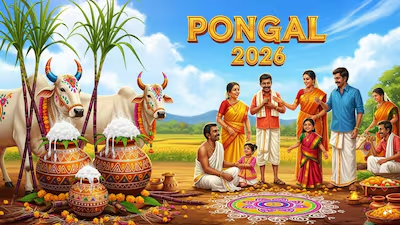
Pongal 2026 celebrations across India highlight how this harvest festival continues to evolve while staying rooted in tradition. From temple rituals to youth-led fashion trends and digital participation, Pongal this year reflects a wider cultural shift that blends heritage with modern expression across states.
Pongal 2026 is time sensitive but culturally recurring, so the tone here balances current reporting with contextual explanation.
Pongal Traditions Remain Central to the Festival
Pongal celebrations traditionally span four days and remain deeply tied to agrarian life. Bhogi focuses on discarding the old, Thai Pongal celebrates the harvest, Mattu Pongal honours cattle, and Kaanum Pongal is about family gatherings. In 2026, households across Tamil Nadu and Tamil-speaking communities elsewhere followed these rituals with strong participation.
Homes were cleaned, kolams were drawn early morning, and clay pots were placed outdoors to cook the symbolic Pongal dish. Sugarcane, turmeric plants, and fresh produce remained essential elements. Temples saw steady footfall during early hours, while village-level celebrations continued to revolve around cattle decoration and community feasts. These practices remain consistent, showing that the cultural core of Pongal has not diluted despite urbanisation.
Pongal Celebrations Across States Beyond Tamil Nadu
While Tamil Nadu remains the epicentre, Pongal celebrations in 2026 were visibly present across Karnataka, Andhra Pradesh, Telangana, Kerala, and urban centres outside the south. Migrant communities organised society-level events, workplace celebrations, and temple gatherings.
In cities like Bengaluru, Hyderabad, Pune, and parts of North India, Pongal was observed alongside Makar Sankranti. Cultural associations hosted Pongal pot ceremonies, folk performances, and traditional food counters. This cross-state celebration reflects how regional festivals now travel with communities rather than remain geographically fixed. The festival has become both a cultural marker and a social networking event for people living away from their native towns.
Pongal Fashion Trends Blend Tradition With Comfort
Pongal fashion in 2026 leaned heavily toward handloom textiles, breathable cottons, and earthy colour palettes. Traditional attire such as veshtis, sarees, pavadai sattai, and angavastrams remained dominant during morning rituals. However, styling choices showed clear modern influence.
Youth opted for minimal jewellery, sustainable fabrics, and mix-and-match looks such as cotton sarees with contemporary blouses or kurtas paired with veshtis. Men increasingly chose simple cotton shirts over heavy silk tops, reflecting both climate awareness and comfort-driven fashion. Social media amplified these looks, turning Pongal attire into a style statement rather than just ceremonial wear.
Youth Participation Redefines Pongal Celebrations
Youth participation during Pongal 2026 was more visible than ever. College groups, housing societies, and workplace teams organised Pongal-themed events that combined tradition with entertainment. Rangoli competitions, folk dance reels, traditional cooking challenges, and cultural quizzes became popular.
Young people also took ownership of rituals by learning their significance rather than treating them as symbolic gestures. Many participated in community cooking, cattle care events, and rural outreach programs during the festival. This shift shows a growing interest among younger generations to engage with tradition on their own terms, without rejecting its roots.
Digital and Social Media Influence on Pongal 2026
Social media played a major role in shaping Pongal celebrations this year. Platforms were filled with festival visuals, traditional recipes, outfit showcases, and short educational videos explaining rituals. Hashtags linked local celebrations to a global Tamil audience.
Influencers and creators focused on authenticity rather than glamour, highlighting village traditions, family rituals, and sustainable practices. This digital storytelling helped younger audiences connect with Pongal beyond surface-level celebration. The festival also became an opportunity for cultural documentation, preserving rituals in a format accessible to future generations.
Economic and Cultural Impact of Pongal Festivities
Pongal 2026 had a noticeable economic impact at the local level. Flower sellers, pot makers, sugarcane vendors, textile weavers, and sweet makers saw increased demand. Handloom markets and street vendors benefited more than large retail chains, reinforcing Pongal’s grassroots economic role.
Culturally, the festival reinforced community bonding. Public Pongal events organised by local bodies and cultural groups strengthened social ties, especially in urban settings where such interactions are otherwise limited. Pongal continues to function as both a religious observance and a cultural reset at the start of the year.
How Pongal Is Evolving Without Losing Identity
The 2026 celebrations show that Pongal is not becoming diluted. Instead, it is adapting. Traditions remain intact, but expression methods have expanded. Youth participation, fashion evolution, and digital platforms have added layers to the festival without erasing its essence.
This balance between continuity and change is what keeps Pongal relevant across generations and geographies.
Takeaways
– Pongal 2026 retained strong traditional rituals across states
– Fashion trends leaned toward handloom, comfort, and sustainability
– Youth participation increased through community and digital platforms
– The festival continues to support local economies and cultural bonding
FAQs
Why is Pongal celebrated over four days?
Each day represents a different aspect of harvest, renewal, gratitude, and social bonding tied to agrarian life.
Is Pongal only celebrated in Tamil Nadu?
No, Pongal is celebrated across multiple states and by Tamil communities nationwide and globally.
How are young people participating differently in Pongal now?
Youth are organising events, learning ritual meanings, and sharing cultural content digitally while maintaining tradition.
Has social media changed Pongal celebrations?
Yes, it has expanded reach and awareness while encouraging documentation and cultural pride.








Leave a comment