

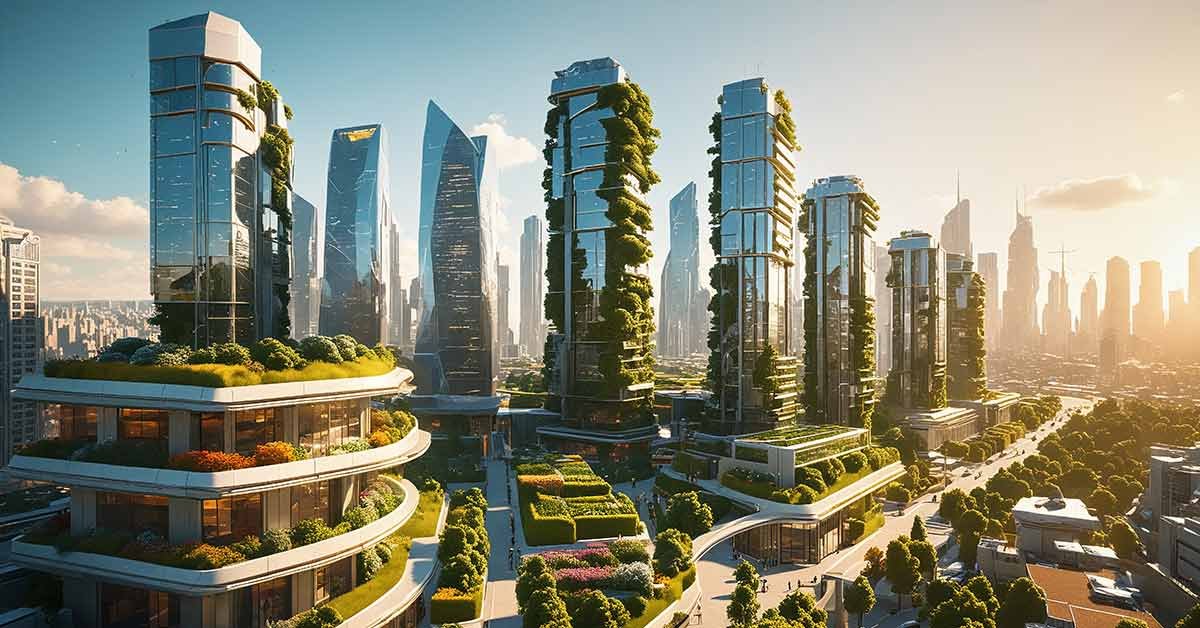
Indore, Jaipur, Lucknow and Surat are becoming strategic growth centres where real estate development aligns with startup investment. New co-working hubs, innovation districts and mixed-use commercial clusters are reshaping how young companies scale outside traditional metro corridors.
Real estate meets startup capital in India’s Tier 2 growth cities as founders, investors and developers respond to changing market dynamics. Indore, Jaipur, Lucknow and Surat are being flagged for sustained expansion due to improving civic infrastructure, rising business formation rates and lower operational costs compared to metros. This is not a short-term trend. It reflects a structural realignment driven by remote collaboration norms, stronger digital connectivity, state-backed innovation missions and local investor networks. These cities are positioning themselves as mid-scale startup playgrounds where commercial real estate development and entrepreneurial ecosystems evolve in tandem.
Subhead: Why These Cities Are Attracting Startup Formation
Founders increasingly want proximity to real market users rather than operating from high-cost metros. Indore provides access to central India’s retail and logistics corridors, Jaipur connects manufacturing and tourism-linked service clusters, Lucknow acts as an administrative and policy hub for startups working with government contracts and Surat serves as a commercial powerhouse with strong MSME networks. These cities are large enough to sustain diverse talent ecosystems but small enough to maintain operational affordability. That balance enables longer financial runway and more controlled team scaling.
Subhead: Co-Working And Innovation Zones Becoming Growth Anchors
Secondary keywords: flexible workspaces, shared infrastructure
Developers are shifting from static commercial towers to modular and flexible workspace models. Co-working operators are creating hybrid facilities that combine private offices, collaboration rooms, event spaces and access to local mentors. Indore’s Vijay Nagar corridor now hosts several tech-enabled shared work campuses. Jaipur’s Lal Kothi and Mansarovar zones have seen integrated co-working parks linked to corporate training centers. Surat’s textile and diamond districts are adding startup lounges inside industrial estates, simplifying industry access. Lucknow’s Gomti Nagar extension is emerging as a mixed-use innovation cluster with incubators, early-stage accelerators and government-supported training labs. These zones reduce administrative overhead and allow startups to scale infrastructure progressively rather than make large upfront commitments.
Subhead: Real Estate Pricing Makes Strategic Scaling Feasible
Secondary keywords: cost structure, operational runway
Commercial rental rates in Tier 2 cities remain significantly lower than those in Bengaluru, Mumbai or Gurugram. Lower capital expenditure allows startups to allocate more resources toward product development, hiring and go-to-market channels. Lower residential rent also eases workforce recruitment as employees can maintain reasonable living standards. For investors, this cost efficiency lowers burn rates and improves sustainability. Startups that begin operations in these markets often demonstrate stronger unit economics, which is increasingly important as venture capital shifts from growth-at-any-cost to efficiency-based evaluation.
Subhead: Government Policy Support And Local Business Networks
State governments in Madhya Pradesh, Rajasthan, Uttar Pradesh and Gujarat have introduced incentive policies for early-stage companies, including subsidized workspace, patent reimbursement schemes, tax support and procurement opportunities. Local chambers of commerce and industry associations play an important role in enabling introductions and reducing friction in vendor or client acquisition. In cities like Indore and Surat, MSMEs actively partner with startups on pilot deployments in supply chain management, automation and finance workflows. This access to immediate real-world users accelerates product refinement and credibility.
Subhead: Talent Retention Through Lifestyle And Stability
Secondary keywords: migration reversal, workforce density
One of the most notable shifts is talent retention. Young professionals who would earlier migrate to metros for work are now opting to stay in or return to their home cities. Better schools, reduced commute times and more community support contribute to higher quality of life. Startups benefit from stable, long-tenure workforces which reduce churn and preserve institutional memory. For founders, this stability allows long-term planning rather than quarter-to-quarter survival strategies.
Subhead: Challenges To Address For Sustained Scaling
While progress is visible, several gaps remain. Specialized deep tech and hardware startups still struggle with access to high-end testing facilities. Fundraising networks are expanding but remain less dense than in metros. Cultural acceptance of startup risk is improving but warrants further strengthening, particularly among local investors accustomed to asset-heavy business models. Co-working spaces need to evolve into structured innovation ecosystems with dedicated research partnerships, not just real estate leasing formats.
Subhead: What Comes Next
The next growth phase will likely involve sector-specific innovation districts. Jaipur may deepen design and crafts-tech clusters, Indore logistics and retail automation, Lucknow governance-tech and civic data solutions, and Surat industrial robotics and supply chain analytics. If real estate development, policy enablement and investor engagement continue in alignment, these cities can anchor India’s next wave of product-oriented growth.
Takeaways:
• Tier 2 cities offer a sustainable cost and talent advantage for early-stage startups.
• Co-working and innovation zones are becoming structural anchors of new business districts.
• Local industry networks accelerate pilot deployments and product-market fit.
• Continued success depends on expanding testing infrastructure and deepening funding pipelines.
FAQ:
Q1: Why are startups preferring Tier 2 cities now?
A1: Lower operating costs, better access to real customers, improved lifestyle stability and strong talent pipelines make these cities attractive for sustained building.
Q2: Are investors actively funding startups in non-metro cities?
A2: Yes. Investor networks are widening, with more seed and early-stage rounds originating from regional angel groups and state innovation funds.
Q3: What types of startups are emerging in these cities?
A3: Automation, fintech for MSMEs, logistics tech, design-led consumer brands, agritech and healthcare solutions are showing strong traction.
Q4: Will Tier 2 cities replace metro hubs?
A4: They will not replace them but complement them by adding distributed centers of innovation with practical product focus and improved cost efficiency.











Leave a comment