

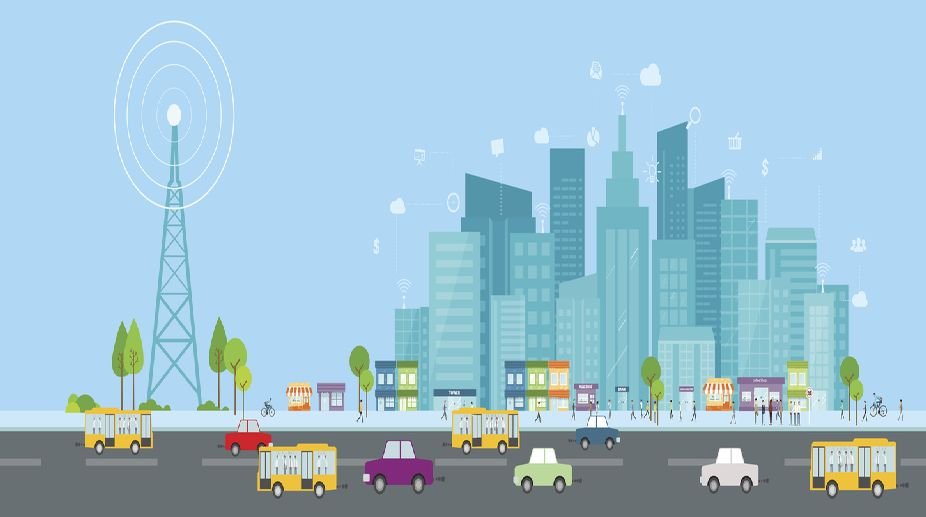
India’s Smart Cities Mission has transformed several emerging urban centers, including Nagpur, Indore, and Surat. These cities are adopting technology driven governance, upgraded infrastructure, and improved public services to handle rapid urban growth and improve the quality of life.
The rise of Smart City projects in Nagpur, Indore, and Surat reflects a major shift in how India is planning its urban future. Instead of focusing only on large metropolitan regions, policymakers are investing in technology enabled infrastructure and efficient governance systems in Tier-2 cities. These initiatives are helping smaller urban centers manage population growth, improve civic services, and attract economic investment.
Smart Cities Mission and Urban Transformation
The Smart Cities Mission in India was launched by the Government of India in 2015 with the goal of improving urban infrastructure and governance across selected cities. The mission initially included 100 cities chosen through a competitive selection process.
Under this program, cities develop projects related to digital governance, sustainable transport, energy efficiency, and improved public spaces. Each city prepares a Smart City proposal that identifies local priorities and outlines technology based solutions.
Nagpur, Indore, and Surat emerged as important examples because of their strong implementation strategies and early progress in project execution. These cities focused on integrating digital technology with urban planning to address long standing challenges such as traffic congestion, waste management, and public safety.
Nagpur Smart City: Technology Driven Urban Management
The Nagpur Smart City development has gained attention for its integrated command and control system that monitors city services in real time. This system connects surveillance cameras, traffic signals, emergency services, and municipal operations through a central platform.
The city has also invested in smart traffic management systems designed to reduce congestion and improve road safety. Sensors and digital monitoring tools help authorities track traffic flow and respond quickly to incidents.
Another important initiative is the expansion of public transport infrastructure. Nagpur Metro has improved connectivity within the city while reducing dependence on private vehicles.
Smart street lighting, public Wi Fi zones, and digitized municipal services are additional components of the city’s urban modernization efforts. These projects aim to create a more efficient and responsive urban environment.
Indore’s Smart City Model and Urban Innovation
The Indore Smart City projects are widely recognized for combining technology with strong civic participation. Indore has consistently ranked among the cleanest cities in India under the Swachh Survekshan survey, partly due to effective waste management systems supported by smart monitoring tools.
The city uses digital platforms to track garbage collection vehicles and monitor sanitation performance. Residents can also report civic issues through mobile applications that connect directly to municipal departments.
Indore has also developed modern public spaces and pedestrian friendly zones to improve urban livability. Projects such as smart roads, cycle tracks, and improved public transport systems aim to create sustainable mobility options.
These initiatives demonstrate how smaller cities can use technology to address everyday urban challenges while maintaining strong community engagement.
Surat Smart City and Digital Governance
The Surat Smart City initiative focuses heavily on digital governance and disaster management systems. Surat’s municipal administration has invested in data driven decision making to improve city services.
The city’s integrated command center allows authorities to monitor public safety, traffic, and environmental conditions through a network of sensors and cameras. During emergencies such as floods or health crises, this system helps coordinate rapid response efforts.
Surat has also developed advanced water management and waste treatment facilities to support its growing population. The city’s textile and diamond industries generate significant economic activity, making efficient infrastructure essential for continued growth.
Digital payment systems, online municipal services, and automated utility management have improved service delivery for residents and businesses.
Economic and Investment Opportunities in Smart Cities
The growth of Smart City infrastructure in Tier-2 cities is also attracting private investment. Improved connectivity, modern utilities, and efficient governance systems make cities like Nagpur, Indore, and Surat more attractive to businesses.
Technology companies, logistics firms, and manufacturing industries often prefer locations where infrastructure supports reliable operations. Smart City projects therefore contribute to regional economic development by encouraging new investments.
Startups and innovation centers are also emerging in these cities as digital infrastructure expands. Entrepreneurs benefit from improved internet connectivity, co working spaces, and supportive local ecosystems.
This combination of infrastructure and technology is helping smaller cities compete with traditional metropolitan business hubs.
Challenges and Future Outlook
Despite the progress of India Smart Cities Mission projects, several challenges remain. Implementing advanced technology systems requires continuous maintenance and skilled personnel. Municipal administrations must ensure that digital infrastructure remains reliable and accessible.
Urban planners also emphasize the need to balance technology with inclusive development. Smart City projects should benefit all residents, including those living in lower income neighborhoods.
Future phases of urban development may focus on climate resilience, renewable energy integration, and sustainable transport systems.
As India continues to urbanize, the experience of cities like Nagpur, Indore, and Surat provides valuable lessons for other emerging urban centers seeking to modernize their infrastructure and governance.
Takeaways
• The Smart Cities Mission aims to modernize urban infrastructure and governance in selected Indian cities.
• Nagpur, Indore, and Surat have implemented technology driven systems to improve public services.
• Smart City projects are attracting investment and strengthening economic growth in Tier-2 urban centers.
• Continued focus on inclusive development and sustainable infrastructure will shape the future of these initiatives.
FAQs
What is the Smart Cities Mission in India?
The Smart Cities Mission is a government initiative launched in 2015 to improve urban infrastructure, digital governance, and sustainability in selected cities.
Why are cities like Nagpur, Indore, and Surat important in the program?
These cities have implemented several successful Smart City projects including command centers, smart transport systems, and digital public services.
How do Smart City projects benefit residents?
They improve traffic management, waste collection, public safety, and access to municipal services through technology driven systems.
Do Smart City projects help economic growth?
Yes. Improved infrastructure and digital governance attract businesses, startups, and investments to emerging urban centers.











Leave a comment