

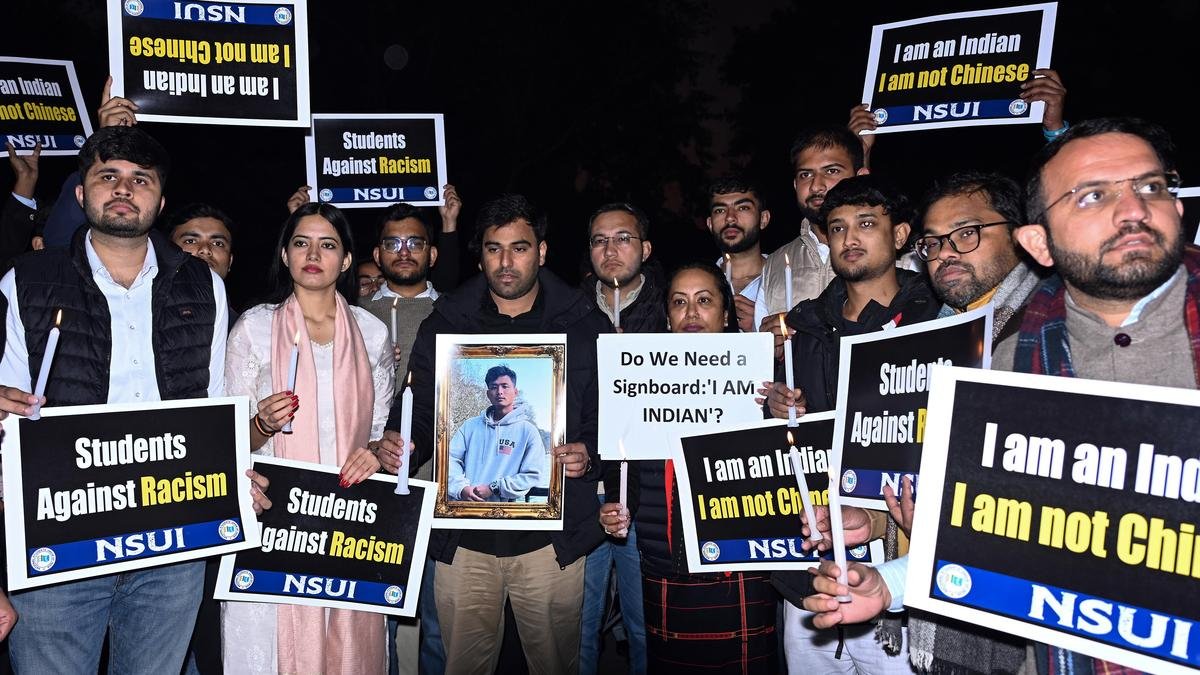
Student bodies in Dehradun have taken to the streets following recent daylight murders that triggered concerns over public safety. As Congress announces a march on February 16, the city is witnessing heightened political activity and demands for stronger law and order measures.
Student bodies protest in Dehradun after a series of daylight murders shocked residents and intensified concerns about law and order in the Uttarakhand capital. The incidents, which reportedly took place in busy public areas, have raised questions about urban safety, policing response time and crime prevention strategies. With Congress announcing a February 16 march, the issue has quickly moved from a local law enforcement matter to a politically charged development.
Public reaction has been swift, especially among university and college students.
Campus Mobilisation and Youth Response
Dehradun is home to several prominent educational institutions, attracting students from across Uttarakhand and neighboring states. Following the daylight murders, student unions organized protests demanding immediate arrests, enhanced police patrolling and stricter surveillance in high traffic zones.
Protest gatherings were held near campuses and key city intersections. Students expressed fear about commuting to classes, internships and evening activities. Many highlighted that crimes occurring in broad daylight undermine confidence in basic urban safety.
The protests remained largely peaceful but firm in tone. Placards calling for justice and safer streets reflected frustration over what students described as recurring crime incidents. Youth leaders have emphasized that this is not merely a political issue but a matter of personal security.
Political Response and Congress February 16 March
The announcement of a February 16 march by Congress has added a political dimension to the unfolding situation. The opposition party stated that it would organize a city level protest to demand accountability and stronger crime control measures from the state government.
Political leaders have framed the issue as a reflection of broader law and order challenges. The planned march is expected to draw party workers, student activists and local residents. Police authorities are likely to deploy additional forces to manage crowd movement and ensure the demonstration remains peaceful.
The development reflects a common pattern in Indian states where high profile crimes quickly become focal points for opposition mobilization. The timing and scale of the march will determine whether the issue sustains momentum beyond immediate protests.
Law and Order Concerns in Uttarakhand
Uttarakhand, like many rapidly urbanizing states, faces challenges balancing tourism growth, student migration and urban expansion with adequate policing infrastructure. Dehradun in particular has seen increased traffic density and commercial activity over the past decade.
Daylight murders are especially alarming because they suggest either boldness on the part of offenders or gaps in surveillance and deterrence. Police departments typically respond by increasing visible patrolling, setting up temporary checkpoints and accelerating investigation timelines.
Authorities have reportedly initiated investigations and intensified monitoring in sensitive areas. In such cases, swift arrest of suspects often plays a crucial role in calming public anxiety. Transparent communication from law enforcement also helps prevent misinformation and rumors.
Impact on Public Confidence and City Image
For a city known as an education and administrative hub, repeated crime incidents can affect public confidence. Parents sending children to study in Dehradun expect a secure environment. Any perception of rising crime can influence admissions, rentals and local business sentiment.
Small businesses located near educational institutions may see reduced footfall if students avoid certain areas. Ride share drivers and public transport operators also face scrutiny regarding safety during late hours.
At the same time, cities across India have experienced similar spikes in public outrage following violent incidents. The long term impact depends on how effectively authorities restore order and prevent recurrence.
Balancing Protest and Governance
Public protest is a legitimate democratic response to serious crime incidents. Student bodies protest not only to demand justice in specific cases but also to push for systemic reforms. However, sustained improvement in law and order requires coordinated policy action rather than episodic outrage.
Measures such as expanding CCTV networks, improving street lighting, deploying quick response teams and enhancing community policing can strengthen deterrence. In university towns, collaboration between campus security and local police can also improve real time information flow.
As the February 16 march approaches, the focus will remain on how state authorities address both the immediate investigation and the broader security concerns raised by citizens.
Takeaways
Daylight murders in Dehradun have triggered strong student protests and public concern
Congress has announced a February 16 march, adding political pressure on the state government
Law and order concerns center on urban safety, policing visibility and investigation speed
Long term confidence in the city depends on effective crime prevention and transparent action
FAQs
Q1. Why are students protesting in Dehradun?
Students are protesting following recent daylight murders that have raised serious concerns about public safety and policing effectiveness in the city.
Q2. What is the significance of the February 16 march?
The march announced by Congress signals political escalation of the issue and aims to demand stronger law and order measures from the government.
Q3. How do such incidents affect an education hub like Dehradun?
High profile crimes can impact public confidence, influence student admissions and affect local businesses linked to educational institutions.
Q4. What measures can improve urban safety in such cases?
Enhanced police patrolling, faster investigations, improved surveillance systems and stronger coordination between institutions and law enforcement can help strengthen safety.










Leave a comment