

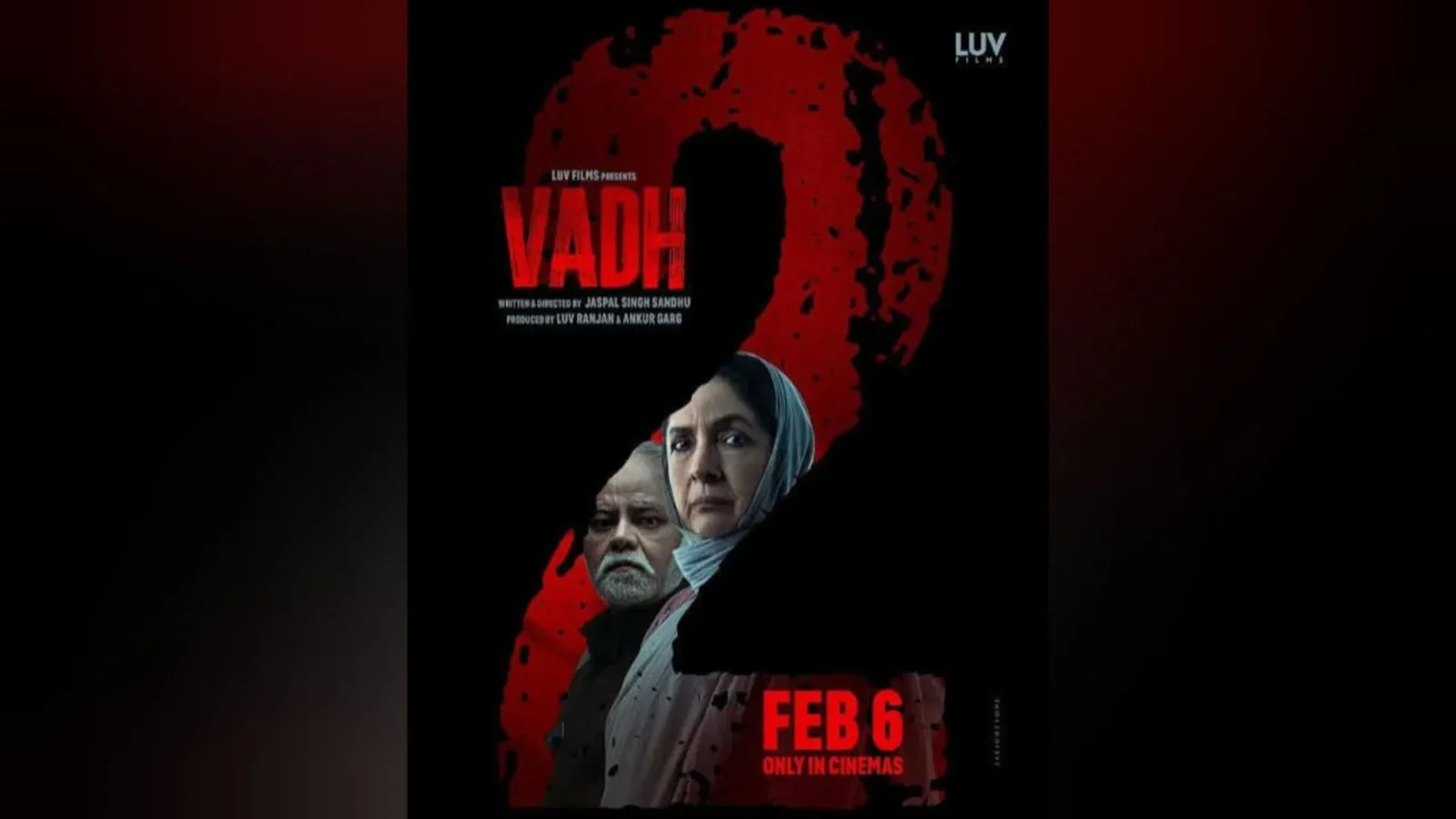
Anticipating Vadh 2 has become a talking point as Hindi cinema enters early 2026 with renewed interest in grounded crime narratives. The Sanjay Mishra and Neena Gupta starrer is being closely watched for what it represents beyond box office numbers and star-driven spectacle.
Anticipating Vadh 2 is not just about a sequel release but about how Hindi cinema is recalibrating its creative priorities. After years dominated by scale-heavy action films and franchise formulas, the return of a restrained crime thriller carries wider implications for storytelling, audience expectations and the positioning of senior actors in lead roles.
Why Vadh 2 Matters After the First Film’s Impact
The first Vadh stood out because it rejected excess. It focused on moral conflict, everyday desperation and psychological tension rather than stylised violence. That approach connected with audiences who were fatigued by loud narratives and predictable arcs.
Vadh 2 arrives at a moment when Hindi cinema is searching for balance between content-driven films and commercial viability. The sequel inherits expectations not of spectacle but of depth. Its relevance lies in whether it can expand the universe without diluting the realism that defined the original.
Sequels to grounded films face a unique challenge. They must justify continuation without turning subtlety into gimmick. Early interest suggests the industry is curious whether Vadh 2 can maintain narrative restraint while raising stakes organically.
Sanjay Mishra and Neena Gupta as Leading Anchors
Sanjay Mishra and Neena Gupta leading a crime thriller sequel in 2026 is itself a statement. Hindi cinema has historically sidelined older actors into supporting roles. Vadh disrupted that pattern by placing lived experience at the centre of its story.
Their performances resonated because they felt unmanufactured. Age was not concealed or romanticised. Instead, it shaped character motivations and ethical dilemmas. In Vadh 2, audiences expect deeper psychological layering rather than louder conflict.
This casting trend aligns with a broader industry shift where credibility is becoming a commercial asset. Films led by experienced actors are increasingly seen as reliable draws for mature urban and tier-2 audiences who value substance over hype.
Crime Thrillers and the Changing Hindi Cinema Audience
The renewed interest in crime thrillers like Vadh 2 reflects changing audience behaviour. Viewers now consume global content regularly and compare Hindi films with international storytelling standards. They expect coherence, tension and consequence.
Crime films that explore social realities rather than cinematic bravado are finding space again. Early 2026 releases indicate a move toward narratives rooted in middle-class anxiety, financial stress and moral ambiguity.
Vadh 2 fits this pattern. Its anticipated tone aligns with audiences who want stories that feel plausible. This shift is particularly visible in tier-2 cities where OTT exposure has sharpened taste without eroding theatrical interest in strong scripts.
What Vadh 2 Signals for Early 2026 Releases
Early 2026 Hindi cinema releases show a tentative move away from overdependence on tentpole films. Producers appear more willing to back mid-budget projects with strong writing and clear audience positioning.
Vadh 2 sits in this space. Its success or failure will be read as a signal. If it performs well, it could encourage more sequels built on theme and character rather than scale. If it struggles, studios may retreat to safer formulas.
The timing matters. Early-year releases often set creative tone for the months ahead. A grounded thriller succeeding at this stage would validate the argument that audiences are ready for quieter but sharper cinema.
OTT Influence Without OTT Dependence
While Vadh gained traction partly through digital discovery, Vadh 2 is positioned as a theatrical-first experience. This reflects a hybrid strategy emerging in Hindi cinema where films are made for theatres but designed to age well on streaming platforms.
OTT has trained audiences to value writing, pacing and performance. Films like Vadh 2 benefit from this conditioning without being restricted by episodic formats. The theatrical release becomes a quality filter rather than the sole revenue driver.
This approach reduces pressure on opening weekend spectacle and allows films to build reputation through word-of-mouth. For content-led cinema, this is a sustainable model.
Risks and Expectations Surrounding the Sequel
Anticipating Vadh 2 also involves acknowledging risks. Sequels often face criticism for rehashing themes. There is pressure to escalate conflict, which can undermine realism.
The creative challenge lies in progression. Characters must evolve, not repeat trauma. The story must justify continuation beyond commercial intent. If the film leans too heavily on shock value, it risks alienating the very audience that supported the original.
Industry observers are watching whether the sequel respects narrative logic over franchise ambition.
What It Means for Hindi Cinema’s Creative Confidence
At a broader level, Vadh 2 represents creative confidence. It suggests that Hindi cinema is willing to back stories driven by moral complexity rather than formula. This confidence is fragile but growing.
If audiences respond positively, it strengthens the case for diversified storytelling. If not, it reinforces the industry’s caution. Either way, the film becomes a reference point for future greenlighting decisions.
Takeaways
- Vadh 2 reflects a renewed appetite for grounded crime thrillers
- Senior actors in lead roles signal a shift in casting priorities
- Early 2026 releases are testing content-driven theatrical viability
- The sequel’s reception could influence future mid-budget films
FAQs
Why is Vadh 2 considered important for Hindi cinema?
It represents a move toward realistic crime storytelling and away from spectacle-heavy formulas.
What makes Sanjay Mishra and Neena Gupta central to this shift?
Their performances bring credibility and lived experience, resonating with mature audiences.
Is Vadh 2 aimed more at theatres or OTT?
It is positioned as theatrical-first while benefiting from OTT-driven audience sensibilities.
What will determine the sequel’s success?
Narrative depth, character progression and maintaining realism over forced escalation.











Leave a comment