

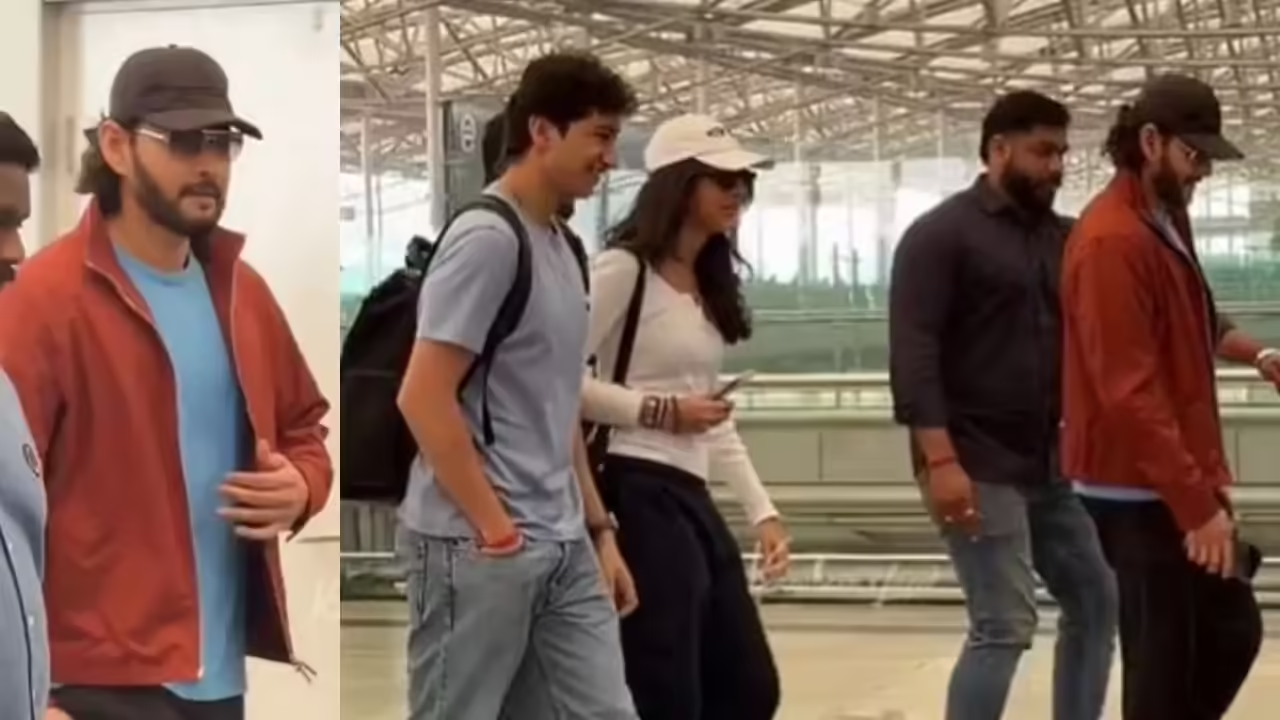
Viral video dynamics have become a defining force in how actor airport moments shape public engagement patterns in India. What once were incidental sightings are now high impact digital events that influence celebrity perception, media narratives, and audience behavior across platforms.
Viral video dynamics around actor airport appearances represent an evergreen media behavior trend rather than a time bound news cycle. The phenomenon reflects deeper shifts in attention economics, fan culture, and algorithm driven visibility, making a detailed and analytical approach appropriate.
Why Actor Airport Moments Go Viral So Easily
Actor airport moments combine three elements that algorithms reward: recognisable faces, unscripted environments, and emotional immediacy. Airports act as semi public spaces where celebrities appear accessible but still aspirational.
Unlike film promotions or interviews, airport videos feel spontaneous. A wave, a smile, irritation, or silence becomes content. Viewers interpret these micro behaviors as signals of personality, authenticity, or attitude.
The setting also matters. Airports symbolise movement, success, and exclusivity. This amplifies curiosity. Even a few seconds of footage can trigger speculation, fan reactions, and media pickup, pushing engagement beyond the original platform.
The Role of Short Form Video Algorithms
Short form video platforms are central to viral video dynamics. Algorithms prioritise high retention, rapid replays, and comment velocity. Actor airport clips perform well because they are instantly recognisable and require no context.
A short clip of an actor walking through an airport triggers instant reactions. Fans zoom in on expressions, outfits, and body language. Critics analyse perceived arrogance or warmth. This dual engagement from supporters and detractors boosts reach.
The loop effect also matters. Airport videos are often under ten seconds, encouraging repeat viewing. Each replay strengthens algorithmic signals, pushing the clip into wider discovery feeds.
How Paparazzi Content Has Changed
The rise of viral airport videos has transformed paparazzi behavior. Photographers no longer shoot for print or long form galleries. They optimise for vertical framing, clean backgrounds, and immediate upload.
Content is designed for virality, not documentation. A single reaction shot is more valuable than multiple angles. Even silence or refusal to engage can become the hook.
This shift has blurred the line between documentation and provocation. Repeated name calling, crowding, or strategic positioning are used to elicit a response that can anchor a viral clip.
Audience Psychology Behind Engagement Patterns
Public engagement with airport videos is driven by parasocial dynamics. Viewers feel invested in celebrities they follow daily on social platforms. An airport sighting feels like a real world crossover moment.
Engagement spikes when behavior aligns or conflicts with the celebrity’s curated image. A star known for humility gains praise for politeness. A star branded as reserved faces criticism for ignoring cameras.
Comment sections become arenas for moral judgment. Fans defend. Critics accuse. Neutral viewers amplify the debate. This layered interaction keeps the video circulating longer than neutral content would.
Gender and Power Dynamics in Viral Reactions
Viral video dynamics reveal clear asymmetries in how male and female actors are judged. Female actors face stricter scrutiny for expressions, tone, and body language. Neutral behavior is often framed as arrogance or coldness.
Male actors are more likely to receive benefit of doubt or humor based interpretations. This imbalance drives different engagement patterns even when behaviors are identical.
Understanding this bias is essential for interpreting comment sentiment and media framing around airport videos.
How Media Outlets Amplify Airport Virality
Digital news platforms often act as secondary amplifiers. A viral airport clip is quickly reframed into headlines, opinion pieces, or explainers.
The original video becomes a reference point for broader narratives about celebrity behavior, entitlement, or public responsibility. This extends the lifecycle of the clip beyond social platforms.
Importantly, media framing influences public interpretation. Neutral footage can be cast as controversy or praise depending on headline language and context added later.
Impact on Celebrity Brand Management
Actor airport moments now form an informal but influential layer of brand management. Publicists and managers monitor these clips closely because they shape sentiment in real time.
Some celebrities consciously engage by smiling, greeting fans, or maintaining consistent airport behavior. Others avoid engagement entirely to limit exposure.
Both strategies carry risk. Engagement can humanise but also create expectations. Disengagement can protect privacy but invite criticism. There is no neutral position in viral ecosystems.
Why These Videos Persist Despite Fatigue
Despite complaints about overexposure, airport videos continue to perform because they tap into low effort consumption. They require no plot, no explanation, and no time commitment.
They also provide a sense of participation. Commenting feels like weighing in on a shared moment. This communal reaction sustains relevance even as formats repeat.
As long as celebrity culture intersects with algorithmic platforms, airport moments will remain a reliable viral trigger.
Takeaways
- Actor airport videos succeed because they combine familiarity, spontaneity, and emotional interpretation.
- Short form algorithms amplify even minimal reactions into large scale engagement.
- Audience psychology and parasocial behavior drive comment and share intensity.
- These moments now influence celebrity branding as much as formal promotions.
FAQs
Why do airport videos go viral faster than other celebrity content?
They are short, recognisable, emotionally ambiguous, and require no context, which suits algorithmic distribution.
Do celebrities benefit from airport virality?
It can boost visibility and relatability but also risks negative interpretation beyond their control.
Why are reactions to similar behavior so different across actors?
Public perception, existing image, gender bias, and fan base dynamics shape how behavior is interpreted.
Will this trend fade over time?
Unlikely. As long as short form video platforms reward spontaneous celebrity content, airport moments will remain viral.









Leave a comment