

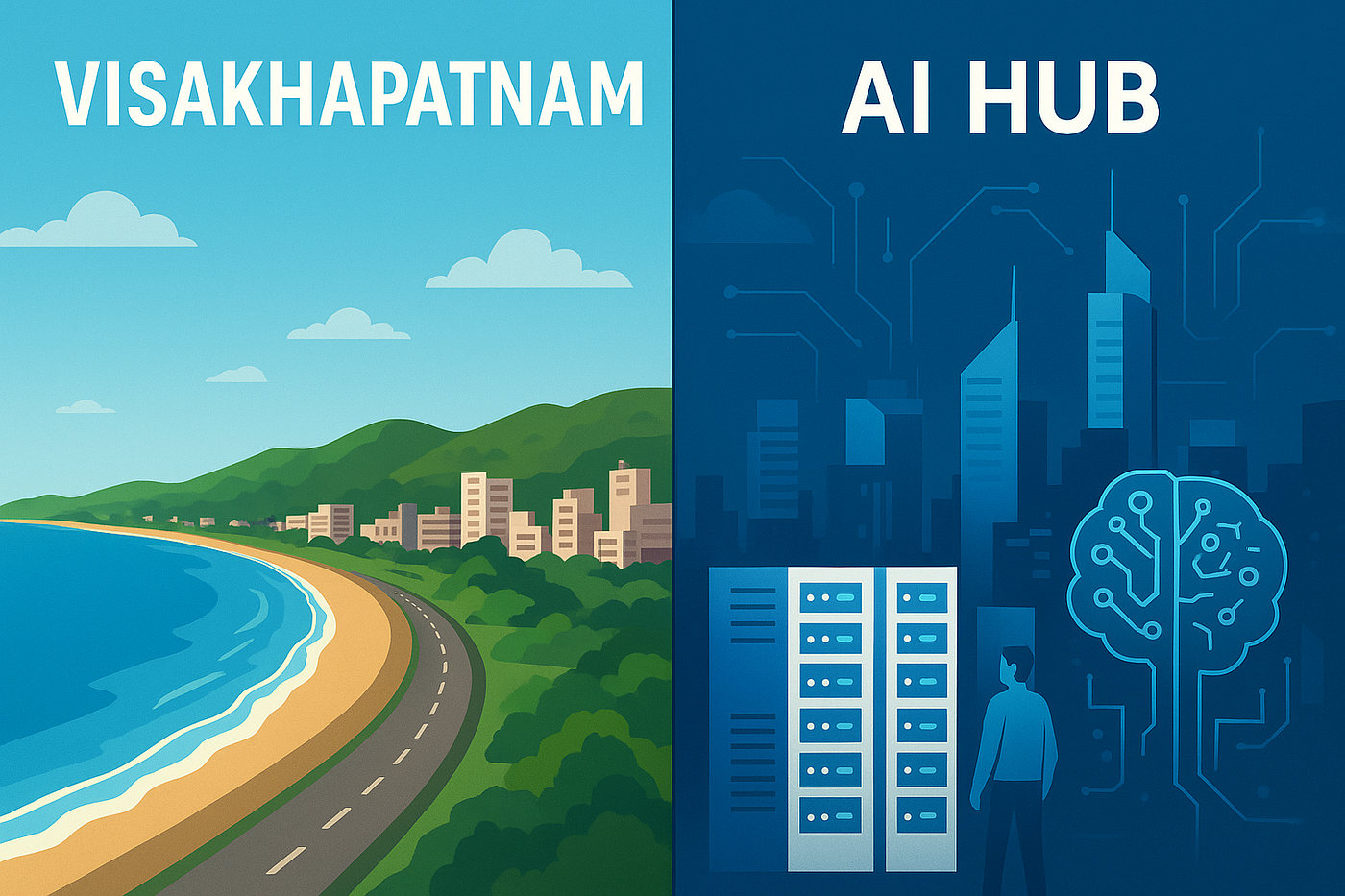
Visakhapatnam is undergoing a structural economic shift. Once known primarily for ports, steel and shipbuilding, the city is now positioning itself as an emerging hub for technology, AI and digital services. This transition offers a model for smaller coastal cities seeking diversification and long-term growth.
Visakhapatnam has historically been associated with heavy industry, including steel production, pharmaceuticals and maritime services. Today, the city is gradually moving toward an AI-led and digital-first economy. This shift is part of a broader strategy aimed at reducing dependency on traditional large-scale industry, improving job diversity and attracting younger talent. Several recent announcements from state authorities and private sector players indicate that the transformation is intentional and being supported by infrastructure investment and skill development initiatives.
Subhead: From Manufacturing Powerhouse To Technology-Focused Growth
Visakhapatnam has long hosted major industrial anchors such as Visakhapatnam Steel Plant, Hindustan Shipyard and a significant port-based logistics network. While these industries continue to operate, they are not the sole growth drivers they once were. State government efforts to develop the city as an IT hub, the establishment of new startups and the expansion of existing tech firms signal a shift toward knowledge-based economic activity. The proposed administrative move of Andhra Pradesh’s capital functions to Visakhapatnam has also contributed to increased institutional presence, planned digital governance corridors and potential for new business districts. This transition is supported by improvements in broadband connectivity, coworking spaces and dedicated IT parks in areas such as Madhurawada.
Subhead: AI And Analytics Firms Creating New Employment Pathways
A notable part of the transition is the rise of AI, data analytics and automation-related firms. Several mid-sized companies have opened delivery centers in Visakhapatnam to serve national and international clients. These firms benefit from lower operational costs compared to metros and an improving supply of trained talent from engineering institutions in the region. Skill development missions and partnerships between local colleges and industry bodies have introduced coursework in data science, cloud computing and AI-driven product development. This is helping retain graduates who might otherwise migrate to cities such as Hyderabad or Bengaluru. The presence of defense and maritime industries has also opened scope for AI use cases in simulation, predictive maintenance and logistics planning.
Subhead: What The Shift Means For Smaller Coastal Cities
Visakhapatnam’s model provides a roadmap for coastal cities such as Mangaluru, Kochi, Tuticorin, Karwar and Pondicherry. These cities share similar advantages including port access, established industrial corridors and educational institutions. By focusing on technology-led diversification, they can reduce dependence on singular sectors such as shipping, fisheries or refinery operations. However, successful replication requires careful policy alignment, consistent digital infrastructure upgrades and private sector engagement. Smaller cities must also prioritize housing, urban mobility and cultural spaces to attract young professionals who seek more than employment opportunities.
Subhead: Challenges And Risks During Transition
The shift away from heavy industry brings challenges. Large industries provide stable employment, while technology sectors often create uneven job distribution across skill levels. There is also a risk of speculative real estate inflation if growth expectations run ahead of actual project execution. Local governments must balance environmental sustainability, coastal protection norms and urban planning demands. Ensuring that reskilling programs are accessible to a wide workforce group is critical to prevent economic exclusion during the transition.
Subhead: Long-Term Regional Impact
If Visakhapatnam continues its trajectory, it could emerge as a key second-tier technology hub supporting India’s expanding digital economy. The city’s example demonstrates that technology clusters do not need to be confined to major metros. Sustainable growth will depend on maintaining collaboration between public agencies, industry bodies, educational institutions and civic groups. Smaller coastal cities observing this shift can learn how to balance heritage economic sectors with future-oriented innovation.
Takeaways:
• Visakhapatnam is transitioning from heavy industry to technology and AI-led growth.
• The shift is supported by infrastructure improvements and skill development partnerships.
• Smaller coastal cities can replicate elements of this model with coordinated planning.
• Success requires balancing innovation with sustainable urban and economic development.
FAQ:
Q1: Is heavy industry declining in Visakhapatnam?
A1: Heavy industry remains active, but it is no longer the only growth driver. The city is diversifying toward technology and services to create a more balanced economy.
Q2: Why is Visakhapatnam attractive for AI and tech firms?
A2: Lower operational costs, regional talent availability and improving digital infrastructure make it a practical location for technology operations.
Q3: Can smaller coastal cities follow the same development path?
A3: Yes, but replication requires investment in education, broadband infrastructure, business environment improvements and urban amenities for talent retention.
Q4: Will the transition impact employment patterns?
A4: Yes. There will be greater demand for digitally skilled labor and more diverse service sector roles, while traditional jobs may require upskilling.











Leave a comment