

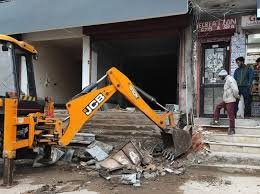
Encroachment removal operations in Mohali are shedding light on how governance pressures are mounting in smaller cities. From roadside eateries to unauthorised colonies, the drive signals shifting expectations of urban order and regulation.
Encroachment culture and the rise of dhabas
Encroachment in Mohali — whether through roadside dhabas, vendor stalls or expanded shopfronts — has grown alongside the city’s rapid development. Many small eat‑outs and dhabas operate on footpaths or road‑berms, creating a blurred line between informal commerce and illegal occupation of public space. The phenomenon reflects not just commercial ambition but also weaker enforcement in non‑metro zones, where municipal agencies struggle to keep pace with growth. The result: traffic congestion, blocked walkways, drainage hazards and a public perception that rules apply selectively.
Crackdown phase: what the authorities are doing
In recent months the influence of regulatory bodies like the Greater Mohali Area Development Authority (GMADA) and the city’s municipal corporation has visibly increased. Notices have been issued for unlawful structures, and large‑scale demolition drives have taken place in critical stretches such as Phase IX/Phase X commercial areas and villages on the city periphery. These operations target dhabas, meat shops near airports, illegal colonies and roadside vendors who have encroached on public land or violated building norms. The message: informal structures will now face stricter oversight.
Governance pressures and smaller‑city dynamics
What this crackdown reveals is a broader governance squeeze on Tier‑2/Tier‑3 towns like Mohali. Unlike major metros with long‑established regulatory regimes and stronger civic systems, smaller cities often experience rapid growth without equivalent institutional capacity. Infrastructure lags, planning frameworks struggle to catch up and public tolerance for disorder remains higher. Now authorities are signalling a pivot: they intend to impose stricter discipline on encroachment, which places local dhabas and street vendors under new pressure. Compliance is becoming non‑optional.
Impacts on local economy and vendors
The impact is mixed. On one hand the removal of encroachments can improve pedestrian access, city aesthetics and long‑term viability of public infrastructure. On the other hand, small entrepreneurs and street vendors fear sudden enforcement without transition periods or alternative arrangements. A roadside dhaba operating legally but with temporary structures may be targeted, creating economic uncertainty. If enforcement is heavy‑handed without support mechanisms, the result may be backlash, informal resistance or political push‑back from affected communities.
Lessons for urban planning in non‑metropolitan hubs
Mohali’s scenario offers instructive lessons for other smaller cities undergoing growth. Urban planning needs to account for the informal economy early. Policies must recognise the existence of dhabas, vendors and roadside commerce—not necessarily banning them, but regulating location, design, spacing and legality. Public land must be safeguarded, road widths maintained, drainage and pedestrian paths protected. Equally important is consistent enforcement: selective drives breed perceptions of bias. The Mohali crackdown suggests a shift toward uniform rule‑application, which may set a standard for similar cities.
Conclusion
Mohali’s transition from lax enforcement to active crackdown on encroachments signals a deeper transformation in governance expectations in smaller cities. The presence of local dhabas, informal stalls and unapproved structures had been tolerated as part of growth dynamics. Now they are targets of regulatory discipline. The outcome will depend on how authorities balance infrastructure needs, economic informality and fairness of implementation. For smaller cities that hope to maintain growth while improving civic order, Mohali offers a valuable case study in how that balancing act unfolds.
Takeaways
- Encroachment by dhabas and vendors in Mohali mirrors informal growth in smaller cities.
- Crackdown by municipal and development bodies signals rising governance pressure and demands for compliance.
- Economic implications for small‑scale operators are real and need thoughtful management.
- The shift in Mohali provides a template for similar Tier‑2/Tier‑3 cities aiming to regulate urban expansion.
FAQ
Q: What kinds of encroachments are being targeted in Mohali?
A: The authorities are acting on roadside dhabas, meat shops near airports, unauthorized structures on public land and unapproved colonies.
Q: Why is Mohali facing this crackdown now?
A: Rapid urbanisation, visible congestion, traffic hazards and pressure on public land have prompted authorities to enforce planning norms more strictly.
Q: What is the likely impact on local dhabas and street vendors?
A: They may face closure or relocation if operating from unauthorised structures but may also gain from clearer regulation and improved urban infrastructure.
Q: How does this trend in Mohali matter for other smaller cities?
A: It shows how urban governance is evolving outside large metros—smaller cities too are increasingly expected to enforce regulations, manage infrastructure and formalise informal economic activities.










Leave a comment