

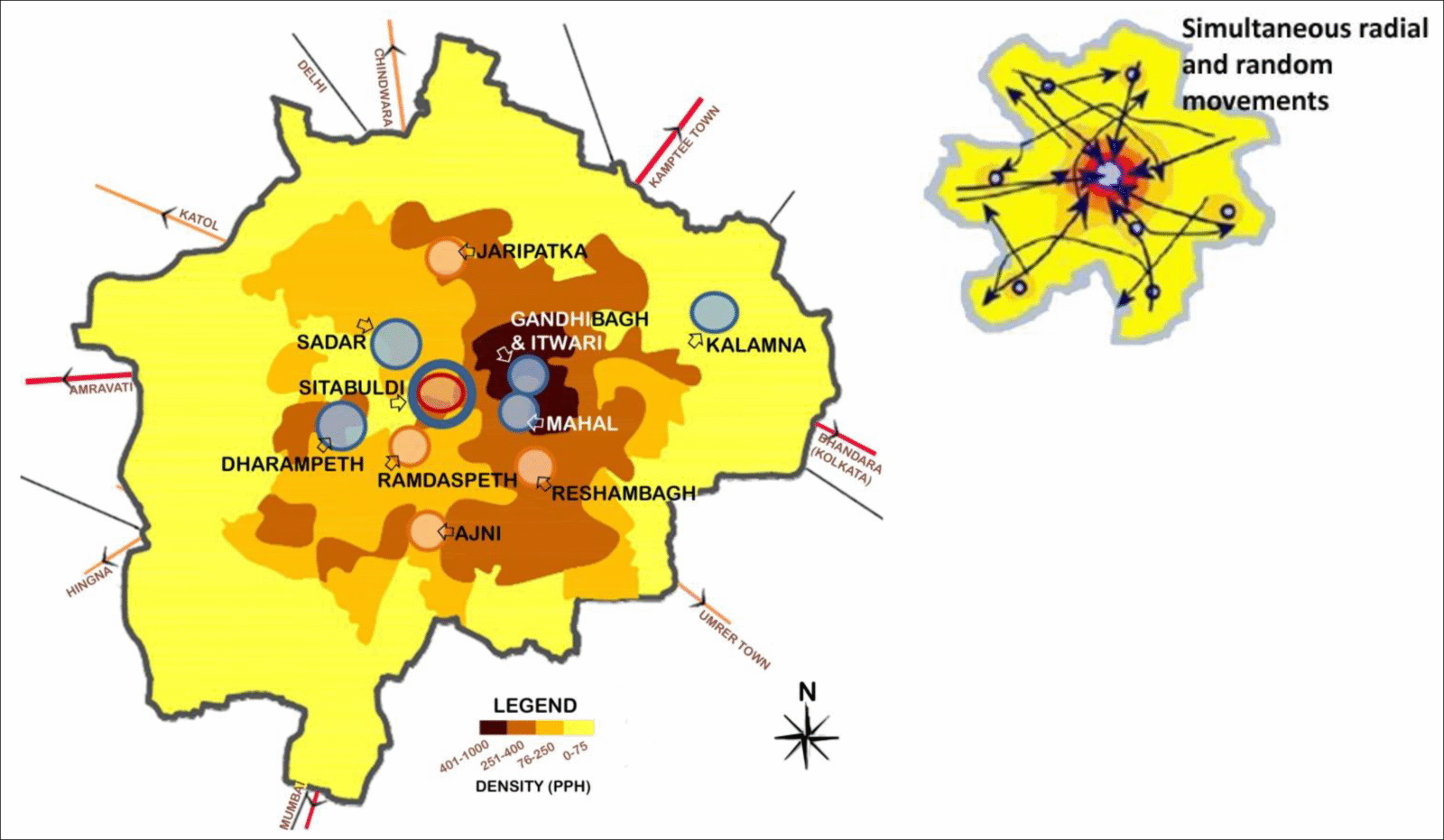
Planning for urban mobility in India’s Tier-2 and Tier-3 cities is gaining momentum, and this surge is especially relevant for places like Nagpur and comparable markets. As corridors expand, pedestrian infrastructure improves and mass transit projects accelerate, the implications for residents, businesses and city growth are significant.
Intent and context
This piece is news-informational. It reports recent policy signals and infrastructure shifts in smaller-city India and translates what these changes mean for markets like Nagpur.
Mobility planning goes local
The national urban affairs ministry has flagged that mobility planning in Tier-2/3 cities must “begin today” so that these centres evolve into future-ready urban hubs. This push elevates non-metro cities into the spotlight for major transport and public-space investments.
For a city like Nagpur, which is already implementing a Comprehensive Mobility Plan (CMP) and transit-oriented development (TOD) pilot, this momentum opens up a framework for faster decisions and greater alignment between state, centre and city agencies.
What fast-tracking means in practice
Multimodal corridors and higher capacity transit. For example, Nagpur has finalised a corridor for its next metro phase under its CMP draft, pointing to planned high-capacity transit beyond the metro-centric metros in metros-only cities.
Pedestrian and non-motorised infrastructure upgrades. The city has earmarked investments in continuous footpaths, at-grade crossings and grade-separated pedestrian facilities to shift mobility away from purely vehicle-centric planning.
Prioritised policy frameworks and funding. When national policy signals support for smaller-city mobility, cities can unlock state and central schemes, stimulate private participation and adopt newer financing models (for example through land-value capture, development-driven models).
Why Tier-2/3 cities are the focus
Smaller cities are increasingly seen as growth nodes: housing demand, logistics hubs and consumer markets are shifting beyond metros. Mobility infrastructure becomes a linchpin to sustain this growth. Efficient transport systems reduce congestion, raise livability and make the city more attractive for investment and talent.
In markets like Nagpur, where current travel patterns and infrastructure gaps raise environmental and economic risks (for instance rising CO₂ projections if mobility remains business-as-usual), the window is open to shape growth rather than react to it.
Implications for residents and businesses
For residents: smoother commutes, safer walking and cycling, more dependable public transport and less reliance on private vehicles. In Nagpur’s case, improved footpath networks and multi-modal hubs will broaden last-mile options and ease access from suburban zones.
For businesses and real-estate: mobility upgrades raise land value, attract retail and service activity, and open peripheral zones for development—especially as the city expands. Developers and investors should reposition around new corridors and transit nodes.
Risks and critical success factors
Fast-tracking infrastructure in smaller cities does not guarantee impact unless governance, implementation capacity and integration are managed. Challenges include land acquisition delays, coordination across agencies, maintenance of new assets and ensuring equity (so poorer areas benefit too).
In Nagpur’s context, the pilot TOD and CMP provide a structural advantage, but the execution will hinge on sustained political will, stakeholder engagement and funding continuity.
What to watch next
- The release of revised Detailed Project Reports (DPRs) for Nagpur’s next metro corridors and their financing model.
- Implementation timelines and tendering of footpath/grade-separator projects.
- Accessibility metrics: ratios of roads with continuous footpaths, number of non-motorised transport (NMT) friendly crossings delivered.
- Ridership and modal-shift data: how many users shift from private vehicles to public/NMT modes over time.
- Value capture or development frameworks: how land near transit is leveraged for infrastructure funding.
Takeaways
- Mobility planning in Tier-2/3 cities is being accelerated, signalling a shift away from metro-only focus.
- For Nagpur and similar markets this creates a chance to align growth, transit and land development early.
- Residents stand to benefit through better public transport and safer walking/cycling infrastructure.
- Success depends on execution capacity, governance and inclusive delivery rather than just project announcements.
FAQs
Q 1: Why is the government emphasising Tier-2/3 cities for mobility now?
A: Because growth is moving beyond large metros—smaller cities are becoming economic and demographic hubs. Managing mobility early helps avoid congested, chaotic outcomes and supports sustainable growth.
Q 2: What kind of mobility projects are relevant in a city like Nagpur?
A: Mass rapid transit (e.g., metro corridors), improved public transport and bus services, walking/cycling infrastructure, grade separators for major junctions, transit-oriented development around stations and integrated land-use planning.
Q 3: What risks should city officials and planners be aware of?
A: Execution delays due to land issues, agencies working in silos, cost overruns, focusing only on flagship projects while neglecting smaller components like last-mile connectivity and NMT, and failing to involve local communities.
Q 4: How will these mobility changes affect everyday people in Tier-2 cities?
A: They can expect shorter commutes, safer pedestrian spaces, more reliable public transport, less vehicular dependency and potentially lower travel cost and air-pollution exposure—provided plans are delivered on time and maintained.












Leave a comment