

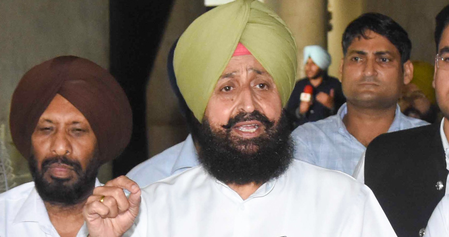
The main keyword here is Union Territory of Chandigarh bill postponement.
Short summary: The central government has confirmed that the proposed bill to bring Chandigarh under Article 240 of the Constitution will not be introduced in the upcoming session, leaving the region’s governance structure unchanged for now and triggering waves across both Punjab and Haryana.
What’s the issue and why the bill was proposed
The proposal was to introduce the Constitution (131st Amendment) Bill, 2025 which would bring Chandigarh, currently a union territory administered via the Punjab Governor, under Article 240 of the Indian Constitution. Article 240 empowers the President to make regulations for union territories without legislatures. The idea on paper was to “simplify the law-making process” for Chandigarh rather than change its administrative structure.
Since Chandigarh is the joint capital of Punjab and Haryana, any change is politically sensitive. The move triggered a strong backlash in Punjab which framed it as a threat to its claim over the city.
With heavy opposition and significant concern from stakeholders, the central government clarified that no final decision is taken and no bill will be introduced in the imminent parliamentary session.
Why the postponement matters for governance processes
Law-making and legislative route
Under the current system, parliamentary acts and state laws extended to Chandigarh govern the territory. The proposed change would have created a faster channel via President’s regulations under Article 240. Postponement keeps the status quo — Chandigarh will continue to depend on Parliament for new legislation, potentially slowing reforms and local adaptation of laws.
State-UT-Centre dynamics
Punjab and Haryana both have stakes in Chandigarh — Punjab views it as its capital, while Haryana shares it. With the Governor of Punjab acting as Administrator of Chandigarh, any shift to a separate administrator or expanded presidential regulation is viewed as altering power balances. The postponement momentarily defuses tensions but leaves uncertainty.
Local institutions and citizen services
In practice, the legislative delays and administrative complexity mean Chandigarh may face slower updates in governance, law-adaptation and services that depend on local tailoring of rules. The proposed change aimed at agility; its pause may keep bureaucratic efficiency lower than envisioned.
Impact on Punjab and Haryana
Punjab’s perspective
Punjab leadership cast the move as an attempt to weaken its historical claim over Chandigarh. The postponement is a temporary relief but the state remains alert to future iterations of the proposal. Punjab will push for consultation and safeguards to protect its rights over the city.
Haryana’s viewpoint
Haryana shares Chandigarh as its capital, and is wary of any unilateral decision affecting the joint-capital arrangement. The postponement means discussions will continue, but Haryana too needs clarity on its role and representation in Chandigarh governance.
Shared infrastructure and assets
Because both states use Chandigarh’s infrastructure, any change that adjusts the administrative set-up — even subtly — could impact service delivery, funding, staffing and jurisdiction. The pause lets both states maintain current arrangements for now, but it leaves unresolved questions.
Centre’s position
The Ministry of Home Affairs emphasised that the proposal “in no way seeks to alter Chandigarh’s governance or administrative structure, nor its traditional arrangements with Punjab or Haryana.” The postponement allows the Centre to conduct broader stakeholder consultation and avoid immediate escalation.
What happens next and what to watch
– Stakeholder consultations: Expect formal meetings between the Centre, Punjab, Haryana and Chandigarh’s UT administration to draft framework and timelines.
– Revised draft or fresh legislation: The bill may return in future sessions, possibly with safeguards for states’ claims or modified proposals.
– Impact on service delivery: Watch local law-making speed, adaptation of state laws to Chandigarh, and governance responsiveness.
– Political narrative: The row has become a flashpoint in Punjab’s politics; any move by the Centre will be viewed through the lens of state rights and federal structure.
Takeaways
- The bill’s postponement keeps Chandigarh’s current governance structure in place for now.
- Law-making for Chandigarh remains dependent on Parliament, slowing the agility of local legislation.
- Both Punjab and Haryana have vested interests in Chandigarh’s status and will demand clarity.
- The Centre’s next steps hinge on stakeholder consultation and a possible revised approach.
FAQs
Q: Does the postponement mean the bill is cancelled?
No. It means no bill will be introduced in the upcoming session, but the proposal remains under consideration. Only final legislation or withdrawal will decide cancellation.
Q: What would have changed if the bill had been passed?
Chandigarh would have come under Article 240, enabling the President to issue regulations for the UT without a legislature, potentially reducing dependency on Parliament and altering administrative control.
Q: Will Punjab lose its capital status over Chandigarh?
As of now, no. The current arrangements continue unchanged. Any future legislation could affect the dynamics, so Punjab remains vigilant.
Q: How does this affect ordinary citizens of Chandigarh, Punjab or Haryana?
In the short term, little change. The key effect is on how quickly laws or rules can be adapted to local needs. If the bill returns, citizens will need clarity on their governance, representation and administrative processes.











Leave a comment