

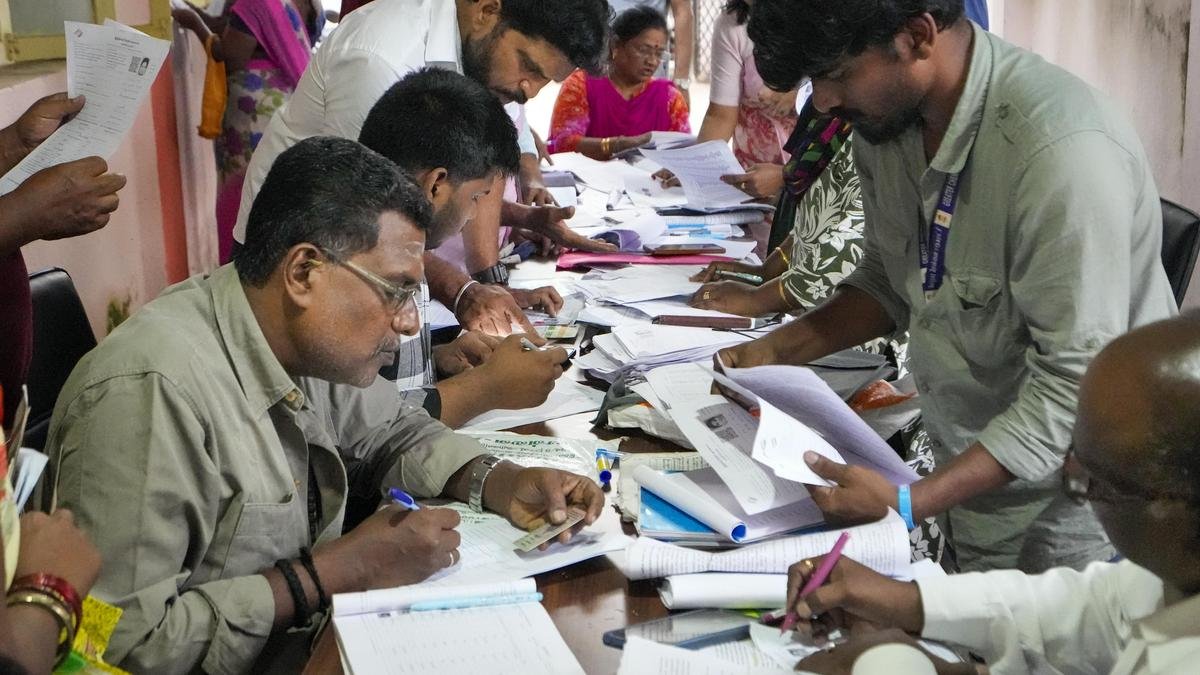
The recent announcement by the Election Commission of India (ECI) that over 99 percent of eligible electors across 12 states and Union Territories have been issued enumeration forms under Phase 2 of the Special Intensive Revision (SIR) of electoral rolls places a spotlight on the implications for smaller cities and towns beyond India’s major metros.
What the 99 percent figure actually is
Under Phase 2 of SIR, launched in November 2025, the ECI reported that more than 50 crore electors in nine states and three UTs have received enumeration forms — nearly 99 percent of the target in those jurisdictions. The distribution exercise runs from 4 November to 4 December, with the final voter list scheduled for publication on 7 February 2026.
Why enumeration matters for Tier-2 and Tier-3 cities
Access and inclusion. Smaller cities and towns frequently face under-registration of voters due to migration, informal settlements and less robust outreach infrastructure. High enumeration coverage signals that the electoral machinery is reaching peripheral areas, ensuring residents in smaller urban settings are not left out.
Up-to-date electoral rolls. Accurate voter lists reduce errors such as duplicate entries or missing names — issues that disproportionately affect smaller towns where records, migration flows and administrative follow-up can be weaker.
Political representation and resource flows. When rolls are more complete and reliable, smaller city electors can expect better responsiveness from their representatives. Their inclusion strengthens accountability and can shift political focus to local issues.
Confidence in the electoral process. For voters in smaller cities, seeing high-coverage revision builds trust. It reassures them that their vote matters, and that bureaucratic hurdles won’t exclude them.
Coverage achievement: what it shows
The ECI’s bulletin shows distribution of enumeration forms at ~98.9 percent; however digitisation of the collected forms is lagging at ~33.4 percent overall, with wide state-wise variation (Lakshadweep ~77 percent, Kerala ~10.6 percent). This gap between distribution and digital consolidation matters for the final deliverable: a reliable, usable voter register.
Specific relevance for smaller urban hubs
In a city with say 3–5 lakh voters, a small error rate (for example, if 2–3 percent of forms go un-delivered) can translate into thousands of residents remaining disenfranchised or requiring correction. By reaching ~99 percent, the process is lowering that risk significantly.
Smaller cities often have more fluid populations (migrants, students, seasonal workers); high enumeration means that relocating voters and new entrants are more likely to be captured.
In towns where administrative capacity is lower than in metros, the success of large-scale enumeration reflects effective field deployment of BLOs (Booth-Level Officers) and BLAs (Booth-Level Agents) in less familiar terrain.
Challenges remain
Distribution is only step one. Unless forms are accurately filled, collected, verified and digitised, gaps will persist. Smaller towns may struggle with limited digital infrastructure, lower internet connectivity or fewer trained staff for verification and follow-up.
Even if forms are delivered, local awareness matters. Smaller cities require concerted communication drives so voters understand their obligations (submitting correct details, use of Form 6 for new enrolment) and the timeline ahead of final list publication.
Political and administrative fairness must be ensured. Reports from states such as Tamil Nadu show that opposition parties allege improper influence in the enumeration distribution process — which may disproportionately affect smaller cities where competition and oversight are weaker.
Broader implications
For upcoming state elections in some of these states (e.g., Tamil Nadu, West Bengal), high enumeration sets the stage for wider voter participation. In towns often overshadowed by metro voter-counts, smaller-city blocs may become more visible in campaign calculations.
Over time, this kind of exercise strengthens the foundation for one-nation electoral integrity by reducing systemic exclusion from below-the-radar urban areas. It reinforces that democracy isn’t just for large centres.
Takeaways
- Near-universal form distribution suggests improved outreach into smaller cities and towns, lowering risk of disenfranchisement.
- Digitisation gaps remain a concern: distributing forms is one thing, converting them into verified entries is another.
- Smaller urban hubs benefit especially because they have more fluid populations and weaker administrative footprints; high coverage helps ensure inclusion.
- Local awareness and fairness matter: even with high coverage, the real test lies in how accurately forms are filled and processed, and whether all demographic segments are reached.
FAQs
Q: What exactly is enumeration in the SIR process?
A: Enumeration refers to the delivery of partly filled enumeration forms to eligible electors in an area, allowing them to verify or update details (name, age, address), apply for new enrolment, and submit the form to become part of the electoral rolls.
Q: Why is achieving 99 percent form distribution noteworthy?
A: It indicates that almost all eligible voters in that region have been reached with the initial form — a major logistic and administrative milestone, especially in less-resourced towns and smaller cities.
Q: Does this mean all entries will appear in the final voter list?
A: Not necessarily. Form distribution is only the first step. Verification and digitisation are required to convert the form into a validated entry. Errors, incomplete forms or administrative delays may still exclude some names.
Q: How will this affect elections in smaller cities?
A: With more comprehensive and accurate rolls, smaller-city voters are less likely to be excluded, giving them better representation. It also means candidates and parties will likely pay more attention to urban-semi-urban voters beyond the major metros.










Leave a comment