


The political funding shift ahead of upcoming assembly elections has become a defining factor in campaign narratives, with the BJP’s large donations drawing attention and opposition parties responding by emphasising grassroots mobilisation. This evolving dynamic is influencing how parties communicate credibility, reach voters, and frame electoral legitimacy.
Political funding has always shaped Indian elections, but the scale and visibility of donations in the current cycle have intensified debate. With campaign strategies now closely scrutinised, money power versus ground level connection has emerged as a central talking point across states preparing for polls.
BJP Funding Surge and Its Strategic Impact
The BJP’s funding advantage has allowed it to run high intensity campaigns across multiple states simultaneously. Large donations enable extensive advertising, data driven outreach, professional campaign teams, and rapid deployment of resources. This financial strength supports consistent messaging across television, digital platforms, and on ground events.
In assembly elections, where local issues dominate, funding also helps candidates build visibility quickly. From branded vans to targeted social media ads, money accelerates reach. The party’s ability to fund micro campaigns in constituencies has strengthened its organisational presence even in competitive regions.
However, this funding scale has also drawn criticism, with rivals questioning the source concentration and long term implications for electoral balance.
Opposition Response and Grassroots Emphasis
Opposition parties have responded by reframing the funding gap as a moral and democratic issue. Rather than matching spending, they are positioning themselves as people powered movements relying on volunteers, local leaders, and door to door outreach.
Grassroots mobilisation has become a key narrative tool. Opposition leaders highlight smaller donations, community meetings, and regional alliances as evidence of public support. This approach appeals to voters sceptical of corporate influence in politics.
In several states, opposition campaigns are focusing on local grievances, unemployment, price rise, and governance gaps, attempting to counter financial disadvantage with issue driven engagement.
Money Power Versus Voter Trust
The political funding shift raises a critical question. Does higher spending guarantee voter trust. While money improves visibility, it does not automatically convert into credibility. Assembly elections often hinge on candidate familiarity, caste equations, and local performance rather than national level branding.
Excessive spending can sometimes backfire if voters perceive campaigns as disconnected from everyday realities. This is where grassroots narratives gain traction. Opposition parties are leveraging this sentiment to frame elections as a choice between resource heavy politics and people centric leadership.
The balance between money and trust is increasingly delicate, especially in semi urban and rural constituencies.
Role of Digital Campaigning and Data Use
Funding advantages are most visible in digital campaigning. Well funded parties can invest heavily in data analytics, targeted messaging, and rapid response teams. This allows narrative control during controversies and faster amplification of favourable news.
Opposition parties with limited funds are relying more on organic reach, influencer support, and regional language messaging. While cost effective, this approach requires stronger coordination and consistent ground feedback.
Digital narratives now shape traditional media coverage, making funding disparities more influential in agenda setting rather than just advertising volume.
Transparency, Perception, and Electoral Fairness
Public discussion around political funding has expanded beyond legality to perception. Voters are increasingly aware of donation patterns and their potential influence on policy. This awareness has made funding a campaign issue in itself.
Opposition parties are demanding greater transparency and accountability, while the ruling party argues that funding reflects organisational strength and public confidence. This debate is likely to intensify as elections draw closer.
In assembly polls, where margins can be narrow, perception of fairness and accessibility can influence undecided voters.
Regional Variations in Funding Impact
The effect of the political funding shift is not uniform across states. In regions with strong regional parties, local leadership still outweighs financial muscle. In contrast, states with fragmented opposition see funding advantages translate more directly into campaign dominance.
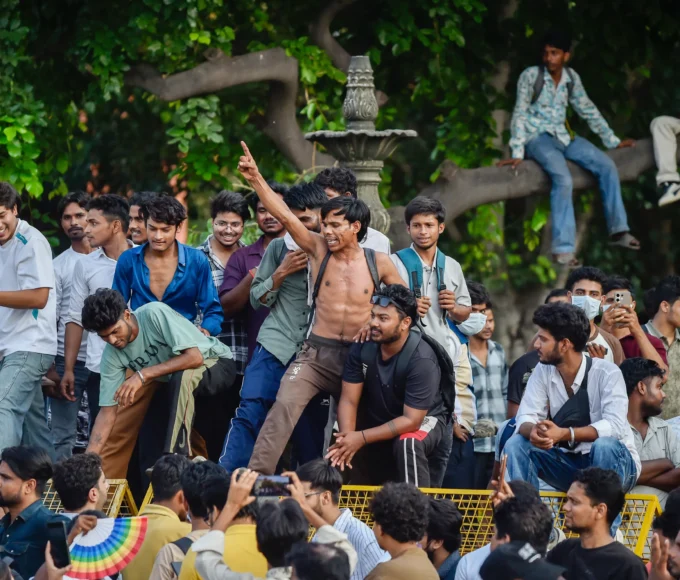
Tier 2 and Tier 3 regions are particularly sensitive to grassroots messaging. Voters in these areas respond strongly to personal contact, local promises, and visible presence rather than large scale advertising alone.
This variation ensures that money remains an advantage, not a guarantee.
What This Means for Assembly Elections
As assembly elections approach, narratives around funding will continue to shape political discourse. The BJP’s financial strength enables scale and consistency, while opposition strategies aim to convert resource constraints into authenticity.
The contest between money power and grassroots mobilisation reflects a broader shift in how political legitimacy is constructed. Voters are no longer passive recipients of messaging but active evaluators of intent and impact.
The outcome will depend on which narrative resonates more strongly at the constituency level.
Takeaways
- The BJP’s large donations enable high intensity and data driven campaign strategies
- Opposition parties are countering funding gaps with grassroots mobilisation narratives
- Money improves reach but does not automatically translate into voter trust
- Assembly elections amplify the importance of local issues and candidate credibility
FAQ
Why is political funding being discussed so prominently this election cycle?
The scale of donations and their visible impact on campaign strategies have made funding a central political issue.
Does higher campaign spending ensure electoral success?
No, especially in assembly elections where local factors and candidate trust play a major role.
How are opposition parties managing with limited funds?
They are focusing on grassroots outreach, volunteer networks, and issue based campaigning.
Are voters concerned about funding transparency?
Yes, awareness around funding sources and influence has grown, affecting voter perception and trust.










Leave a comment