


Future of work in India is being reshaped as AI and deep tech jobs move decisively outside metro cities. In 2026, talent, infrastructure, and enterprise demand are converging in Tier 2 and Tier 3 regions, changing where high value technology work is created and sustained.
Future of work is time sensitive in context but structurally evergreen in impact, so this article balances current momentum with explanatory depth.
Why AI and Deep Tech Jobs Are Leaving Metros
For over a decade, metro cities dominated advanced tech hiring due to proximity to clients, capital, and talent. That advantage is eroding. AI and deep tech work now requires scalable infrastructure, stable teams, and long development cycles rather than constant client proximity.
Non metro cities offer lower operating costs, predictable expansion, and reduced attrition. These factors matter for AI model development, semiconductor design, robotics, and advanced manufacturing software, where continuity is critical. Companies are realizing that innovation speed improves when teams stay intact longer.
The future of work rewards depth and stability over density, making metros less essential than before.
What Kind of AI and Deep Tech Jobs Are Emerging
The jobs moving outside metros are not peripheral roles. They include AI model training, data engineering, computer vision development, embedded systems design, chip verification, robotics integration, and clean tech R and D.
Unlike earlier IT outsourcing roles, these positions involve core intellectual property creation. Teams work on long horizon problems such as predictive maintenance systems, autonomous inspection tools, medical diagnostics algorithms, and energy optimisation platforms.
These roles demand strong engineering fundamentals, not just software services skills. That requirement aligns well with the growing technical depth in non metro education ecosystems.
How Tier 2 Cities Are Building the Right Ecosystem
Tier 2 cities are no longer competing on cost alone. They are building full ecosystems that support advanced work. Data centres, cloud access points, testing labs, and co working research spaces are expanding steadily.
Local governments are supporting this shift by simplifying approvals and investing in digital infrastructure. Power reliability, high speed internet, and logistics connectivity have improved enough to support continuous operations.
Equally important is lifestyle infrastructure. Affordable housing, manageable commute times, and access to education and healthcare make these cities attractive for long term settlement, which directly supports workforce stability.
Talent Preferences Are Redefining the Future of Work
The future of work is being shaped by worker choice as much as employer strategy. Engineers and researchers increasingly prefer living closer to family and lower stress environments, provided the work remains meaningful.
AI and deep tech professionals value autonomy, focused problem solving, and learning depth. These preferences align better with non metro work settings where distractions and churn are lower.
Return migration is also playing a role. Professionals who built careers in metros are relocating back with experience and leadership capability. This raises the quality of local teams and accelerates ecosystem maturity.
Enterprise and Startup Demand Is Pulling Jobs Outward
Demand is not limited to startups. Large enterprises in manufacturing, healthcare, logistics, and energy are deploying AI systems close to their operations. Many of these operations are located outside major cities.
Building AI and deep tech teams nearby reduces latency in decision making and improves collaboration between engineers and operations staff. This proximity improves outcomes for use cases such as predictive maintenance, quality control, and supply chain optimisation.
Startups are following a similar logic. Founders are choosing locations where teams can focus without constant hiring pressure and cost escalation.
Skill Development and Education Are Catching Up
One concern around non metro expansion was skill availability. That gap is narrowing. Engineering colleges, technical institutes, and private training programs are aligning more closely with industry needs.
Apprenticeships, industry sponsored labs, and remote mentorship are helping bridge practical skill gaps. Online learning platforms supplement formal education, allowing professionals to upskill without relocating.
The future of work depends on continuous learning. Tier 2 cities are proving capable of supporting this through blended education models.
Challenges That Could Slow the Shift
Despite progress, challenges remain. Leadership depth can be limited in early stages. Companies often need to invest in grooming managers or rotating senior leaders initially.
Another risk is uneven development. A few cities may attract most opportunities while others lag. Without balanced planning, this could recreate metro like congestion at a smaller scale.
There are also concerns around research funding continuity and access to advanced equipment. These issues require coordinated policy and private investment to resolve.
What This Means for India’s Workforce Long Term
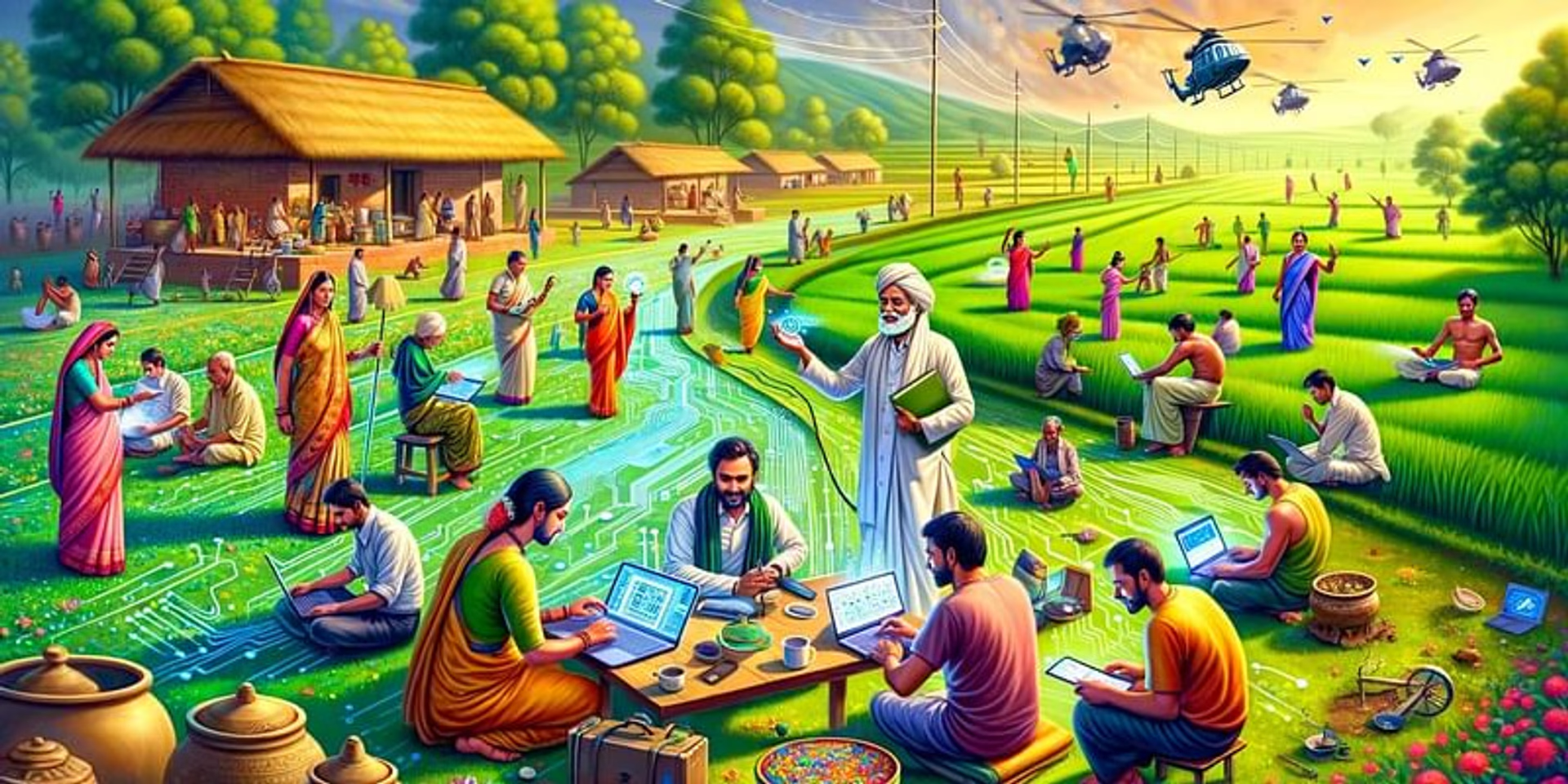
The decentralisation of AI and deep tech jobs fundamentally alters India’s workforce geography. High value work is no longer locked to a handful of cities.
This shift improves inclusion by opening opportunities to a wider population. It also reduces urban pressure while strengthening regional economies.
For companies, it expands the talent pool and improves resilience. For professionals, it offers meaningful careers without sacrificing quality of life.
The future of work in India will be defined by distributed intelligence rather than centralised hubs.
Takeaways
– AI and deep tech jobs are moving to Tier 2 and Tier 3 cities
– Stability and continuity matter more than metro proximity
– Talent preference and enterprise demand are driving the shift
– Distributed tech hubs will shape India’s long term workforce
FAQs
Why are AI jobs moving outside metros?
Lower costs, better retention, and proximity to operations make non metro cities more suitable for long term AI work.
Are these roles high skill or support functions?
They are core roles involving IP creation, R and D, and system design.
Do Tier 2 cities have enough talent for deep tech?
Yes, and returning professionals plus targeted upskilling are strengthening local ecosystems.
Will metros lose their tech dominance?
No, but dominance will be shared as growth becomes more distributed.









Leave a comment