

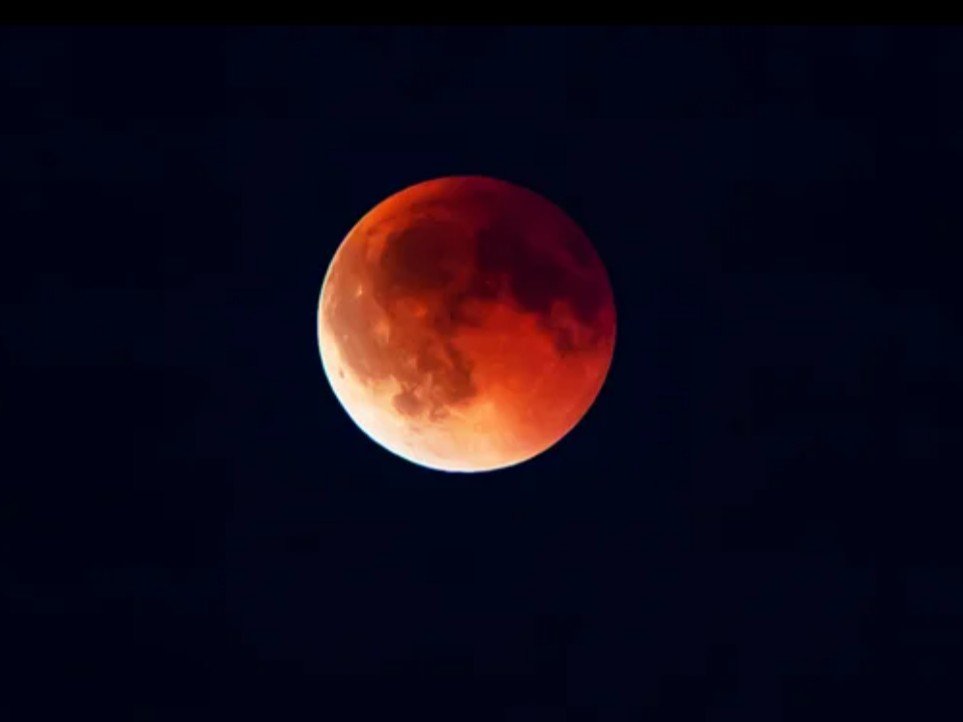
The Blood Moon lunar eclipse in March 2026 drew attention from astronomy enthusiasts and casual skywatchers across India. Observers followed the celestial event through telescopes, observatories, and online broadcasts, highlighting growing public interest in astronomy and space science.
The Blood Moon lunar eclipse 2026 generated widespread excitement among skywatchers across India as astronomy enthusiasts tracked the rare celestial event. A blood moon occurs during a total lunar eclipse when the Earth moves directly between the Sun and the Moon, casting a shadow that gives the Moon a reddish appearance. Although lunar eclipses occur periodically, each event attracts significant public interest because of the dramatic visual effect and the opportunity to observe astronomical phenomena with the naked eye.
What Causes a Blood Moon Lunar Eclipse
A Blood Moon lunar eclipse occurs when the Sun, Earth, and Moon align in a straight line, with Earth positioned in the middle. During this alignment, the Earth blocks direct sunlight from reaching the Moon. However, some sunlight passes through Earth’s atmosphere and bends toward the Moon.
This filtered light contains longer red wavelengths, which illuminate the lunar surface and create the distinctive reddish color associated with a blood moon. The same atmospheric scattering effect that produces red sunsets is responsible for the Moon’s appearance during a total lunar eclipse.
Unlike solar eclipses, lunar eclipses are safe to observe with the naked eye. People can watch the entire event without special protective equipment, which makes it accessible to a wide audience including students and amateur astronomers.
Astronomy organizations often encourage public viewing during such events because they help promote interest in science and space exploration.
Visibility of the 2026 Lunar Eclipse in India
The March 2026 Blood Moon lunar eclipse was visible in several parts of the world depending on time zones and weather conditions. In India, many skywatchers followed the event through live streams, observatories, and online astronomy communities.
While some regions experienced limited direct visibility due to timing differences and daylight conditions, the eclipse remained a widely discussed astronomical event among enthusiasts.
Indian planetariums, astronomy clubs, and science institutions often organize educational programs during eclipses. These programs explain the science behind celestial alignments and provide telescopic views when conditions allow.
Online broadcasts by international observatories also allowed viewers in India to watch the eclipse in real time, demonstrating how digital platforms have expanded access to astronomical events.
Growing Interest in Astronomy Among Indian Skywatchers
Events such as the Blood Moon lunar eclipse often spark renewed interest in astronomy among the general public. Over the past decade, India has seen a steady rise in amateur astronomy groups, public telescope events, and science outreach programs.
Organizations such as planetariums, university astronomy departments, and private science groups regularly host skywatching sessions during major celestial events. These gatherings allow participants to learn about lunar cycles, planetary motion, and space science.
Social media platforms also play a role in spreading awareness about astronomical events. Photographers and astronomy enthusiasts often share images of eclipses, meteor showers, and planetary alignments, encouraging more people to participate in skywatching activities.
Educational institutions frequently use such events as teaching opportunities, helping students understand concepts related to orbital mechanics and the solar system.
Cultural Beliefs and Lunar Eclipse Traditions in India
Lunar eclipses also carry cultural significance in many parts of India. Traditional beliefs associated with eclipses have been passed down through generations and are still observed in some communities.
For example, some people avoid eating food during an eclipse period, while others perform rituals or prayers based on traditional interpretations of celestial events.
At the same time, scientific awareness about eclipses has increased significantly in recent years. Educational campaigns by science organizations emphasize that lunar eclipses are natural astronomical phenomena that pose no physical danger.
This combination of cultural traditions and scientific understanding reflects the diverse ways in which astronomical events are perceived in Indian society.
Role of Observatories and Planetariums During Celestial Events
Planetariums and astronomical observatories play an important role during events such as the Blood Moon lunar eclipse. Institutions in cities such as Delhi, Mumbai, Bengaluru, and Kolkata often organize public viewing sessions and educational lectures.
These events help explain the science behind eclipses, including the movement of celestial bodies and the physics of light scattering.
Many observatories also provide telescopes for public use during major astronomical events. This allows participants to observe details of the lunar surface that are not visible to the naked eye.
Such outreach programs are part of broader efforts to promote scientific literacy and encourage interest in space science among young students.
Future Lunar Eclipses and Astronomical Events to Watch
Lunar eclipses occur several times each decade, but total eclipses that produce the blood moon effect are less frequent in any given location. Astronomy enthusiasts often track eclipse calendars to plan future observation opportunities.
Advances in astronomy education and digital broadcasting mean that even people who cannot directly see an eclipse from their region can follow the event online.
For many observers, the Blood Moon lunar eclipse 2026 served as a reminder of the dynamic nature of the solar system and the fascinating interactions between celestial bodies.
As interest in space exploration grows, events such as lunar eclipses continue to inspire curiosity about the universe and humanity’s place within it.
Takeaways
• The Blood Moon lunar eclipse 2026 occurs when Earth’s shadow turns the Moon reddish during a total eclipse.
• Lunar eclipses are safe to observe with the naked eye and attract widespread public interest.
• Astronomy clubs and planetariums often organize educational programs during celestial events.
• Cultural traditions related to lunar eclipses coexist with modern scientific explanations in India.
FAQs
What is a Blood Moon lunar eclipse?
A blood moon occurs during a total lunar eclipse when sunlight filtered through Earth’s atmosphere gives the Moon a reddish appearance.
Is it safe to watch a lunar eclipse without protection?
Yes. Unlike solar eclipses, lunar eclipses are completely safe to watch with the naked eye.
Why does the Moon turn red during an eclipse?
Earth’s atmosphere bends and filters sunlight, allowing red wavelengths to reach the Moon while blocking most other light.
How often do Blood Moon lunar eclipses occur?
Total lunar eclipses occur periodically, but the visibility of a blood moon depends on geographic location and timing.











Leave a comment