

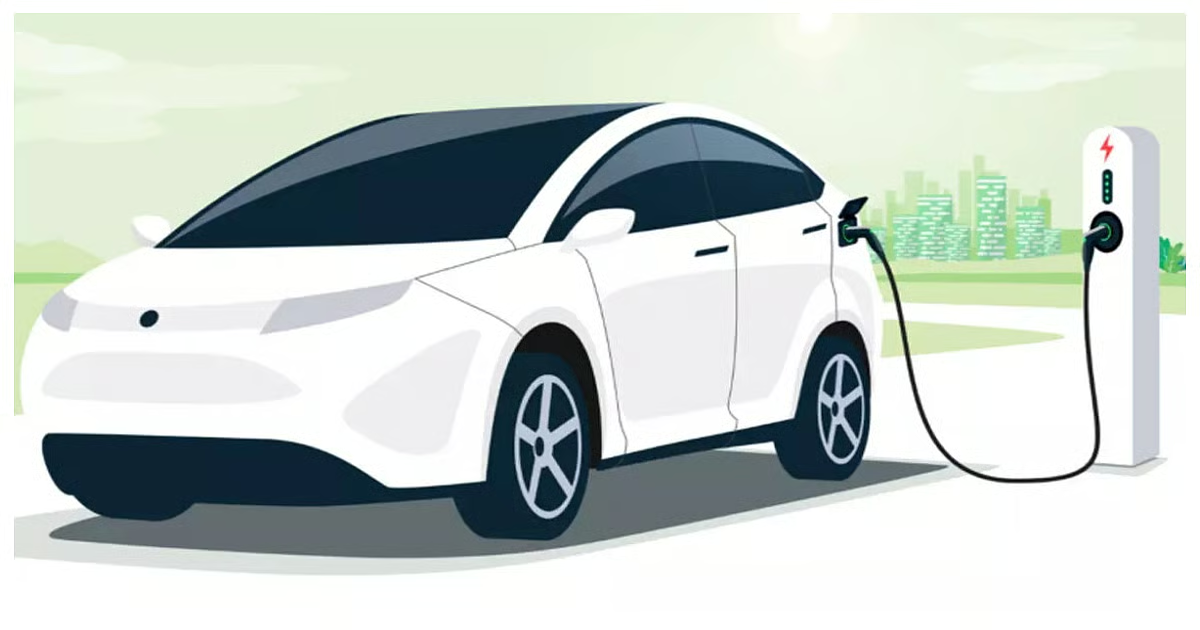
Nagpur is witnessing a sharp rise in electric vehicle adoption, reflecting a broader shift across Tier-2 cities in India. Lower running costs, policy support, and improving charging infrastructure are accelerating this transition, making electric mobility more practical beyond metro markets.
Nagpur EV Adoption Picks Up Pace in 2026
Nagpur EV adoption has moved from early experimentation to visible mainstream growth. Over the past year, the city has seen a steady increase in electric two-wheelers, e-rickshaws, and a gradual rise in electric cars. Local dealers report higher walk-ins for EV models, especially in the budget and mid-range segments.
This trend aligns with national data showing strong EV growth led by two-wheelers. In cities like Nagpur, affordability and daily commuting needs make electric scooters a practical choice. Fleet operators and delivery services have also shifted to electric vehicles to reduce operational costs.
The presence of pilot projects and earlier EV initiatives in Nagpur has created awareness, making the transition smoother compared to other Tier-2 cities.
Lower Running Costs Drive Consumer Decisions
Cost advantage remains the biggest driver behind electric mobility growth in Nagpur. Petrol prices continue to fluctuate, while electricity remains significantly cheaper per kilometre.
For an average commuter, the running cost of an electric two-wheeler is a fraction of a petrol vehicle. Maintenance costs are also lower due to fewer moving parts. This matters more in Tier-2 markets where consumers are highly price sensitive and focus on long-term savings.
Financing options and EMI schemes have further reduced the entry barrier. Many dealerships now offer exchange bonuses and discounts, making EVs accessible to first-time buyers.
Government Policies and Incentives Boost Demand
Government support has played a critical role in accelerating EV adoption in Nagpur. Central schemes like FAME II have reduced upfront costs through subsidies, particularly for electric two-wheelers and commercial vehicles.
At the state level, Maharashtra’s EV policy offers incentives such as tax exemptions, registration benefits, and support for charging infrastructure. These incentives have directly influenced buyer decisions in cities like Nagpur.
Local authorities have also encouraged the adoption of electric public transport and e-rickshaws, which has improved visibility and trust in EV technology.
Charging Infrastructure Expands Across the City
One of the biggest barriers to EV adoption in smaller cities has been charging availability. Nagpur is gradually addressing this gap with new public and private charging stations.
Fuel stations, shopping complexes, and key transit points are adding EV charging facilities. Residential societies are also beginning to install charging points for residents.
While infrastructure is still evolving, the current network is sufficient for daily commuting needs, especially for two-wheelers. This has reduced range anxiety among buyers.
Rise of Electric Fleets and Last-Mile Mobility
Electric mobility in Nagpur is not limited to personal vehicles. Fleet operators, delivery companies, and ride services are increasingly adopting EVs for last-mile connectivity.
E-rickshaws and electric cargo vehicles have become common in local markets and residential areas. Businesses benefit from lower fuel costs, while cities benefit from reduced noise and air pollution.
This commercial adoption is creating a ripple effect, encouraging individual consumers to consider EVs as reliable options.
Tier-2 Cities Lead the Next Phase of EV Growth
Nagpur’s EV growth reflects a larger trend across Tier-2 and Tier-3 cities in India. Metro cities drove early adoption, but growth is now shifting to smaller urban centres where commuting distances are shorter and cost sensitivity is higher.
Automakers are responding by launching affordable EV models tailored for these markets. Improved battery technology and better financing options are further supporting this expansion.
As awareness increases and infrastructure improves, Tier-2 cities are expected to contribute significantly to India’s overall EV penetration in the coming years.
Takeaways
Nagpur EV adoption is accelerating due to strong cost advantages and policy support
Electric two-wheelers and commercial vehicles are leading the shift in Tier-2 cities
Charging infrastructure is improving but still developing across key areas
Tier-2 cities are becoming the next major growth drivers for electric mobility in India
FAQs
Why is EV adoption increasing in Nagpur?
Lower running costs, government incentives, and better charging infrastructure are making EVs more practical and affordable for daily use.
Which types of EVs are most popular in Nagpur?
Electric two-wheelers and e-rickshaws dominate due to affordability and suitability for short-distance travel.
Is charging infrastructure sufficient in Nagpur?
It is improving steadily and is currently adequate for regular city commuting, though expansion is still ongoing.
Are EVs cheaper than petrol vehicles in the long run?
Yes, EVs generally have lower running and maintenance costs, making them more economical over time.










Leave a comment