

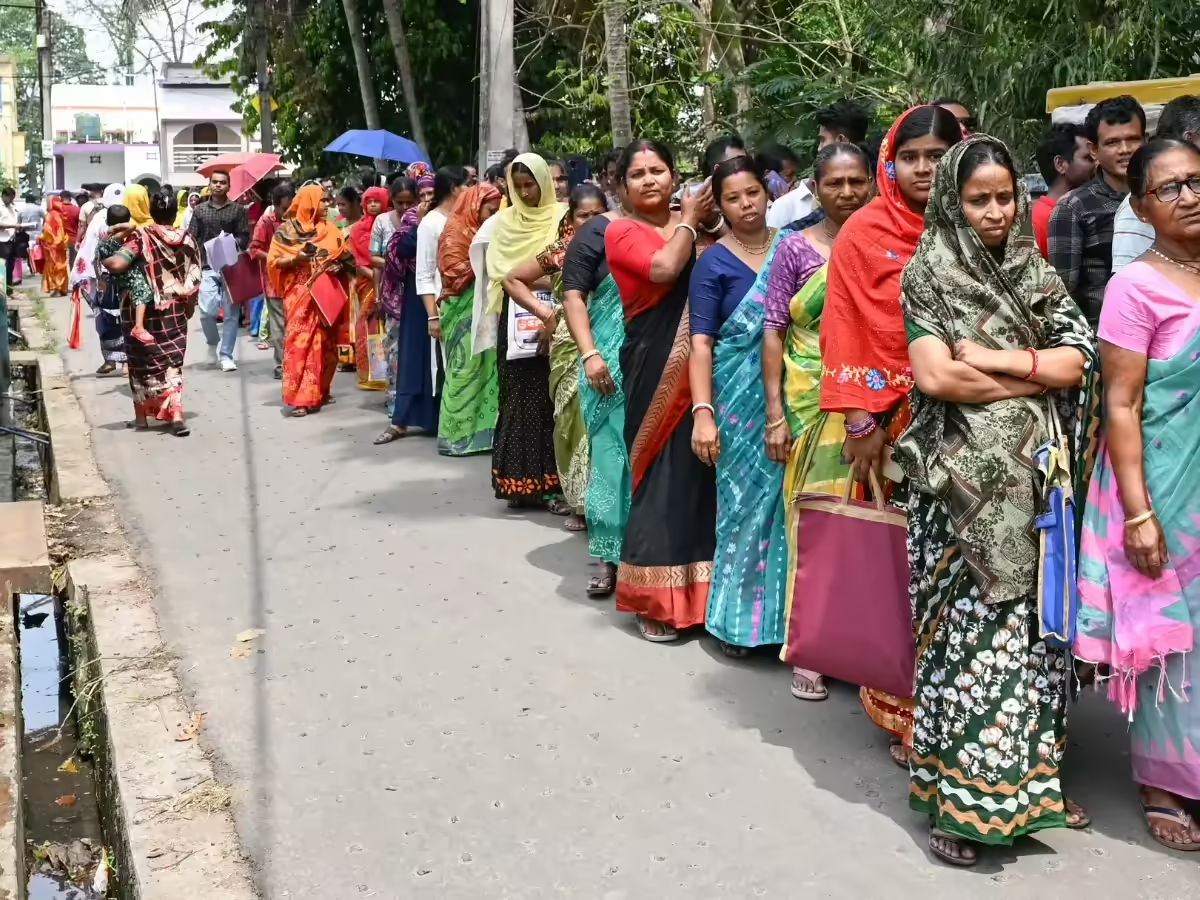
Voting is underway today in Assam, Kerala, and Puducherry, making it one of the most closely watched election days in India’s 2026 political calendar. These elections are critical not just for state leadership but also for shaping national political momentum ahead of future contests.
India is witnessing a significant election day as voters across Assam, Kerala, and Puducherry head to polling booths. The elections in these states carry high political stakes, with regional dynamics, governance performance, and national party strategies all in focus.
Why These State Elections Matter in 2026
The Assam, Kerala, and Puducherry elections are not routine state contests. They are being closely tracked for their broader political signals. In Assam, the contest reflects the performance of the incumbent government and its handling of regional identity, infrastructure, and law and order. Kerala continues its pattern of bipolar competition, while Puducherry remains a politically sensitive Union Territory with shifting alliances.
These elections also serve as a testing ground for national parties looking to consolidate influence in diverse regions. For the ruling party at the Centre, strong results could reinforce its narrative of governance and expansion beyond traditional strongholds. For opposition parties, especially in Kerala, the outcome is a chance to demonstrate resilience and voter trust.
Assam Elections: Regional Identity and Development at Core
In Assam, voters are weighing issues like economic development, flood management, and identity politics. The state has seen significant infrastructure push in recent years, including roads and connectivity projects, which are expected to influence voter sentiment.
However, concerns around regional identity and migration continue to shape political discourse. These factors have historically played a decisive role in Assam elections and remain relevant in 2026. Rural voters and first-time voters in Tier-2 and Tier-3 areas are expected to have a strong say in the outcome.
The voter turnout in smaller towns and semi-urban belts will be a key indicator of political engagement and could tilt results in closely contested constituencies.
Kerala Elections: Traditional Rivalry Faces New Variables
Kerala’s election is once again a contest between established political fronts, but with evolving voter priorities. Issues such as unemployment, welfare delivery, and economic management are central to the campaign narratives.
The state’s highly literate electorate tends to vote on governance performance and policy delivery rather than just political loyalty. This makes Kerala one of the most unpredictable battlegrounds despite its clear alliances.
Youth voters and urban middle-class segments are expected to play a decisive role. Their concerns around job opportunities and cost of living are shaping the campaign discourse in a noticeable way this year.
Puducherry Elections: Alliance Politics in Focus
Puducherry presents a different kind of electoral landscape. Being a Union Territory with a smaller electorate, local alliances and candidate selection often have a disproportionate impact on results.
Frequent political shifts and government changes in recent years have made stability a key issue for voters. Governance delivery, infrastructure, and employment opportunities are among the top concerns.
The role of national parties in Puducherry is significant, but local leadership credibility often determines final outcomes. This makes the election highly dynamic and sensitive to last-mile voter mobilization.
Election Day Dynamics and Voter Turnout Trends
Polling day logistics, voter turnout, and on-ground mobilization are critical factors that can influence results across all three regions. Historically, higher voter turnout in rural and semi-urban areas has altered expected outcomes.
Election authorities have implemented standard measures to ensure smooth voting, including security deployment and monitoring mechanisms. The focus remains on ensuring free and fair elections across sensitive constituencies.
Early trends in voter turnout will be closely analyzed by political observers to gauge momentum shifts and potential surprises.
What These Results Could Mean Nationally
The outcomes in Assam, Kerala, and Puducherry are likely to influence national political narratives in the coming months. Strong performances in diverse regions can boost party confidence and impact alliance strategies ahead of future elections.
For emerging political players and regional parties, these elections offer an opportunity to expand their footprint and influence beyond traditional bases.
The results will also provide insight into how voters in Tier-2 and Tier-3 regions are responding to governance, economic pressures, and political messaging in 2026.
Takeaways
• Assam elections hinge on development versus identity politics balance
• Kerala remains a governance-driven battleground with strong voter awareness
• Puducherry outcome will depend heavily on alliances and local leadership
• Tier-2 and rural voter turnout could significantly influence final results
FAQs
Why are these state elections important nationally?
They act as indicators of political momentum and public sentiment ahead of larger national contests.
What are the key issues in Assam elections 2026?
Development projects, flood management, and identity-related concerns dominate voter priorities.
How is Kerala different from other election states?
Kerala voters tend to prioritize governance performance and policy delivery over personality-driven politics.
Why is Puducherry politically significant despite its size?
Its alliance-driven politics and history of instability make it a strategic and closely watched contest.











Leave a comment