

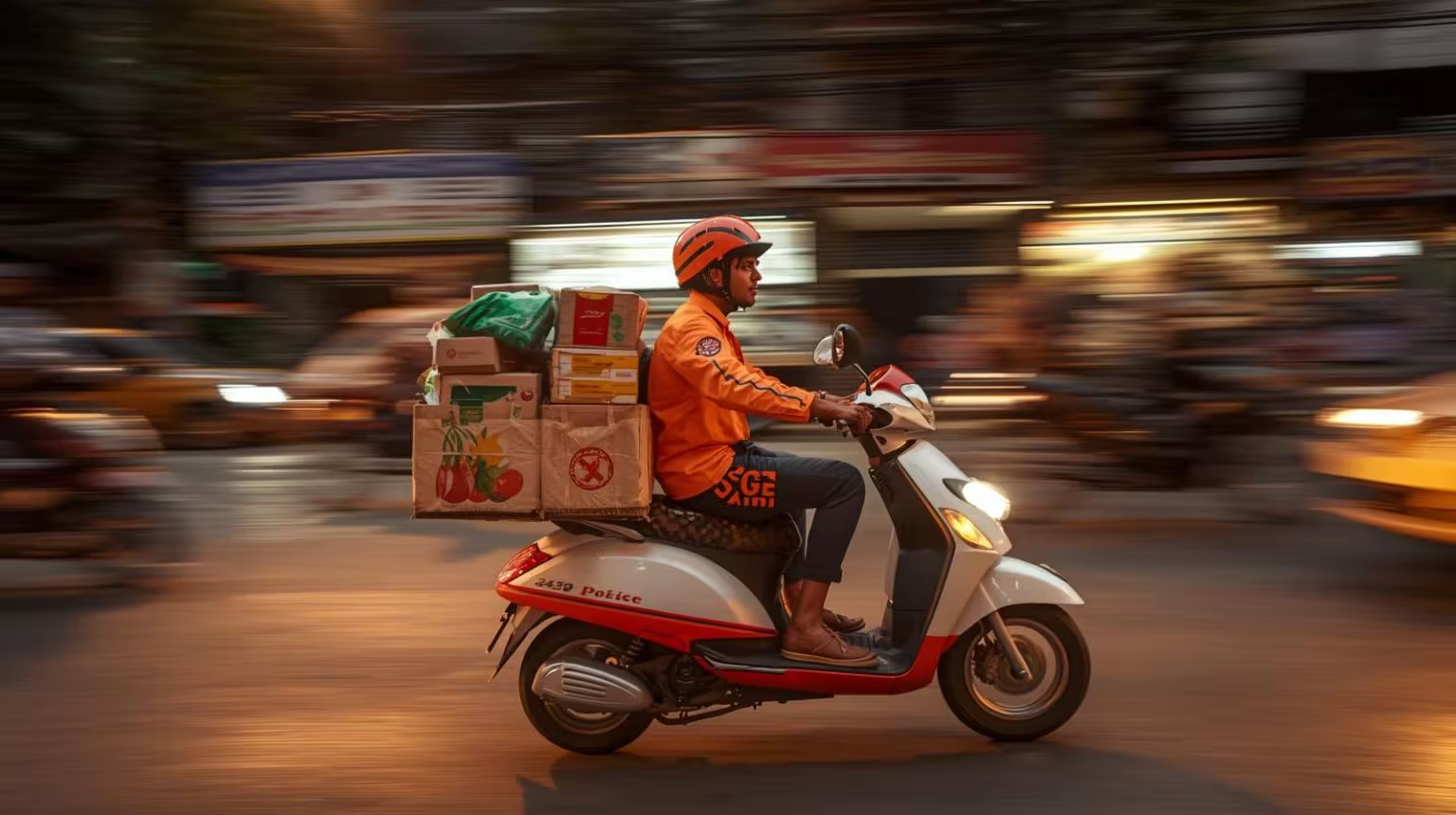
Quick commerce platforms like Zepto and Swiggy Instamart are rapidly expanding beyond metro cities into Tier-2 and Tier-3 India. But as demand for ultra-fast grocery delivery grows, questions remain about whether smaller cities can sustain the economics, infrastructure and customer expectations behind the 10-minute delivery model.
Quick commerce in India has evolved from an urban convenience service into a major retail trend. Platforms such as Zepto, Swiggy and Blinkit are aggressively expanding operations into cities beyond Mumbai, Delhi and Bengaluru. Smaller cities like Nagpur, Indore, Surat, Jaipur and Lucknow are becoming important growth markets as companies compete for new customers.
While demand is increasing, industry experts believe the long-term sustainability of 10-minute delivery in smaller Indian cities will depend on profitability, infrastructure and changing consumer behavior.
Why Quick Commerce Companies Are Expanding Into Tier-2 India
India’s metro markets are becoming increasingly competitive and expensive. Customer acquisition costs in large cities have risen sharply as multiple delivery platforms compete for the same urban consumers.
Tier-2 cities offer a different opportunity. Smartphone usage, digital payments and online grocery adoption have increased significantly over the past few years. Many smaller cities now have young working professionals and middle-class families who are comfortable ordering groceries and daily essentials online.
Quick commerce companies also see strong growth potential because retail infrastructure in smaller cities is still evolving. Local kirana stores remain dominant, but digital convenience is attracting younger consumers looking for faster shopping experiences.
Companies are opening dark stores closer to residential areas to reduce delivery times. These micro-warehouses help platforms process orders quickly while covering compact urban neighborhoods.
The Economics of 10-Minute Delivery Remain Challenging
Despite rapid expansion, the economics behind ultra-fast delivery remain difficult. Maintaining dark stores, paying delivery riders and managing inventory involves high operational costs.
In metro cities, large order volumes help companies offset some of these expenses. However, smaller cities often generate fewer orders per square kilometer, making profitability harder to achieve.
Fuel prices and delivery logistics also affect sustainability. Delivery riders in Tier-2 cities frequently travel longer distances compared to densely populated metros. This increases operational costs while reducing delivery efficiency.
Discount-driven customer behavior creates another challenge. Many consumers still prefer ordering only when offers, cashback or free delivery options are available. This makes it difficult for companies to maintain healthy profit margins.
Industry analysts believe quick commerce platforms may eventually focus less on the “10-minute” promise and more on reliable 20 to 30-minute deliveries that are economically sustainable.
Consumer Habits Are Changing Rapidly
Consumer behavior in smaller cities is changing faster than many expected. Younger households are increasingly using quick commerce apps not just for groceries, but also for electronics, medicines, stationery and personal care products.
Convenience plays a major role in adoption. Busy professionals and students often prefer ordering essentials online instead of visiting crowded markets after work hours.
Festive shopping and late-night ordering have also increased in several Tier-2 cities. During cricket tournaments, festivals and heavy rain periods, quick commerce demand typically spikes.
However, price sensitivity remains stronger outside metros. Consumers in smaller cities often compare prices carefully before placing orders. Unlike metro users who may prioritize speed, Tier-2 buyers still value affordability over convenience in many cases.
This creates a balancing challenge for platforms trying to maintain fast delivery expectations without increasing customer charges significantly.
Local Kirana Stores Still Hold Strong Influence
One major factor that may shape the future of quick commerce in smaller cities is the strength of local kirana stores. In many Tier-2 and Tier-3 regions, neighborhood shops continue offering personalized service, informal credit systems and immediate product availability.
Many residents already have trusted relationships with local shop owners. This makes complete disruption difficult for digital delivery platforms.
Some quick commerce companies are now trying hybrid strategies by partnering with local retailers instead of competing directly against them. These collaborations may help reduce inventory costs while improving delivery reach.
Kirana stores are also becoming more digitally aware. Many now use WhatsApp ordering, UPI payments and local delivery systems to retain customers.
This competition means quick commerce platforms must offer more than speed alone to maintain long-term relevance in smaller markets.
Infrastructure and Workforce Will Decide Future Growth
The future of quick commerce in smaller cities will depend heavily on urban infrastructure and workforce availability. Better roads, organized housing clusters and reliable internet access improve delivery efficiency.
Delivery rider availability is another critical factor. High rider turnover rates can disrupt operations and increase recruitment costs.
Companies are also investing in AI-driven inventory systems and demand forecasting to reduce wastage and improve efficiency. Smarter logistics may help quick commerce become more sustainable outside metros over time.
Experts believe the sector will continue growing, but expansion strategies may become more cautious compared to the aggressive growth phase seen in major cities during the past few years.
Key Takeaways
- Quick commerce companies are rapidly expanding into Tier-2 Indian cities
- Profitability remains difficult due to logistics and operational costs
- Consumers in smaller cities prioritize affordability along with convenience
- Local kirana stores continue to remain strong competitors in regional markets
FAQ
What is quick commerce?
Quick commerce refers to ultra-fast online delivery services, usually delivering groceries and daily essentials within 10 to 30 minutes.
Why are companies like Zepto and Swiggy expanding into smaller cities?
Tier-2 cities offer growing internet penetration, rising digital payment adoption and increasing demand for convenience-based shopping.
Are 10-minute delivery models profitable?
Profitability remains challenging due to high operational expenses, delivery costs and discount-driven customer behavior.
Can local kirana stores survive quick commerce competition?
Yes. Many kirana stores continue attracting customers through trust, personalized service and flexible payment options.








Leave a comment