

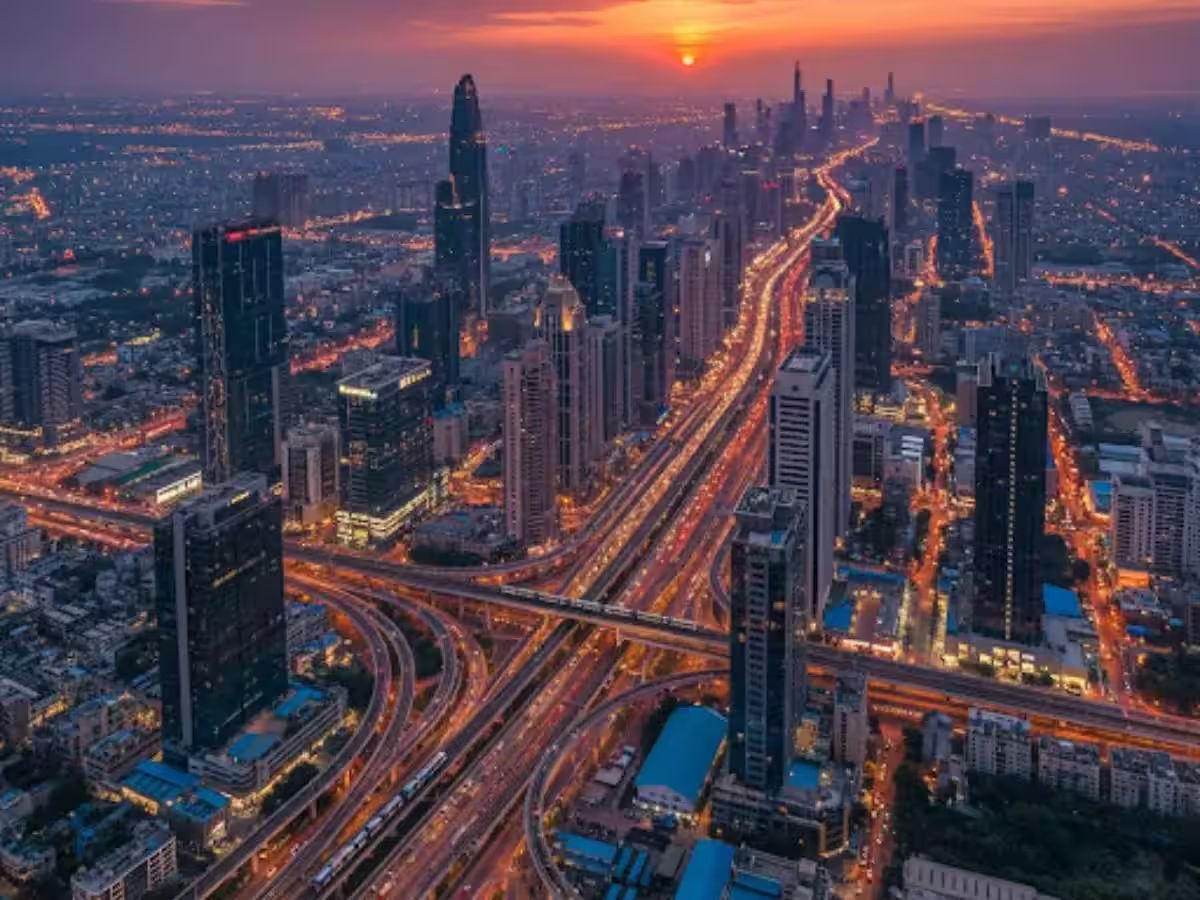
New infrastructure projects are changing how India’s smaller cities connect to jobs, markets, businesses and essential services. From railways and highways to airports, industrial parks and urban infrastructure, the focus is increasingly shifting beyond major metros. The impact could be significant for Tier-2 and Tier-3 cities, but project execution will determine how quickly residents see the benefits.
Infrastructure Expansion Is Moving Beyond Major Metros
India’s infrastructure push is increasingly reaching smaller cities and regional economic centres. Roads, railway lines, industrial parks, airports and urban services are being planned together rather than as isolated projects.
The government’s PM GatiShakti framework is designed to coordinate infrastructure planning across different ministries and states. As of August 11, 2026, 396 infrastructure projects worth about ₹18.66 lakh crore had been evaluated through the Network Planning Group mechanism, with 256 projects sanctioned and 198 under implementation.
For smaller cities, this approach matters because connectivity is often the missing link between local economic potential and larger markets.
A new highway can reduce travel time for businesses. A railway connection can make movement of people and goods easier. An industrial park can create demand for logistics, housing and local services.
The combined effect can be larger than the individual project itself.
Better Rail Connectivity Can Open New Economic Routes
Railway expansion is one of the clearest ways infrastructure can affect smaller cities and towns.
Indian Railways sanctioned 100 projects involving new lines, doubling and multitracking during FY 2025-26, covering more than 6,000 kilometres with an investment of about ₹1.53 lakh crore. The projects include routes intended to improve passenger movement, freight capacity and connectivity to economic and social centres.
A separate government update said 300 railway projects covering 13,808 kilometres had been sanctioned over the previous three years under PM GatiShakti. These projects include 51 new lines, 17 gauge conversions and 232 doubling projects, with several routes passing through small towns and connecting ports and industrial areas.
For Tier-2 cities, better rail infrastructure can have several practical effects. Students may get easier access to educational centres. Workers can travel more efficiently between nearby cities. Manufacturers can move raw materials and finished products at lower logistical friction.
The benefit is not limited to passengers. Better freight connectivity can also help local businesses reach larger markets.
Highways Can Change the Business Geography of Smaller Cities
Road infrastructure can reshape the economic geography of a region because businesses often consider transport access when deciding where to operate.
A recent example is the approved upgrade of the 154.6-kilometre Ghoti-Trimbak-Mokhada-Jawhar-Manor-Palghar section of NH-160A in Maharashtra. The ₹3,320.38 crore project is designed to improve connectivity between industrial areas, economic nodes, railway stations, airports and ports.
The project illustrates how a road can serve more than local commuters. It can connect industrial clusters with larger transport networks and reduce pressure on existing urban routes.
For smaller cities, this can create opportunities for warehouses, transport operators, repair services, hotels, restaurants and other supporting businesses.
However, new roads do not automatically produce economic growth. Local planning, land availability, reliable utilities and access to skilled workers also influence whether businesses actually move into a region.
Industrial Parks Could Bring Jobs Closer to Smaller Cities
Industrial infrastructure is another major part of the current expansion.
The BHAVYA scheme aims to develop 100 investment-ready industrial parks with an outlay of ₹33,660 crore. The programme is intended to provide integrated industrial infrastructure and strengthen manufacturing ecosystems.
India also has 20 approved industrial smart cities across seven industrial corridors, while 272 plug-and-play industrial parks were reported as operational in an August 2026 government update.
For smaller cities, industrial development can reduce dependence on traditional metropolitan employment centres.
A manufacturing unit does not only employ factory workers. It can generate demand for transport, security, maintenance, food services, accommodation, retail and professional services.
That creates what economists often describe as a wider local economic multiplier.
The challenge is ensuring that industrial development is supported by housing, healthcare, schools, public transport and other basic infrastructure. Otherwise, rapid growth can place pressure on existing city services.
Urban Infrastructure Will Matter as Much as Highways
Infrastructure is not only about roads and railway lines. Water supply, sanitation, public transport, drainage and last-mile connectivity directly affect the daily experience of residents.
The Urban Challenge Fund launched in 2026 has an overall size of ₹1 lakh crore and is intended to catalyse ₹4 lakh crore in urban investment. The programme specifically identifies Tier-2 and Tier-3 cities and includes areas such as urban mobility, last-mile connectivity, redevelopment, water and sanitation.
AMRUT 2.0 is also supporting urban water and sanitation infrastructure. As of August 2026, ₹71,133 crore had been allocated for sewerage and septage-related work, with 394 projects worth ₹47,230 crore underway, according to the Ministry of Housing and Urban Affairs.
For residents, these projects can have a more immediate impact than large expressways.
Reliable water supply, better drainage and improved public transport can affect household expenses, commuting time and quality of life every day.
Regional Airports Could Improve Access to Jobs and Tourism
Air connectivity is another area where smaller cities could see changes.
The Modified UDAN scheme, approved in March 2026, has a proposed outlay of ₹28,840 crore for ten years from FY 2026-27 to FY 2035-36. The scheme aims to improve connectivity to underserved and unserved areas and specifically identifies economic growth, tourism, healthcare access and affordable air travel as expected benefits for Tier-2 and Tier-3 cities.
Better regional aviation can make smaller cities more accessible to businesses and visitors.
For tourism-dependent regions, improved airport connectivity can help shorten travel times. For businesses, it can make meetings and movement between regional centres easier.
But air connectivity also depends on sustained passenger demand and financially viable routes. Airport infrastructure alone does not guarantee regular services.
Smaller Cities Could See a Wider Shift in Opportunity
The larger change may come from the interaction between different infrastructure projects.
A railway line connected to an industrial park can support freight movement. A highway connecting the same area to a major city can expand its market access. Better public transport can help workers reach new employment centres.
This interconnected model is central to PM GatiShakti, which aims to coordinate different infrastructure sectors and improve last-mile connectivity.
That could gradually change the role of Tier-2 and Tier-3 cities in India’s economy.
Instead of functioning mainly as administrative or consumption centres, some could develop stronger manufacturing, logistics, tourism, technology or services ecosystems.
The pace, however, will vary significantly from one city to another.
The Biggest Test Will Be Project Execution
Announcing infrastructure is only the first step. The real impact depends on land acquisition, environmental approvals, funding, construction timelines and coordination between government agencies.
Cities also need to prepare for the secondary effects of infrastructure-led growth.
More factories can mean more workers. More workers can mean higher demand for housing and transport. More vehicles can create congestion if urban roads are not upgraded at the same time.
This makes integrated city planning important.
The objective should not simply be to connect a smaller city to a major economic centre. It should also be to ensure that the city has the capacity to handle the economic activity that better connectivity can bring.
What This Means for Residents and Local Businesses
For ordinary residents, infrastructure development can translate into shorter journeys, better access to jobs, improved public services and greater connectivity with larger cities.
For local businesses, the opportunity could be broader markets and lower transportation barriers.
For young people, new industrial and service clusters may create alternatives to migrating permanently to Mumbai, Delhi, Bengaluru, Hyderabad or other major metropolitan centres.
But these outcomes are not automatic. Infrastructure creates the conditions for growth. Local economic policy, private investment, education, skills and urban governance determine how much of that opportunity is actually captured.
Key Takeaways
- India is expanding infrastructure planning and investment beyond major metropolitan centres.
- Railways, highways, industrial parks and regional aviation can improve economic connectivity for smaller cities.
- Urban infrastructure such as water, sanitation and public transport will be critical as these cities grow.
- The actual benefits will depend on timely project execution and coordinated local planning.
FAQs
What infrastructure projects are benefiting smaller Indian cities?
Railway expansions, highways, industrial parks, regional airports and urban infrastructure programmes are among the major areas receiving attention. PM GatiShakti is intended to coordinate these projects and improve multimodal connectivity.
How can infrastructure create jobs in Tier-2 cities?
Infrastructure can directly create construction and engineering jobs while indirectly increasing demand for logistics, retail, hospitality, housing, maintenance and other services. Industrial parks can also attract manufacturing and related businesses.
Will infrastructure reduce migration from smaller cities?
It could create more local employment opportunities, but infrastructure alone cannot determine migration patterns. Job availability, wages, education, healthcare and quality of life will also influence whether people choose to stay or move.
Why is last-mile connectivity important?
A highway, railway station or industrial park is less useful if people and businesses cannot reach it efficiently. Last-mile roads, public transport and logistics connections help translate major infrastructure investments into practical economic benefits.









Leave a comment