

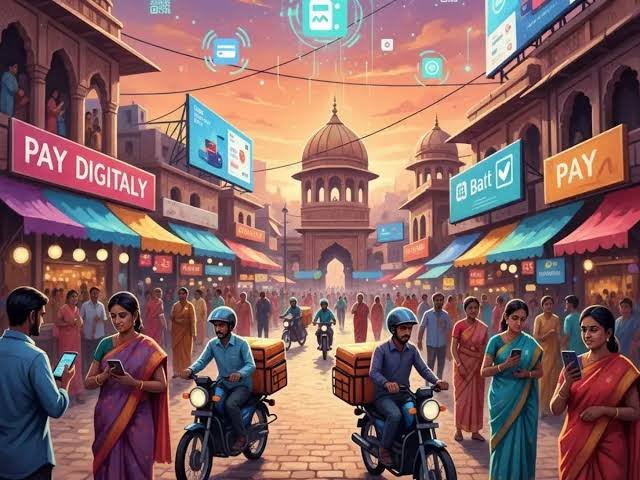
Smaller Indian cities are becoming increasingly important to the country’s next phase of employment and investment. Expanding industrial parks, infrastructure projects, digital connectivity and changing hiring patterns are creating new opportunities beyond major metros, although skills, infrastructure and project execution remain critical factors.
Hiring Is Moving Beyond India’s Biggest Metros
The employment landscape in India is showing signs of a wider geographic shift. Companies are increasingly looking at Tier-2 and Tier-3 cities for talent, rather than concentrating recruitment entirely in Mumbai, Delhi-NCR, Bengaluru, Hyderabad, Chennai and other major urban centres.
A report cited by PTI in September 2026 found that 69% of organisations surveyed had increased hiring from Tier-2 and Tier-3 cities by more than 30% over the previous two years. The report attributed the shift to factors including cost considerations, talent availability and employee retention.
The trend does not mean that large cities are losing their role as India’s main employment centres. Instead, companies are adding more locations to their hiring networks.
For smaller cities, this can create a different kind of opportunity. Jobs that once required relocation to a metro may increasingly be available locally, particularly in technology-enabled services, sales, customer support, finance, logistics, healthcare and other service sectors.
Industrial Parks Could Bring Investment Closer to Smaller Cities
Manufacturing infrastructure is another major factor behind the changing economic landscape.
The Centre approved the Bharat Audyogik Vikas Yojana, or BHAVYA, in March 2026 with an outlay of ₹33,660 crore to develop 100 plug-and-play industrial parks over six years. The scheme is intended to provide investment-ready infrastructure for manufacturing and is being implemented with states and private-sector participation.
The government has specifically highlighted Tier-2 and Tier-3 cities as part of the scheme’s focus. The June 2026 implementation briefing said cities with populations above 10 lakh in these categories would be covered, alongside industrially backward states.
For smaller cities, the significance is straightforward. Industrial parks can provide companies with developed land, utilities, logistics facilities and other infrastructure needed before production begins.
If investment follows, employment can extend beyond factory floors to transport, maintenance, warehousing, food services, security, construction and other local businesses.
Industrial Corridors Are Creating New Economic Nodes
The broader industrial corridor programme is also changing where large-scale investment can be located.
The government has approved 20 industrial nodes under the National Industrial Corridor Development Programme. These projects are being developed through Centre-state partnerships, with states involved in planning and implementation.
Several of the industrial cities and nodes are located outside India’s traditional metropolitan centres.
Government data for 12 greenfield industrial cities approved in 2024 projected combined investment potential of about ₹1.53 lakh crore and employment potential of roughly 9.39 lakh jobs. These are projected figures, not jobs already created. The projects include industrial nodes in places such as Gaya, Prayagraj, Agra, Hisar, Jodhpur-Pali, Orvakal and Kopparthy.
This distinction matters.
An announced investment or projected employment figure does not automatically translate into immediate jobs. Land development, construction, company commitments, production capacity and actual recruitment all have to follow.
Still, the geographic spread of these projects indicates that industrial policy is increasingly looking beyond established metropolitan clusters.
Maharashtra’s Amravati Shows the Potential
Maharashtra is one example of how a smaller urban centre can be positioned for industrial investment.
Amravati has been selected as one of the seven locations for the PM Mega Integrated Textile Region and Apparel, or PM MITRA, Parks. The other locations are in Tamil Nadu, Telangana, Gujarat, Karnataka, Madhya Pradesh and Uttar Pradesh.
The PM MITRA programme is designed around integrated textile manufacturing infrastructure. It includes factory sites, roads, power, water and wastewater systems, logistics, warehousing, worker housing and skill-development facilities.
This model is important for smaller cities because a manufacturing cluster can generate employment across an entire local ecosystem.
A textile park does not only require production workers. It can create demand for transport operators, packaging suppliers, maintenance services, restaurants, accommodation, financial services and training providers.
The extent of the economic impact will depend on how quickly investment commitments turn into operating units and sustained employment.
Better Infrastructure Can Make Smaller Cities More Attractive
Jobs and investment rarely follow population size alone. Companies also consider whether a city has reliable transport, electricity, internet connectivity, water, housing and access to skilled workers.
That is why infrastructure development is closely connected to the growth prospects of smaller cities.
India currently has 272 plug-and-play industrial parks reported as operational, while 20 industrial smart cities have been approved across seven industrial corridors. The government has also approved BHAVYA for another 100 industrial parks.
The idea behind plug-and-play infrastructure is to reduce the time and complexity involved in setting up industrial operations.
For a smaller city, this can address one of the biggest barriers to investment: the absence of ready industrial land and supporting infrastructure.
However, infrastructure must also keep pace with residential and civic requirements. More factories and offices mean more demand for housing, schools, healthcare, public transport and municipal services.
Digital Jobs Could Expand the Opportunity
The next wave of employment will not be limited to manufacturing.
India’s expanding digital economy means some services can be delivered from cities that are far away from the headquarters of large companies. Customer service, business-process operations, software services, financial services, digital marketing and other knowledge-based activities can operate from multiple locations when connectivity and talent are available.
Government policy is also placing greater emphasis on skills, artificial intelligence and digital technologies. A recent PIB overview of India’s skill ecosystem said the country’s approach is increasingly connecting education, skilling, employment and entrepreneurship, with attention to AI and future workforce requirements.
For smaller cities, this creates an important requirement: local workers need access to training that matches actual employer demand.
A city can attract a company, but the long-term employment benefit will be limited if employers cannot find workers with the required technical and professional skills.
Skills Will Decide Who Benefits From New Investment
Investment does not automatically benefit every section of a city’s population.
New industrial or technology companies may require specialised workers, while existing local workers may have experience in entirely different sectors.
This makes skilling and reskilling particularly important.
The government has highlighted the need to connect vocational education, industry requirements, digital technologies and lifelong learning.
For young people in smaller cities, the opportunity could therefore extend beyond finding a job in a newly established company.
Training in areas such as coding, data services, machine operations, logistics, accounting, digital commerce, electronics and technical maintenance could improve access to emerging employment categories.
Local colleges and training institutions may also become more important if businesses begin hiring closer to these cities.
Local Businesses Could Benefit From the Employment Cycle
Large investment projects can create secondary economic activity.
When a new industrial facility begins operations, employees need housing, transport, food, healthcare and everyday services. Companies need suppliers, maintenance providers, logistics operators and professional services.
This can create opportunities for small businesses that are not directly connected to the main investor.
The effect is particularly relevant in cities where formal employment opportunities have historically been concentrated in government services, traditional trade or small-scale businesses.
However, local enterprises need access to finance and suitable infrastructure to participate in these supply chains.
Without that support, some of the economic activity generated by a new investment project may be captured by larger companies from outside the city.
Housing and Urban Planning Will Become More Important
If employment expands, cities will need to accommodate new workers.
This can increase demand for rental housing, affordable homes, public transport and basic services.
The risk is visible in several fast-growing urban areas where employment clusters have expanded faster than roads, water systems and public services.
For smaller cities preparing for investment, planning before population growth becomes intense could reduce future pressure.
Industrial development therefore cannot be treated as a separate issue from urban development.
A new factory may create hundreds or thousands of jobs, but the city also needs transport routes, housing and civic infrastructure capable of supporting the workers and their families.
The Next Challenge Is Turning Plans Into Actual Jobs
India’s smaller cities are entering this phase with several favourable developments: companies are widening their hiring locations, industrial parks are being developed and government programmes are targeting manufacturing and infrastructure outside the biggest metros.
But there is a significant gap between potential and delivery.
A projected investment is not the same as capital already deployed. A proposed industrial park is not the same as an operating factory. And an employment estimate is not the same as people already receiving salaries.
For residents, the real test will be visible economic activity.
That means functioning industrial units, sustained recruitment, new local businesses and improved infrastructure.
If those elements develop together, smaller cities could capture a larger share of India’s employment and investment growth over the coming years.
What Smaller Cities Need to Prepare
The cities that benefit from the next investment cycle will need more than available land.
They will need reliable electricity and water, good roads, digital connectivity, skilled workers, efficient local administration and housing that workers can afford.
Businesses will also look at the quality of the local supply chain and access to larger markets.
This makes coordination between state governments, local bodies, educational institutions and private companies important.
For young residents, the changing landscape could mean more opportunities to build careers without automatically relocating to a major metro.
For local entrepreneurs, it could mean a larger customer base and new B2B opportunities.
The scale of the opportunity will ultimately depend on execution, not announcements alone.
Key Takeaways
- Hiring is expanding beyond India’s major metros, with recent industry data showing stronger recruitment from Tier-2 and Tier-3 cities.
- The ₹33,660 crore BHAVYA scheme aims to develop 100 plug-and-play industrial parks and specifically includes a focus on Tier-2 and Tier-3 locations.
- Industrial corridors and projects such as PM MITRA are creating potential investment and employment hubs outside traditional metropolitan centres.
- Skills, housing, transport and civic infrastructure will determine how much of the projected investment translates into local employment.
FAQs
Why are companies hiring more from Tier-2 and Tier-3 cities?
Recent industry research points to factors including talent availability, lower operating costs and employee retention. Companies can also access a wider workforce by distributing recruitment across multiple cities.
Which government programme is targeting new industrial parks?
The BHAVYA scheme has an outlay of ₹33,660 crore and aims to develop 100 plug-and-play industrial parks between 2026-27 and 2031-32. The programme is intended to create investment-ready industrial infrastructure.
Can smaller cities replace major metros as employment centres?
There is no evidence that smaller cities are replacing major metros. The current trend is better described as geographic diversification, with companies adding Tier-2 and Tier-3 cities to their hiring and investment networks.
What will determine whether new investment creates local jobs?
Actual job creation will depend on projects becoming operational, companies following through on investment plans, availability of skilled workers, infrastructure quality and the ability of local businesses to participate in emerging supply chains.








Leave a comment