

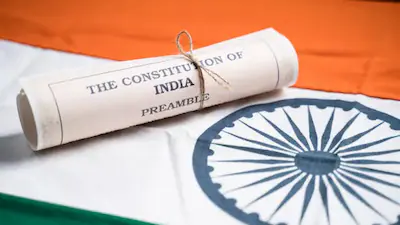
India observes Constitution Day on November 26 every year to commemorate the adoption of its Constitution in 1949. The occasion highlights the importance of Fundamental Rights, Fundamental Duties and democratic values in protecting citizens and strengthening India’s constitutional framework.
Why India Celebrates Constitution Day on November 26
Constitution Day 2026 is being observed across India on November 26 to mark the adoption of the Indian Constitution by the Constituent Assembly on the same date in 1949. Also known as Samvidhan Diwas, the day reminds citizens of the principles that guide India’s democracy, governance and legal system.
The Constitution came into effect on January 26, 1950, which is celebrated as Republic Day. Although it was adopted in November 1949, the government formally introduced November 26 as Constitution Day in 2015 to promote awareness about constitutional values and the contribution of those involved in framing the document.
The Ministry of Parliamentary Affairs is facilitating an online reading of the Preamble through the MyGov portal in 23 languages, including 22 Scheduled Languages and English, as part of the 2026 celebrations. Educational institutions, government departments and citizens are being encouraged to participate.
For students, young professionals and ordinary citizens, Constitution Day is an opportunity to understand how constitutional principles influence everyday life.
Dr BR Ambedkar’s Contribution to the Indian Constitution
Dr BR Ambedkar played a significant role in the making of the Indian Constitution as the Chairman of the Drafting Committee of the Constituent Assembly.
The Constituent Assembly began its work in December 1946. The Drafting Committee was established on August 29, 1947, under Ambedkar’s chairmanship. Its responsibility was to prepare a constitutional framework that could guide an independent India with its diverse languages, religions, communities and social structures.
The Constitution was the result of extensive discussions, debates and contributions from several members of the Constituent Assembly. It was designed to establish democratic institutions, define the powers of government and protect the rights of individuals.
One of its most important features was the recognition that every citizen should receive constitutional protection, regardless of their social or economic background.
The Constitution also established a framework through which citizens could question government actions and seek legal remedies when their rights were violated.
Fundamental Rights in India: Six Important Categories
Fundamental Rights are among the most important provisions of the Indian Constitution. They are included in Part III, covering Articles 12 to 35.
These rights protect individual freedom, equality and dignity. They also place constitutional limits on the exercise of government power.
The Constitution recognises six broad categories of Fundamental Rights.
1. Right to Equality (Articles 14 to 18)
The Right to Equality ensures that individuals receive equal treatment under the law. Article 14 provides equality before the law and equal protection of laws.
These provisions also address discrimination on grounds of religion, race, caste, sex or place of birth. They include equality of opportunity in public employment, abolition of untouchability and abolition of titles, subject to constitutional provisions.
For ordinary citizens, these protections are important in education, employment, public services and access to justice.
2. Right to Freedom (Articles 19 to 22)
The Right to Freedom protects several essential civil liberties. These include freedom of speech and expression, peaceful assembly, association, movement, residence and profession, subject to constitutional restrictions.
Article 21 protects life and personal liberty. Article 21A provides for free and compulsory education for children between six and fourteen years of age.
These provisions are particularly relevant in a country where citizens regularly express opinions through newspapers, television, public discussions and social media.
However, these freedoms are not unlimited. The Constitution permits reasonable restrictions under specified conditions.
3. Right Against Exploitation (Articles 23 and 24)
This right protects individuals against human trafficking, forced labour and certain forms of exploitation.
Article 23 prohibits trafficking in human beings and forced labour. Article 24 prohibits the employment of children below fourteen years of age in factories, mines and other hazardous employment.
These provisions remain important in addressing issues such as bonded labour, human trafficking and child labour.
4. Right to Freedom of Religion (Articles 25 to 28)
India is a secular republic, and the Constitution protects freedom of conscience and the right to freely profess, practise and propagate religion, subject to public order, morality, health and other constitutional provisions.
These protections allow individuals to follow their religious beliefs while maintaining the broader constitutional framework of equality and freedom.
5. Cultural and Educational Rights (Articles 29 and 30)
India’s cultural and linguistic diversity is reflected in these constitutional protections.
Article 29 protects the interests of sections of citizens who have a distinct language, script or culture. Article 30 gives religious and linguistic minorities the right to establish and administer educational institutions of their choice.
These provisions help protect cultural identity and educational opportunities across different communities.
6. Right to Constitutional Remedies (Article 32)
The Right to Constitutional Remedies allows individuals to approach the Supreme Court for the enforcement of Fundamental Rights.
The Supreme Court can issue constitutional writs, including habeas corpus, mandamus, prohibition, quo warranto and certiorari.
High Courts also have the power to issue writs under Article 226.
This right is particularly significant because constitutional guarantees become meaningful when citizens have access to legal mechanisms to protect them.
Fundamental Duties: What Every Indian Citizen Should Remember
While Fundamental Rights explain the protections available to citizens, Fundamental Duties highlight their responsibilities towards the country and society.
These duties are included in Part IVA under Article 51A. They were added through the 42nd Constitutional Amendment Act, 1976. An additional duty relating to providing educational opportunities to children between six and fourteen years was introduced through the 86th Amendment Act, 2002.
The Constitution currently lists 11 Fundamental Duties.
They include respecting the Constitution, the National Flag and the National Anthem, protecting India’s sovereignty and integrity, promoting harmony among citizens and preserving the country’s cultural heritage.
Citizens are also expected to protect the natural environment, develop scientific temper, safeguard public property and avoid violence.
Parents and guardians have a duty to provide educational opportunities to their children or wards between six and fourteen years of age.
These responsibilities have practical relevance in everyday life. Protecting public property, avoiding discrimination, respecting different communities and keeping public spaces clean are examples of how constitutional values can be reflected in individual behaviour.
Unlike Fundamental Rights, Fundamental Duties are generally not directly enforceable through courts as standalone claims. However, laws can give effect to them, and courts may consider them when interpreting constitutional provisions and legislation.
Why Fundamental Rights and Duties Matter in Everyday Life
The importance of the Constitution is not limited to Parliament, courts or government offices. Its principles influence several aspects of everyday life.
For example, the Right to Equality is relevant when a person applies for a government job or seeks access to public services. Freedom of Expression matters when citizens share opinions, question public policies or participate in discussions.
Similarly, the Right to Education has a direct impact on children and families, while protections against exploitation are important for workers and vulnerable communities.
Fundamental Duties also have a visible connection with daily activities. Citizens who avoid damaging public property, respect different communities and take steps to protect the environment contribute towards a more responsible society.
In smaller cities and towns, constitutional awareness can be particularly useful. People may encounter questions involving local administration, public facilities, educational opportunities, discrimination or access to government services.
Knowing basic constitutional rights can help individuals understand where to seek information and which legal institutions may provide assistance.
Constitution Day 2026: Why Young Indians Should Understand the Constitution
Young Indians are increasingly participating in public discussions through social media, educational institutions, professional networks and community initiatives.
However, sharing information about rights and government policies also requires an understanding of constitutional principles.
For example, freedom of expression does not mean that every form of speech is protected without limitations. Similarly, equality before the law does not mean that every individual situation must receive identical treatment regardless of relevant legal circumstances.
Understanding these distinctions can help young citizens participate in public discussions more responsibly.
Schools and colleges can also play an important role by organising Constitution-reading activities, debates, quizzes and discussions about Fundamental Rights and Duties.
The government’s 2026 initiative to facilitate Preamble reading in 23 languages provides an opportunity to make constitutional awareness more accessible to people across different linguistic backgrounds.
Constitution Day should therefore be viewed as more than an annual commemorative occasion. It is a reminder that democracy depends not only on institutions but also on informed citizens who understand their rights and responsibilities.
Key Takeaways
- India celebrates Constitution Day on November 26 to commemorate the adoption of the Constitution in 1949.
- Fundamental Rights are included in Part III and cover six broad categories of constitutional protections.
- Article 51A lists 11 Fundamental Duties that encourage responsible citizenship and respect for national values.
- Constitutional awareness helps citizens understand their freedoms, legal protections and responsibilities towards society.
Frequently Asked Questions (FAQs)
1. Why is Constitution Day celebrated on November 26 in India?
Constitution Day is celebrated on November 26 because the Constituent Assembly adopted the Constitution of India on November 26, 1949. The government officially declared this date Constitution Day in 2015.
2. How many Fundamental Rights are there in the Indian Constitution?
The Constitution currently recognises six broad categories of Fundamental Rights under Part III, covering Articles 12 to 35.
3. How many Fundamental Duties are mentioned in the Indian Constitution?
There are 11 Fundamental Duties under Article 51A. They include respecting the Constitution, protecting national unity, promoting harmony and safeguarding the environment.
4. What is the difference between Fundamental Rights and Fundamental Duties?
Fundamental Rights provide constitutional protections and freedoms to individuals, while Fundamental Duties describe responsibilities citizens are expected to follow towards the nation and society. Fundamental Rights can be enforced through constitutional courts, whereas Fundamental Duties are generally not independently enforceable as standalone claims.
(Internal Keywords: Constitution Day 2026, Samvidhan Diwas India, Fundamental Rights in India, Fundamental Duties Article 51A, Article 32 of Indian Constitution, Dr BR Ambedkar contribution, Indian Constitution facts, Preamble of Indian Constitution, Constitution Day significance, Indian democracy and constitutional values)











Leave a comment