

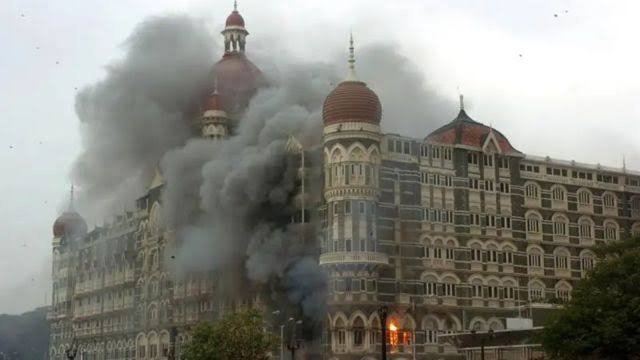
Eighteen years after the 26/11 Mumbai terror attacks, Maharashtra is reorganising its counter-terrorism framework to improve emergency response and coordination. The latest decision to bring Force One under the ATS highlights India’s continuing efforts to strengthen specialised security preparedness.
26/11 Mumbai Attacks: The Incident That Changed India’s Security Approach
The 26/11 Mumbai terror attacks remain one of the most significant security incidents in India’s modern history. On November 26, 2008, ten terrorists associated with the Pakistan-based Lashkar-e-Taiba entered Mumbai by sea and carried out coordinated attacks at several locations, including the Taj Mahal Palace Hotel, Chhatrapati Shivaji Terminus, Oberoi-Trident Hotel, Nariman House and Leopold Cafe.
The attacks continued for nearly three days, leaving 166 people dead and hundreds injured. Security personnel from the Mumbai Police, Indian Army, Navy and National Security Guard (NSG) participated in the response.
The incident exposed serious gaps in India’s counter-terrorism preparedness, particularly in intelligence coordination, coastal security, specialised response capabilities and emergency mobilisation.
The NSG commandos had to be airlifted from their base in Manesar, Haryana, to Mumbai. Their arrival highlighted the need for states to develop specialised forces capable of responding quickly to major security threats.
Eighteen years later, the anniversary provides an opportunity to examine how Maharashtra and other Indian security agencies are adapting their preparedness.
Force One: Maharashtra’s Specialised Counter-Terrorism Force
Force One was established by the Maharashtra government in 2009 following the 26/11 attacks. Modelled on the NSG, the unit was created to provide the state with a dedicated team of specially trained commandos capable of responding to high-risk terrorist incidents.
Before its establishment, Maharashtra did not have a comparable dedicated commando unit for immediate counter-terrorism intervention.
Force One was developed with specialised personnel, modern weapons and training for operations involving terrorist threats, hostage rescue and protection of important installations.
The primary objective was to reduce dependence on central forces for the initial response to a major security emergency.
According to reporting by The Indian Express on November 26, 2026, Force One has spent 17 years training and remaining on standby for a major terror strike, without having to fight one directly. The unit has, however, supported the Anti-Terrorism Squad in a limited number of operations.
Its existence represents an important change in Maharashtra’s security planning: the state now has a specialised force designed to respond to serious threats within its jurisdiction.
Maharashtra Brings Force One Under ATS Control in November 2026
One of the most significant developments ahead of the 18th anniversary of the Mumbai attacks is the Maharashtra government’s decision to bring Force One under the administrative and operational control of the Anti-Terrorism Squad.
A Government Resolution issued by the Maharashtra Home Department on November 16, 2026, formalised the restructuring.
Previously, Force One and the ATS operated under separate administrative reporting structures. Although the two agencies had closely connected responsibilities, separate command arrangements could create coordination challenges during security operations.
Under the new arrangement, both specialised units will function under the ATS leadership.
The decision is intended to improve communication, operational planning and deployment of specialised personnel.
The ATS primarily handles intelligence gathering, investigation of terror-related offences and identification of potential security threats. Force One provides the specialised armed response required during high-risk situations.
Bringing the two functions under a common leadership structure is expected to reduce administrative delays and improve coordination during emergencies.
The government has clarified that the restructuring will not change Force One’s existing organisational structure, manpower, financial provisions or service conditions.
This is an administrative and operational integration, not an announced expansion of the commando unit.
Why ATS and Force One Coordination Matters
Counter-terrorism operations involve more than the physical response to an attack. Intelligence collection, threat assessment, investigation and specialised intervention must work together.
For example, intelligence agencies may identify a potential security threat through surveillance or investigation. The information must then reach the appropriate operational teams so that preventive measures can be considered.
The ATS plays an important role in identifying and investigating suspected terrorist networks and activities. Force One brings specialised personnel and tactical capabilities to situations requiring an armed response.
When these functions operate under separate leadership structures, coordination may require additional administrative communication.
The November 2026 restructuring aims to address this issue by bringing both agencies under a unified command arrangement.
Former Force One leadership and senior police officials cited in The Indian Express report have also highlighted the importance of closer coordination between intelligence and specialised response teams.
However, the actual effectiveness of the restructuring will depend on its implementation, communication systems, operational planning and regular joint training.
NSG Training: Preparing State Police for Another 26/11-Type Attack
Another important development in India’s counter-terrorism preparedness is the National Security Guard’s specialised training programme for state anti-terror units.
According to a Hindustan Times report published on November 26, 2026, the NSG has completed six-week police commando conversion courses for personnel belonging to anti-terror units in Maharashtra, Telangana, West Bengal, Gujarat and Uttar Pradesh.
The training programme is part of a broader effort to ensure that state police forces have specialised teams capable of responding to major terrorist incidents.
The programme includes training in hostage rescue, counter-terrorism operations and coordination with the NSG during emergencies.
Hostage rescue is particularly important because the 26/11 attacks demonstrated how difficult it can be to respond to simultaneous threats inside large buildings.
During the Mumbai attacks, security personnel had to deal with complex situations involving multiple locations, trapped civilians and armed attackers.
The NSG training programme aims to improve the ability of state-level personnel to handle similar emergencies as first responders while working alongside specialised central forces when required.
The Union Home Ministry is monitoring the training initiative, and further courses are planned for other state anti-terror units.
India’s Counter-Terrorism Framework After 26/11
The 2008 attacks led to several changes in India’s national security arrangements.
One major development was the establishment of the National Investigation Agency (NIA) in 2008 to investigate offences related to terrorism and other threats to national security.
Coastal security also received greater attention because the attackers entered Mumbai through the sea route.
The government strengthened coastal surveillance and coordination among the Indian Navy, Coast Guard, marine police and other security agencies.
The development of specialised state counter-terrorism units was another important part of the post-26/11 response.
In February 2026, the Ministry of Home Affairs published India’s National Counter Terrorism Policy and Strategy, known as PRAHAAR.
The policy identifies local police as the first responders to terrorist attacks, supported by specialised state and central forces. It also emphasises intelligence sharing, modernisation, training and coordination between different security agencies.
The strategy recognises that counter-terrorism preparedness requires cooperation between institutions operating at national, state and district levels.
This approach is particularly relevant for large urban centres, industrial regions, transport hubs and coastal areas.
Why Modern Security Preparedness Must Go Beyond Commandos
The nature of security threats continues to evolve. Traditional armed attacks are no longer the only concern for security agencies.
Cyber threats, drone-related risks, attacks on critical infrastructure, misinformation and vulnerabilities in communication networks have created additional challenges.
Police forces increasingly require access to modern surveillance systems, secure communication infrastructure, specialised equipment and updated training.
Maharashtra has also explored the use of drones for security and surveillance. In November 2025, reports indicated that the state police was working towards a comprehensive drone-use policy to address emerging security challenges.
Such developments show why counter-terrorism preparedness cannot depend on a single specialised unit.
It requires cooperation between local police, intelligence agencies, specialised commandos, emergency medical services, fire departments and central security forces.
Regular mock exercises and coordinated training are equally important because emergency response depends on how effectively different agencies work together under pressure.
26/11 Anniversary 2026: Remembering Victims While Strengthening Preparedness
The 18th anniversary of the Mumbai attacks is also being marked through memorial activities and public awareness initiatives.
On November 25, 2026, the NSG announced a memorial and pledge ceremony at Mumbai’s Gateway of India under the theme #NEVEREVER.
The programme is intended to honour those who lost their lives, recognise survivors and remember the security personnel who made sacrifices during the attacks.
Schools and colleges are also participating in pledge-taking activities focused on peace, vigilance and national security.
While memorial events preserve the memory of the tragedy, institutional reforms address the lessons that emerged from it.
The Maharashtra government’s decision to bring Force One under ATS control and the NSG’s training programme for state anti-terror units are two developments in this continuing process.
The objective is to improve preparedness, strengthen coordination and ensure that security agencies can respond effectively to future threats.
Key Takeaways
- Force One was established in 2009 following the 26/11 Mumbai attacks to strengthen Maharashtra’s specialised counter-terrorism response.
- A November 16, 2026, government resolution brought Force One under the administrative and operational control of the ATS.
- The NSG completed six-week commando training courses for anti-terror personnel from five states, including Maharashtra.
- India’s post-26/11 security framework increasingly focuses on intelligence sharing, coastal security, specialised training and coordination between state and central agencies.
Frequently Asked Questions (FAQs)
1. Why was Force One established in Maharashtra?
Force One was established in 2009 following the 26/11 Mumbai terror attacks. It was created to provide Maharashtra with a dedicated, specially trained commando force capable of responding to major terrorist incidents and hostage situations.
2. What is the latest development involving Force One in 2026?
On November 16, 2026, the Maharashtra government issued a resolution placing Force One under the administrative and operational control of the Anti-Terrorism Squad. The decision aims to improve coordination and ensure unified leadership during counter-terrorism operations.
3. What is the role of the National Security Guard in India’s counter-terrorism framework?
The NSG is India’s specialised federal counter-terrorism force. It handles exceptional situations involving major terrorist attacks and hostage rescue operations. It also provides specialised training and capacity-building support to state anti-terror units.
4. What security changes followed the 26/11 Mumbai attacks?
The attacks led to several changes, including the establishment of the NIA, improvements in coastal security, the development of specialised state counter-terrorism units and stronger coordination among national and state security agencies.












Leave a comment