

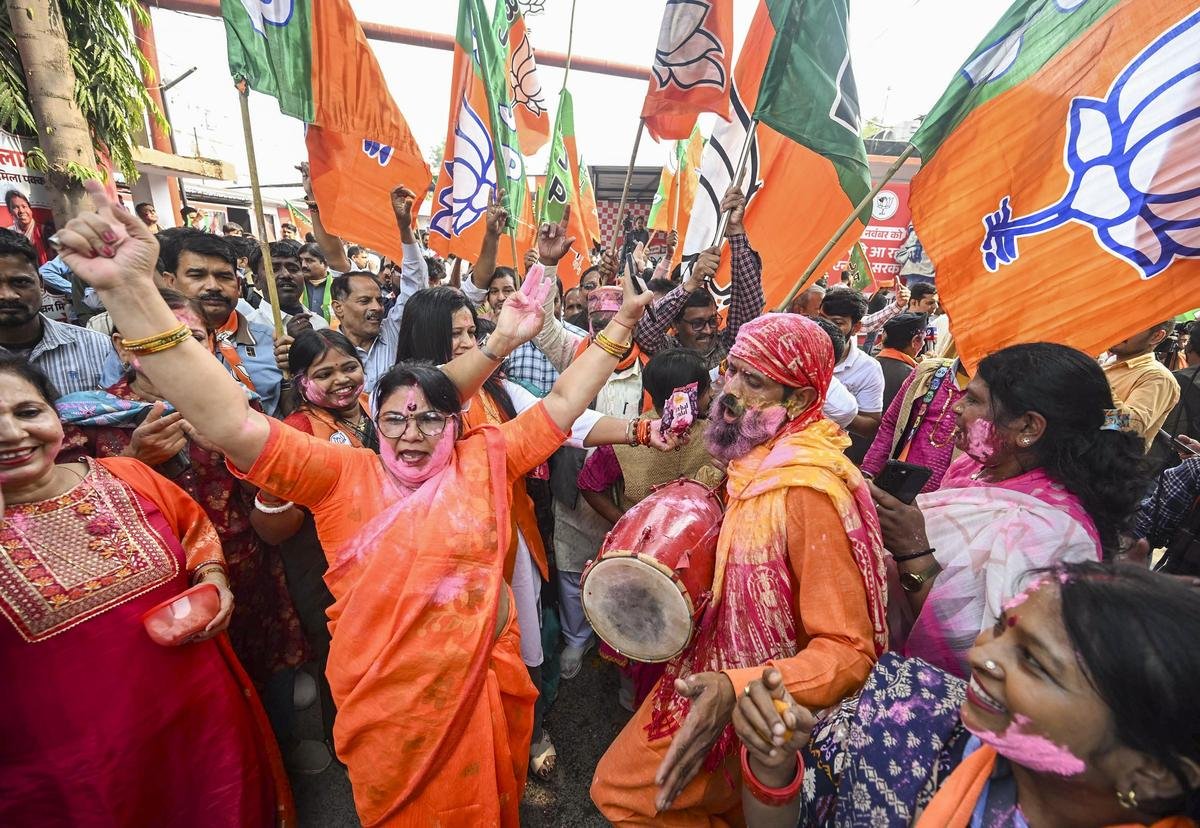
The recent landslide victory of the ruling alliance in Bihar has sparked widespread discussions on the future of politics in the Hindi belt. With a decisive win, the alliance has solidified its position in Bihar, but what does this mean for the broader region? This article explores the implications for Bihar’s political landscape and the Hindi belt, analyzing the shifting power dynamics and what the ruling alliance’s next steps might be.
Political Shifts and Implications for Bihar
Bihar’s recent election results have confirmed a resounding victory for the ruling alliance, which was able to secure a significant number of seats across the state. This success has given the coalition a renewed mandate to govern, cementing its place in Bihar’s political future for the next few years. However, this victory is not just about Bihar—it carries broader implications for the Hindi belt as a whole.
Bihar, being a crucial state in the Hindi belt, has long been considered a battleground for political parties aiming to consolidate their power in the region. The results indicate a shift towards the ruling alliance’s policies, signaling the strengthening of its influence not only within the state but across neighboring Hindi-speaking states. The alliance’s success could further galvanize its political base, especially in other Tier-2 and Tier-3 cities that have traditionally been less engaged with state-level politics.
The Role of Regional Alliances in Strengthening the Coalition
The key to the ruling alliance’s success lies in its ability to form strategic regional alliances that appeal to voters from different socio-political backgrounds. Bihar’s political scene has often been defined by the fragmentation of opposition parties, but the ruling alliance has capitalized on these divisions, presenting itself as a unifying force. This tactic may prove crucial in extending its influence beyond Bihar, into Uttar Pradesh, Madhya Pradesh, and Jharkhand, where similar coalition-building strategies could yield similar results.
The next step for the ruling alliance would be to focus on reinforcing these regional ties. Bihar’s strong rural base and growing urban centers have proven effective for the alliance, and replicating this success in neighboring states will require nuanced political strategies that address both urban and rural concerns. This could include further investments in infrastructure and social welfare programs that resonate with voters in Tier-2 cities, where economic issues are often more pressing.
Focus on Governance and Economic Development
A major factor driving the success of the ruling alliance has been its governance record. Policies aimed at improving local infrastructure, healthcare, and education have been central to the alliance’s appeal, particularly in rural areas. The next logical step for the alliance will be to continue prioritizing development in Bihar while also pushing for similar advancements in neighboring states.
The Hindi belt, with its large agrarian population and growing urbanization, requires balanced attention between rural development and urban infrastructure. Strengthening the local economy through targeted schemes for farmers, small businesses, and emerging tech industries in cities like Patna and Ranchi could solidify the ruling alliance’s standing in the region. Further bolstering the state’s position as a hub for new industries could make Bihar more competitive with other states in the Hindi belt, especially as neighboring regions look to enhance their infrastructure.
Key Challenges: Managing Diverse Interests
While the ruling alliance’s victory is a clear signal of its strength, the challenges ahead are substantial. Managing a coalition with diverse interests is often tricky, especially in a state like Bihar, which has a complex social fabric. The alliance must maintain the delicate balance between its key constituencies, including backward classes, Dalits, and urban voters.
Moreover, the competition from opposition parties, despite being fragmented, will continue to challenge the ruling alliance. Ensuring that Bihar remains stable and united under its leadership requires continuous engagement with all sections of society. The alliance will need to invest in proactive communication strategies to address grievances and prevent any potential unrest.
What’s Next for the Hindi Belt?
The landslide victory in Bihar sets a precedent for what’s possible in the Hindi belt. As the ruling alliance looks to expand its reach, its success in Bihar could act as a blueprint for other states in the region. The next few years will likely see a flurry of political activity as the ruling coalition looks to capitalize on its momentum.
For the Hindi belt, the coming phase will be marked by strategic alliances, economic development efforts, and a greater focus on social welfare schemes. The ruling alliance’s ability to navigate regional dynamics and continue building on its strong governance record will play a critical role in shaping the future of the region.
Takeaways:
- The ruling alliance’s landslide win in Bihar strengthens its position in the Hindi belt.
- Regional alliances and strategic political moves will be key to expanding the alliance’s influence in neighboring states.
- Economic development and social welfare will continue to be at the forefront of the alliance’s agenda.
- Managing a coalition with diverse interests remains one of the biggest challenges for the ruling alliance.
FAQs:
Q1: How significant is the Bihar victory for the ruling alliance’s future in the Hindi belt?
The Bihar victory is crucial as it solidifies the alliance’s power in a key state within the Hindi belt. It serves as a springboard for potential influence in neighboring states.
Q2: What are the challenges that the ruling alliance faces post-victory?
The primary challenge is maintaining unity within the coalition, as well as addressing the diverse socio-political interests of Bihar’s population, while also fending off opposition parties.
Q3: How can the ruling alliance expand its influence beyond Bihar?
The alliance can build on its success by forging regional alliances in Uttar Pradesh, Madhya Pradesh, and Jharkhand, focusing on development, economic growth, and effective governance.
Q4: What role does governance and economic development play in the alliance’s future?
Governance and economic development, particularly in rural areas and Tier-2 cities, will be critical for the alliance to maintain support and expand its influence across the Hindi belt.











Leave a comment