

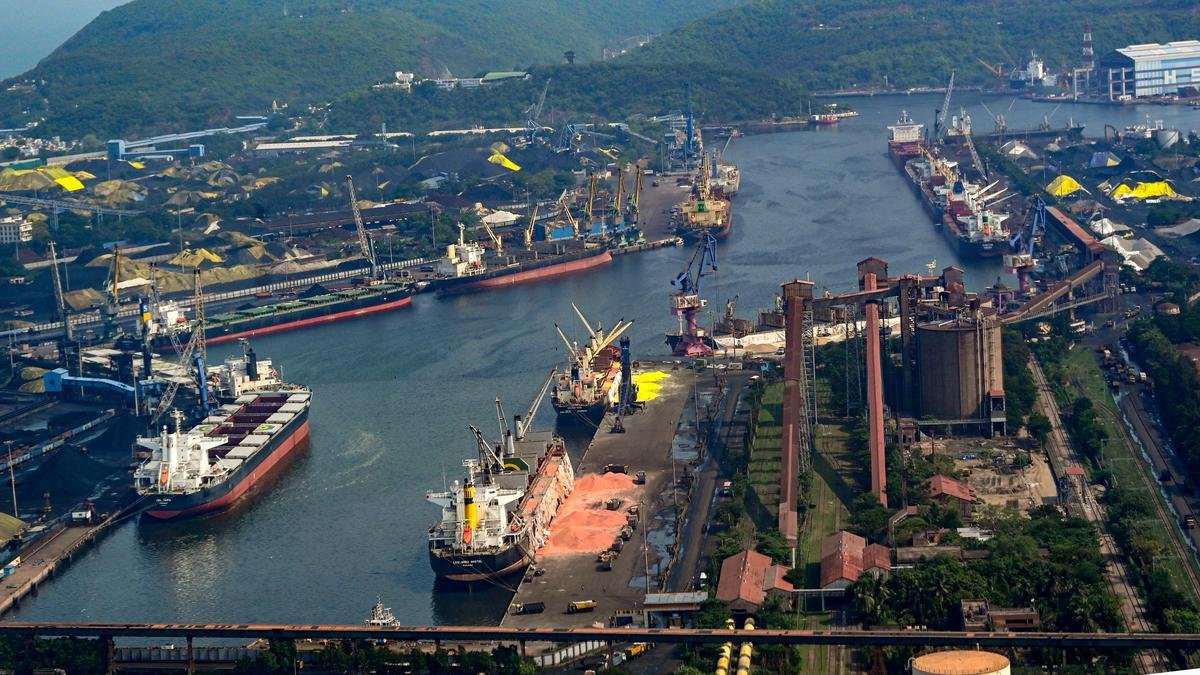
The autonomous maritime shipyard in Andhra Pradesh marks a significant development for coastal industrialisation, with direct implications for local jobs and emerging tech clusters. The project positions the state within India’s strategic shipbuilding push while opening new employment and innovation pathways beyond traditional port activity.
The autonomous maritime shipyard in Andhra Pradesh is a time sensitive development story rather than an evergreen concept piece. The announcement reflects an active policy and investment decision aimed at strengthening domestic shipbuilding, maritime automation and coastal manufacturing capacity. Its timing aligns with India’s broader focus on logistics, defence manufacturing and export readiness.
What makes the Andhra Pradesh shipyard different
Unlike conventional shipyards, the proposed autonomous maritime shipyard is designed around automation, smart manufacturing and digital control systems. Core operations such as hull fabrication, component assembly, material handling and quality inspection are expected to rely heavily on robotics, AI driven monitoring and sensor based systems.
This shift reduces dependence on manual processes and improves precision, turnaround time and safety. It also signals a transition from labour intensive shipbuilding to technology intensive maritime manufacturing. Andhra Pradesh is positioning the facility not just as a production unit but as a testing ground for next generation shipbuilding methods, including autonomous vessels and advanced marine platforms.
For the state, this differentiation is critical. Competing with established shipyards on scale alone is difficult. Competing on technology and efficiency offers a clearer edge.
Local job creation beyond traditional shipbuilding roles
Concerns often arise that automation reduces employment. In this case, the job impact is expected to be more layered. While the number of low skill manual roles may be limited, the project opens demand for skilled and semi skilled workers across engineering, software, electronics and systems maintenance.
Mechanical engineers, naval architects, electrical technicians, automation specialists and data analysts will be required at different stages. Ancillary employment will also grow in logistics, materials supply, fabrication support and quality assurance services.
Importantly, many of these jobs are higher value and longer term. They support stable income growth in coastal districts where employment has historically depended on ports, fishing and seasonal industries.
Impact on regional tech and manufacturing clusters
The autonomous shipyard has the potential to anchor a broader maritime technology cluster in Andhra Pradesh. Suppliers of sensors, control systems, marine electronics, precision components and industrial software tend to locate close to large manufacturing hubs.
Over time, this can attract startups and MSMEs focused on robotics integration, AI based monitoring systems and digital twins for maritime assets. Engineering colleges and technical institutes in the region may also adapt curricula to align with new skill demands, strengthening the local talent pipeline.
If supported by incubation and testing facilities, the cluster effect can extend beyond shipbuilding into offshore energy platforms, port automation and coastal surveillance technologies.
Strategic value for Andhra Pradesh’s coastal economy
Andhra Pradesh has one of the longest coastlines in India but has not fully leveraged it for high value maritime manufacturing. Ports have driven trade, but industrial activity around them has remained limited compared to potential.
The autonomous maritime shipyard changes this equation by converting coastal access into manufacturing leverage. It integrates port infrastructure with industrial output, reducing logistics friction for large maritime components and vessels.
This also aligns with national goals of reducing import dependence in shipbuilding and defence platforms. For the state, participation in strategic supply chains brings policy visibility, long term investment confidence and stronger centre state alignment.
Skill transition challenges and workforce readiness
One of the immediate challenges will be workforce readiness. Automation heavy facilities require specialised skills that are currently scarce in many coastal districts. Without targeted skilling programmes, local workers risk being sidelined in favour of external talent.
State agencies and industry partners will need to invest early in training modules covering industrial automation, maritime systems and digital maintenance. Apprenticeship models linked directly to the shipyard can help bridge this gap.
Successful skill transition will determine whether the project delivers inclusive growth or remains a high tech enclave with limited local integration.
Long term outlook for jobs and technology adoption
In the medium term, the autonomous maritime shipyard is likely to act as a catalyst rather than a standalone employer. Its true value lies in ecosystem creation. As operations scale and technology matures, secondary units and service providers are expected to follow.
Technology adoption patterns from this shipyard could influence other Indian ports and manufacturing zones, accelerating automation standards across the maritime sector. Andhra Pradesh stands to benefit if it becomes an early mover rather than a late adopter.
The project’s success will depend on execution discipline, continuous technology upgrades and sustained policy support. If managed well, it could redefine how coastal states participate in India’s industrial growth story.
Takeaways
The autonomous shipyard shifts Andhra Pradesh towards high value maritime manufacturing
Job creation will focus on skilled and technology driven roles rather than manual labour
The project can anchor a broader maritime tech and MSME cluster
Skill development will be critical to ensure local workforce participation
FAQs
What is an autonomous maritime shipyard
It is a shipbuilding facility that uses automation, robotics and digital systems for manufacturing, monitoring and quality control.
Will automation reduce local employment
It changes the nature of jobs rather than eliminating them, increasing demand for skilled technical roles.
How does this benefit Andhra Pradesh’s economy
It adds manufacturing depth to the coastal economy, attracts investment and strengthens industrial diversification.
Can this lead to more tech startups in the region
Yes, large automated facilities often attract suppliers, service firms and startups focused on industrial and maritime technology.












Leave a comment