

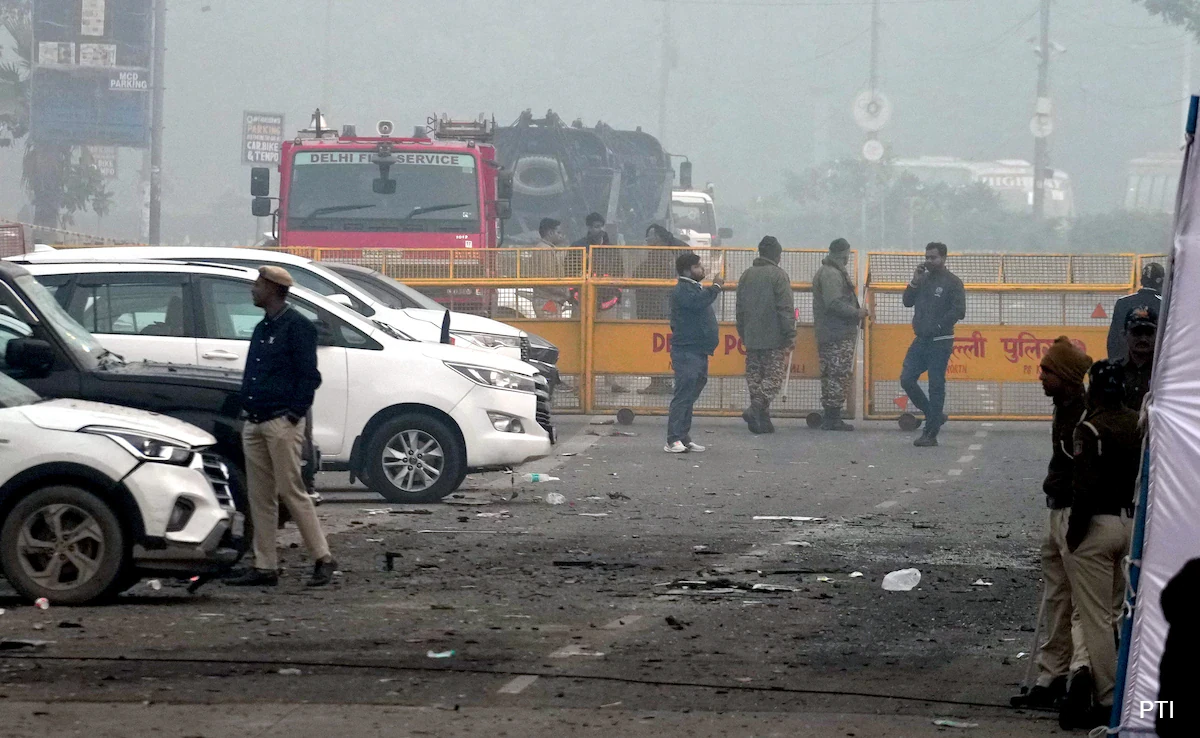
A car blast near Delhi’s historic Red Fort Metro station killed at least 9 people and injured dozens. The probe, now being treated as a terror incident, raises questions about vehicle security, infrastructure readiness and threat detection that Tier‑2 Indian cities must heed.
The incident and investigation update
On the evening of 10 November 2025, a white Hyundai i20 exploded near Gate 1 of the Red Fort Metro Station in New Delhi. The vehicle had stopped at a traffic signal when the blast occurred, killing at least nine people and injuring about 20 others. The case has been registered under India’s anti‑terror law (the Unlawful Activities (Prevention) Act, UAPA) and the National Investigation Agency (NIA) has taken over the probe. Initial findings suggest the explosive device may have been triggered prematurely under panic after security raids. DNA tests, forensic samples (including cartridges and ammonium‑nitrate based materials) and mobile‑data checks have become key elements of the investigation.
Why this matters beyond the capital
While the attack struck the heart of India’s capital, the implications extend far beyond Delhi. Tier‑2 and Tier‑3 cities may often assume they are less likely targets, yet the nature of this incident signals broader vulnerabilities: vehicle‑borne blasts, exploitation of second‑hand vehicle markets, and threat actors capable of striking in highly secured zones. In this blast, investigators found that the vehicle had passed through multiple ownerships and was retrofitted with a CNG conversion, pointing to how non‑metro circulation of vehicles can mask risk vectors. For smaller cities with growing traffic, less‑saturated security resources and fewer anti‑terror units, such an incident exposes the need to elevate preparedness in traffic clusters, at markets, near religious or heritage zones, and near transport hubs.
Key security lessons for Tier‑2 cities
Vehicle screening and ownership records One immediate directive after the blast: second‑hand car dealers in Delhi‑NCR were asked to verify recent sales and share records, showing how used vehicles can become instruments of terror. Tier‑2 cities should likewise monitor ownership transfers, vehicle conversions and non‑standard retrofits (e.g., CNG kits) as part of preventive surveillance. Traffic‑signal and metro‑station zones as potential soft targets The blast occurred at a traffic signal near a metro station in a crowded, pedestrian‑rich area. Such junctions in smaller cities—especially where heritage or religious sites sit beside public transport hubs—may not yet be fully secured but are exposed. Intelligence and forensic readiness The probe involves DNA tests, mobile‑data dumps, explosives forensics and cross‑jurisdiction coordination. Tier‑2 cities may lack forensic labs or advanced analytics, meaning central and state support must be extended. Public awareness and response protocols Beyond official readiness, the public and local businesses need awareness: evacuation plans, recognising suspicious vehicles, and understanding that high‑profile events or heritage zones may be targeted. The Delhi blast shows the ripple effect of panic triggering a blast, rather than a classic suicide mission.
What states and local administrations should do now
Local administrations in Tier‑2 cities should assess their “soft target” zones: markets, transport hubs, heritage sites, large-gathering religious venues. They must develop vehicle‑screening protocols for areas around these zones and integrate second‑hand vehicle ownership checks into local enforcement. Infrastructure such as CCTV, traffic‑signal monitoring and inter‑agency communication needs auditing. Additionally, forensic‑support networks should be mapped: does the city have quick access to state crime labs? Are local police trained for terror‑probe coordination? These are gaps exposed by the Delhi incident.
Challenges and constraints for smaller cities
Smaller cities often face fewer resources: fewer specialised bomb‑squad units, limited traffic‑signal camera coverage, and less‑structured coordination with state intelligence agencies. Budget constraints and competing priorities may push this down the list until a major incident occurs. The Delhi blast should serve as a wake‑up call: high‑impact events can occur in places beyond the usual metro corridors. Larger cities will get media attention, but smaller ones may become testing grounds for tactics.
Conclusion
The car blast near the Red Fort metro station is being treated as a major terror incident, and its implications go far beyond Delhi. For India’s Tier‑2 and Tier‑3 cities, the incident underlines that growing urbanisation, increased vehicle circulation, heritage and transport‑hub intersections, and less‑dense security apparatus combine to create vulnerabilities. Local administrations should act now—vehicle‑ownership tracking, vehicle‑screening near public hubs, intelligence integration and public‑awareness measures become non‑optional.
Takeaways
- The blast underlines the risk of vehicle‑borne explosives even in highly secured heritage/metro zones.
- Second‑hand vehicle markets and conversions present a surveillance gap for local authorities.
- Tier‑2 cities must treat transport hubs, signals and heritage zones as potential soft targets.
- Coordinated intelligence, forensic readiness and public awareness are vital to reduce risk.
FAQ
Q: What type of vehicle was used in the Red Fort blast? A: A white Hyundai i20 car was used; it halted near a traffic signal near the Red Fort Metro Station before exploding on 10 November 2025.
Q: How many casualties resulted from the blast? A: Initial reports indicate at least nine fatalities and around 20 injuries, though numbers may rise as investigations continue.
Q: Why should Tier‑2 cities be concerned about this incident? A: Many risk factors—vehicle‑borne attacks, public transport hubs, heritage areas, used vehicle markets—are not unique to metros; smaller cities may have weaker surveillance and response systems.
Q: What immediate step did authorities take after the blast regarding vehicles? A: Authorities in Delhi-NCR ordered second-hand vehicle dealers to verify recent sales and share detailed records, highlighting the role of vehicle resale in the incident.









Leave a comment