

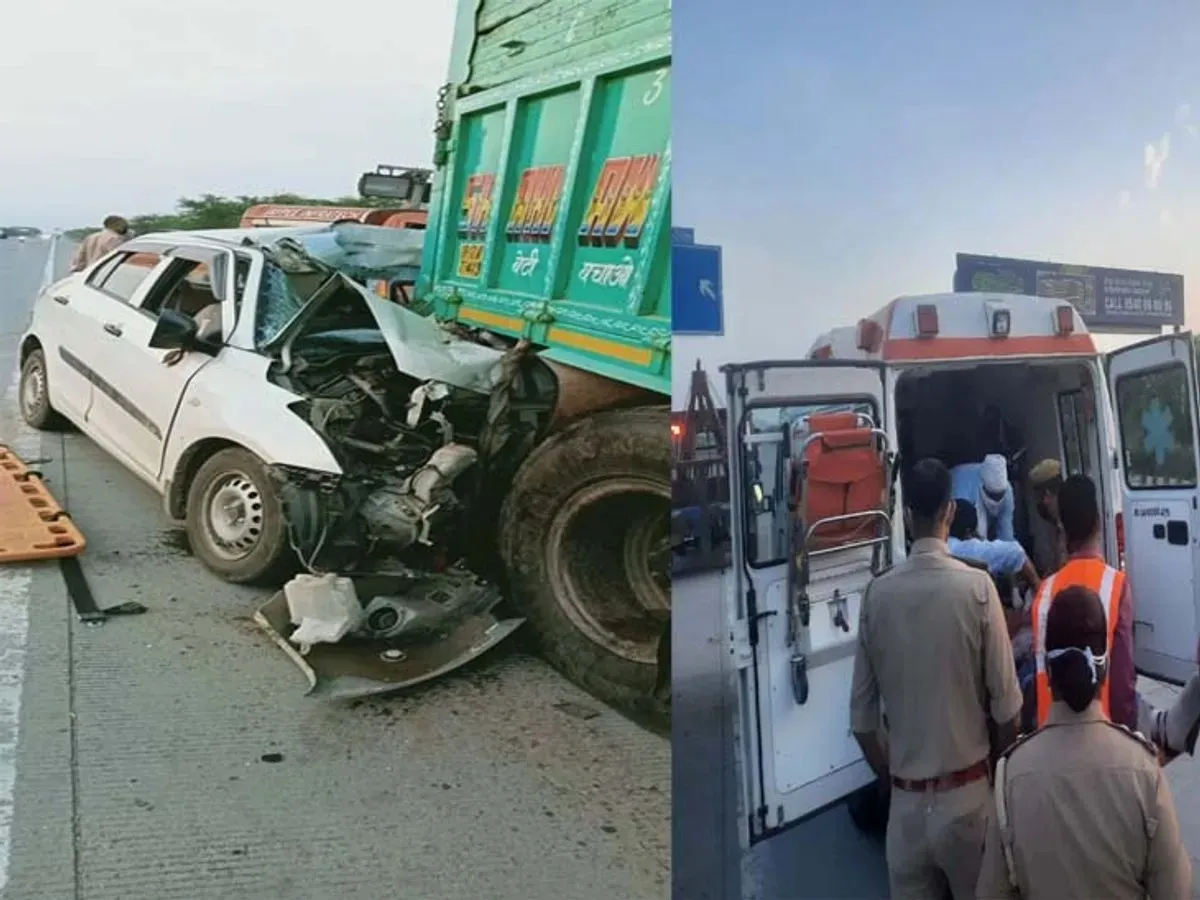
The Delhi Agra Expressway crash has once again exposed serious road safety gaps on one of North India’s busiest high-speed corridors, with multiple vehicles colliding near the Mathura Basti stretch and triggering fatalities, traffic paralysis, and urgent administrative action.
The incident, which occurred during early morning hours, involved a chain collision attributed to low visibility and speeding. The crash has brought renewed attention to safety enforcement, emergency response readiness, and infrastructure design on the Yamuna Expressway network connecting Delhi, Mathura, Agra, and adjoining districts.
Delhi Agra Expressway crash details and immediate cause
The Delhi Agra Expressway crash took place near the Mathura Basti corridor, a section known for dense fog conditions during winter months. Preliminary assessments indicate that reduced visibility due to fog, combined with high vehicle speed, played a decisive role in the accident.
Eyewitness accounts and early police findings suggest that one vehicle slowed abruptly, triggering a pile-up involving cars and heavy vehicles moving at highway speeds. The absence of timely speed moderation and limited reaction time in foggy conditions magnified the impact.
Authorities confirmed multiple fatalities and injuries, with victims rushed to district hospitals in Mathura and nearby areas. Emergency teams faced initial difficulty reaching the spot due to traffic congestion and secondary collisions caused by stranded vehicles.
Traffic disruption and commuter impact across the corridor
The crash led to hours-long traffic disruption on the Delhi Agra Expressway, affecting commuters traveling between Delhi NCR, Mathura, Agra, and further into eastern Uttar Pradesh. Vehicles were stranded across several kilometers, with diversions implemented through local roads not designed for heavy traffic.
Daily commuters, transport operators, and intercity bus services reported delays exceeding four to six hours. The incident also disrupted supply chains, as goods carriers remained stuck on the expressway for most of the morning.
Local residents in the Mathura Basti area assisted stranded passengers with water and basic aid until official relief reached the scene. The congestion highlighted the lack of adequate emergency lay-bys and fog management infrastructure along this stretch.
Local response from Mathura administration and police
Following the Delhi Agra Expressway crash, the Mathura district administration activated emergency protocols. Senior police officials reached the site to oversee rescue operations, traffic clearance, and crowd management.
Cranes and recovery vehicles were deployed to remove damaged vehicles, while traffic police coordinated staggered movement to prevent further accidents. Medical teams were stationed along the corridor to provide on-site assistance to injured passengers.
The district administration announced compensation procedures for victims’ families and ordered a detailed investigation into whether safety norms were violated. Officials also directed expressway authorities to review signage, speed monitoring systems, and fog warning mechanisms in the area.
Recurring safety issues on the Delhi Agra Expressway
The latest Delhi Agra Expressway crash is not an isolated incident. The corridor has witnessed multiple accidents in recent years, particularly during winter when fog sharply reduces visibility.
Experts point to a pattern of overspeeding, limited enforcement of lane discipline, and inadequate driver awareness regarding fog driving protocols. While the expressway is designed for high-speed travel, enforcement often lags behind design capacity.
Another concern raised after the crash is the delayed response time of emergency services during peak congestion. Although patrol units exist, reaching accident sites during pile-ups remains a challenge due to limited access points and traffic density.
Government and expressway authority actions under review
In response to the crash, state transport and public works officials are reviewing existing safety measures on the Delhi Agra Expressway. Discussions include stricter speed enforcement during foggy conditions, increased deployment of patrol vehicles, and real-time visibility alerts for drivers.
There is also renewed focus on installing advanced fog detection systems, reflective road markers, and variable speed limit displays. Authorities are examining whether existing warning systems were operational at the time of the crash.
The incident has prompted calls for mandatory fog driving advisories, temporary speed caps during low visibility, and improved coordination between expressway operators and district administrations.
Impact on public discourse and road safety awareness
The Delhi Agra Expressway crash has sparked public debate on road safety culture in India’s high-speed corridors. Social media discussions have focused on driver responsibility, enforcement gaps, and the risks of aggressive driving during adverse weather.
Road safety activists argue that expressways require stricter compliance mechanisms, including automatic speed penalties and better driver education. They emphasize that infrastructure alone cannot prevent accidents without consistent behavioral enforcement.
For residents along the Mathura Basti corridor, the crash has reinforced long-standing concerns about frequent accidents and the need for permanent safety upgrades rather than reactive measures after major incidents.
What this incident signals for future travel on the corridor
The aftermath of the Delhi Agra Expressway crash is likely to influence policy decisions related to winter travel safety. Authorities are expected to issue updated advisories and conduct safety audits across vulnerable stretches.
Travelers are being urged to avoid high speeds during fog, maintain safe distances, and adhere strictly to lane discipline. Transport operators may also face tighter compliance checks in the coming weeks.
The incident serves as a reminder that expressway safety depends equally on infrastructure, enforcement, and responsible driving, especially in weather-prone regions like the Mathura Agra belt.
Takeaways
- The Delhi Agra Expressway crash was triggered by fog and high speed near the Mathura Basti corridor.
- Traffic disruption exposed gaps in emergency response and congestion management.
- Local administration initiated rescue, investigation, and safety reviews promptly.
- The incident renews focus on winter driving protocols and expressway enforcement.
FAQs
What caused the Delhi Agra Expressway crash
Low visibility due to dense fog combined with overspeeding is considered the primary cause.
Where did the accident occur
The crash occurred near the Mathura Basti stretch of the Delhi Agra Expressway.
Were emergency services delayed
Initial access was slowed due to congestion, but rescue teams reached the site and cleared traffic in phases.
Will safety measures be upgraded
Authorities are reviewing speed enforcement, fog warning systems, and emergency response protocols.












Leave a comment