

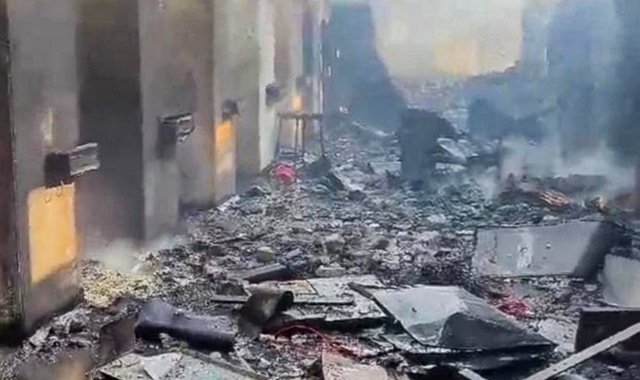
An explosive factory blast in Nagpur district has triggered fresh scrutiny of industrial safety audits and regulatory enforcement. Authorities have launched investigations while local residents question compliance standards, inspection frequency, and emergency response mechanisms in hazardous manufacturing units.
The explosive factory blast in Nagpur district has once again highlighted the risks associated with industrial units handling combustible materials. Initial reports indicate that the explosion occurred inside a licensed facility involved in manufacturing or processing explosive substances used for industrial or mining purposes. Casualties and injuries have been reported, and a formal probe is underway to determine the exact cause.
Industrial accidents of this nature typically prompt a multi agency investigation involving local police, fire services, and regulatory authorities responsible for explosives control and factory inspections.
Immediate Response and Ongoing Investigation
Following the blast, emergency services were deployed to control secondary fires and evacuate nearby workers. District authorities sealed the premises pending forensic examination. Standard protocol in such cases includes assessing whether the unit adhered to storage limits, safety distance norms, and handling procedures.
Investigators will examine stock registers, employee training records, and maintenance logs. In explosive handling units, even minor procedural lapses such as improper storage temperature, static discharge, or faulty wiring can trigger catastrophic consequences.
Officials are also expected to evaluate whether safety audits were conducted as per schedule and whether previous inspection reports flagged any compliance gaps.
Industrial Safety Audits and Compliance Framework
Factories dealing with explosives in India are governed by a strict regulatory framework. Licenses are issued subject to compliance with safety standards that cover building design, ventilation, storage capacity, and separation distances between units.
Periodic inspections are mandated to ensure adherence. Safety audits typically assess fire suppression systems, emergency exits, worker protective equipment, and adherence to prescribed manufacturing quantities.
In theory, these regulations are robust. However, enforcement capacity varies across districts. Staffing shortages in inspection departments, delayed audit cycles, and paperwork driven compliance can weaken ground level monitoring.
In high risk sectors such as explosives, the margin for error is extremely small. Even a minor deviation from prescribed storage density or process temperature can escalate into a chain reaction.
Regulatory Gaps and Oversight Challenges
The Nagpur district blast has revived debate around regulatory gaps. One recurring issue in industrial accidents is the gap between documented compliance and actual practice. A factory may pass inspection on paper but operate differently during peak production cycles.
Another challenge is subcontracting. Temporary workers or contract labour may not receive the same level of safety training as permanent staff. In hazardous industries, insufficient training increases risk.
Local zoning policies also come under scrutiny. Over time, residential settlements sometimes expand closer to industrial zones. While the factory may have been established within legal limits, changing population density raises the risk exposure of surrounding communities.
Digital monitoring systems and surprise inspections are often proposed as corrective measures, but implementation remains uneven across regions.
Impact on Workers and Local Communities
Explosive factory accidents disproportionately affect workers from nearby rural or semi urban areas. Many employees depend on such units for livelihood, especially in districts where industrial employment options are limited.
Beyond immediate casualties, families face economic uncertainty. Compensation mechanisms exist under labour laws and insurance frameworks, but claim processing can be prolonged.
Local communities also bear psychological and environmental consequences. Blast shockwaves can damage nearby structures. Fear of recurring accidents affects property values and public trust in regulatory authorities.
In previous industrial accidents across India, public pressure has often accelerated compensation payouts and stricter enforcement drives. Whether that happens in this case depends on investigative findings.
Lessons for Industrial Policy and Risk Management
India’s industrial growth strategy includes expanding manufacturing capacity in non metro districts. Nagpur district, strategically located in central India, has developed industrial clusters due to logistical advantages.
However, industrial expansion must be matched with proportional safety investment. Risk mapping, updated hazard assessments, and independent third party audits can reduce accident probability.
Automation and sensor based monitoring systems can detect abnormal temperature rise or chemical instability before escalation. Adoption of such technologies varies widely across small and medium units due to cost constraints.
The blast underscores a recurring policy tension. Economic growth and employment generation are critical, but high risk industries require constant vigilance. Regulatory complacency can have severe human and financial costs.
Way Forward After the Nagpur Blast
Authorities are expected to submit a detailed investigation report outlining the cause of the explosion. If negligence is established, penalties may include suspension of license, criminal liability, or mandatory operational overhaul.
At a broader level, state regulators may initiate inspection drives across similar units to prevent repeat incidents. Worker safety training and updated emergency response drills could become immediate priorities.
For residents, transparency will be key. Public disclosure of findings and corrective measures can rebuild trust. Without accountability and systemic reform, such incidents risk becoming recurring headlines.
Takeaways
The Nagpur district factory blast has exposed vulnerabilities in hazardous industry safety enforcement
Investigations will examine compliance records, storage norms, and worker training standards
Regulatory gaps often emerge between documented audits and real world operational practices
Stronger monitoring, technology adoption, and transparent accountability are critical going forward
FAQs
What typically causes explosive factory blasts
Common causes include improper storage, overheating, electrical faults, static discharge, or violation of handling protocols.
Who regulates explosive manufacturing units in India
Explosive units operate under a licensing and inspection framework governed by national safety regulations and district level enforcement authorities.
Are workers entitled to compensation after such accidents
Yes. Labour laws and insurance mechanisms provide for compensation in case of injury or death, subject to legal procedures.
Can such accidents be prevented entirely
While risk cannot be eliminated completely, strict compliance, frequent audits, advanced monitoring systems, and proper worker training significantly reduce the likelihood of major incidents.












Leave a comment