

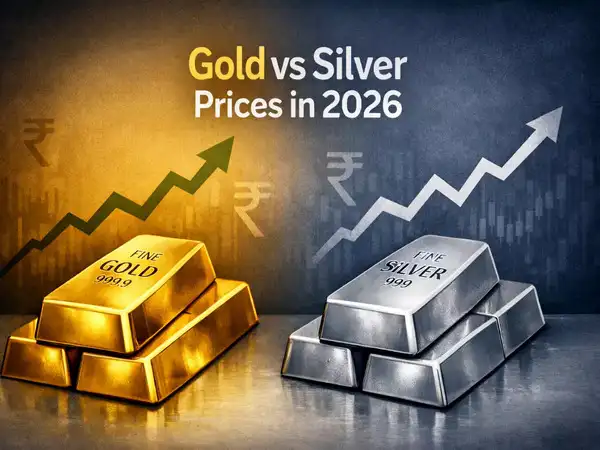
Gold and silver price trends across regional urban markets are closely watched as inflation influences savings decisions in both rural and urban India. Rising input costs, currency fluctuations and global cues are shaping how households allocate money between bullion, deposits and other assets.
Gold and silver price trends have once again moved to the center of financial conversations as inflation pressures persist across sectors. Food prices, fuel costs and housing expenses have affected household budgets, prompting savers to reconsider traditional investment routes. In India, gold and silver are not just commodities but long standing stores of value, especially in Tier 2 and Tier 3 cities where physical assets dominate portfolios.
Current Gold and Silver Price Movements in Regional Cities
Gold prices in India are influenced by international bullion rates, rupee dollar exchange movements and import duties. When global uncertainty rises or the rupee weakens, domestic prices often firm up. Silver, while more volatile, follows similar global cues but is also impacted by industrial demand.
In regional urban markets such as Nagpur, Indore, Jaipur and Lucknow, bullion rates typically mirror national benchmarks with small variations due to local taxes and logistics costs. During periods of elevated inflation, jewellers report increased inquiries even when prices are high. Many buyers prefer smaller denominations such as coins and lightweight jewellery to manage affordability.
Silver demand in smaller cities has also shown resilience. Apart from investment, silver is widely used in utensils, gifting and small scale industrial activity. Price corrections often trigger quick buying in local markets.
Inflation Impact on Rural and Urban Savings Decisions
Inflation erodes purchasing power. When households observe rising grocery and fuel bills, they seek assets that can preserve value over time. Historically, gold has been perceived as a hedge against inflation in India. Rural households in particular prefer tangible assets over financial instruments.
In urban areas, savers often balance between fixed deposits, mutual funds and bullion. However, when real interest rates turn low relative to inflation, fixed income instruments appear less attractive. This pushes some investors toward gold exchange traded funds or digital gold platforms.
Rural savings behavior differs. Crop income cycles, wedding seasons and cultural traditions influence gold purchases. In times of higher inflation, households may reduce quantity but rarely abandon gold entirely. Instead, they shift toward smaller ticket purchases.
Silver as an Affordable Investment Alternative
Silver prices are significantly lower per gram compared to gold, making the metal accessible to first time investors. In regional cities, silver coins and bars are common during festivals and wedding seasons.
Industrial demand also plays a role. Silver is used in electronics, solar panels and medical equipment. As India expands renewable energy capacity and manufacturing activity, industrial consumption supports price trends. This dual role as investment and industrial metal makes silver more volatile but also potentially rewarding.
For middle income households in Tier 2 cities, silver can serve as a diversification tool. It allows participation in precious metals without the higher capital outlay required for gold.
Rural Urban Divide in Investment Channels
Urban investors increasingly use formal channels such as sovereign gold bonds, gold ETFs and digital trading platforms. These instruments provide exposure without storage concerns. However, awareness and access are uneven in rural regions.
In villages and smaller towns, physical gold remains dominant. Trust in local jewellers and familiarity with traditional buying patterns drive decisions. Inflation reinforces the preference for tangible savings that can be pledged for loans if needed.
At the same time, financial literacy campaigns and mobile banking penetration are gradually narrowing this divide. Some rural savers now explore gold backed loans and digital purchases through banking apps.
Risks and Considerations in a High Inflation Environment
While gold often performs well during inflationary periods, prices can fluctuate sharply due to global monetary policy changes. A strong dollar or rising global interest rates can pressure bullion. Silver tends to swing more widely due to its industrial linkages.
Investors in regional markets should avoid concentrating all savings in one asset. Diversification across gold, silver, bank deposits and other financial products can reduce risk. Liquidity needs must also be considered. Jewellery purchases involve making charges, which reduce resale value compared to coins or bars.
Urban households facing higher living costs may prioritize emergency funds before increasing bullion exposure. Rural households dependent on agricultural income must account for seasonal variability.
Outlook for Precious Metals in India
Looking ahead, gold and silver price trends will continue to respond to global economic signals, domestic inflation data and currency movements. In India, cultural affinity for gold ensures baseline demand, especially during weddings and festivals.
Inflation remains a key driver of sentiment. If consumer prices remain elevated, households are likely to maintain some allocation to precious metals. However, the mix between physical and digital forms may evolve as awareness spreads.
Regional urban markets will remain crucial demand centers. Their behavior often reflects a blend of traditional savings culture and emerging financial awareness.
Takeaways
Gold and silver remain preferred inflation hedges for many households in regional India.
Urban investors are gradually shifting toward digital and financial forms of bullion ownership.
Silver offers an affordable entry point but carries higher price volatility.
Balanced diversification is essential during periods of sustained inflation.
FAQs
Why do gold prices rise during inflation.
Gold is viewed as a store of value. When currency purchasing power declines, investors often move toward assets perceived as stable.
Is silver a good alternative to gold.
Silver is more affordable and has industrial demand support, but it tends to be more volatile than gold.
Do regional cities have different bullion prices.
Prices are broadly aligned with national benchmarks, with minor variations due to local taxes and logistics costs.
Should rural households invest only in physical gold.
Physical gold is common, but diversification and awareness of alternatives such as sovereign gold bonds can improve long term financial outcomes.












Leave a comment