

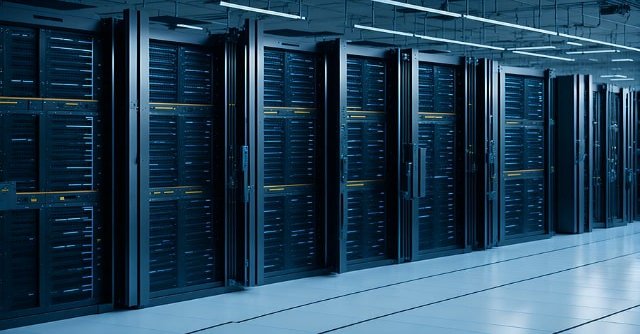
The topic is informational with present day relevance. The main keyword shapes a detailed analysis of how improved data centres and AI infrastructure, driven by investments from operators like Adani Connex and global players such as Google, can shift India’s tech growth beyond Bengaluru and Hyderabad.
Improved data centres and AI infrastructure are becoming foundational to India’s digital economy. As hyperscale facilities expand into Tier 2 and Tier 3 cities, they unlock new opportunities for cloud computing, AI driven services, enterprise IT and local innovation hubs. This geographical shift strengthens India’s tech capabilities and reduces dependence on a few concentrated metro ecosystems.
Why India’s next tech phase requires strong data centre expansion
India’s digital consumption is growing faster than domestic infrastructure capacity. Cloud adoption across fintech, logistics tech, SaaS and consumer platforms demands reliable compute power. AI applications require low latency processing and large scale storage. Data localisation rules increase the need for domestic capacity.
For years, Bengaluru, Hyderabad and Mumbai dominated India’s data centre footprint. But these metros face limits on land availability, high power costs and congestion. Tier 2 cities offer stronger expansion potential due to affordable land, supportive industrial policies and proximity to renewable energy corridors.
Investments from firms like Adani Connex with Google accelerate this decentralisation by building large integrated campuses connected to cloud services, AI compute clusters and high speed fibre networks.
How new data centres can push tech ecosystems into Tier 2 geographies
When a hyperscale data centre is built in a smaller city, it triggers an entire digital ecosystem. AI developers, cloud service providers, cybersecurity firms and enterprise IT teams establish local offices around these facilities for faster coordination and reduced cost.
For example, cities like Pune, Nashik, Nagpur, Jaipur, Coimbatore and Kochi are emerging as strong candidates because they combine educational talent, industrial zones and upgraded connectivity. This allows companies to run development teams, customer success operations and edge compute services without relying on metro infrastructure.
Data centres also attract colocation partners, hardware vendors, maintenance specialists and software integrators. The cluster effect gradually forms a regional tech base, supporting higher skilled jobs and local entrepreneurship.
Why AI infrastructure will accelerate non-metro adoption of advanced tech
AI infrastructure requires substantial compute power, high bandwidth networks and efficient cooling systems. Placing this capability within Tier 2 cities enables local industries to adopt AI at lower entry costs.
Manufacturing clusters use AI for predictive maintenance and quality control. Logistics hubs rely on AI for route optimisation and warehouse automation. Healthcare institutions adopt AI imaging and diagnostics with reduced latency when compute is local. Local startups gain access to GPUs and training resources previously available only in metro based innovation centres.
This democratises access to advanced AI tools, enabling regional talent to build products, prototypes and research projects without relocation.
How improved infrastructure drives job creation across skill levels
Data centre expansion boosts employment in multiple layers. Construction and facility setup generate engineering and technical jobs. Once operational, facilities require network engineers, power specialists, cooling technicians, automation controllers and security teams.
AI infrastructure expands demand for data analysts, model validators, prompt engineers, cloud architects and DevOps professionals. Non metro youth benefit from these roles because many require engineering or diploma based skills rather than metropolitan experience.
Vendor networks also grow. Electrical suppliers, cooling system vendors, fibre installers and maintenance firms see sustained demand, creating long term regional employment.
Impact on startups and SMBs operating from smaller cities
Startups in smaller cities often struggle with high cloud bills, latency issues and limited access to compute resources. Local data centres reduce operational costs by improving speed and lowering data transfer charges. This makes it easier to build SaaS products, analytics platforms or AI driven tools from regional hubs.
SMBs gain access to enterprise grade solutions such as managed cloud services, cybersecurity layers and data backup. With reliable infrastructure, regional businesses adopt digital tools faster, improving competitiveness.
Startups that require quick iteration—such as gaming tech, edtech, logistics platforms or IoT solutions—benefit from low latency when servers are closer to users. This encourages founders in Tier 2 cities to pursue scalable tech ideas without shifting operations to Bengaluru or Hyderabad.
How decentralisation strengthens India’s overall tech resilience
A metro concentrated tech economy creates risk. Weather events, power outages or infrastructure saturation in major cities can disrupt critical digital services. Distributing data centres across regions adds redundancy. Traffic balancing, disaster recovery and failover systems become stronger when compute power is geographically diversified.
Decentralisation also reduces the pressure on metro resources. Talent spreads more evenly. Salaries stabilise. Real estate costs decrease. Startups can operate sustainably without competing with large enterprises for the same labour pool.
India’s long term goal of becoming a global digital infrastructure hub requires a multi city approach. Improved data centres and AI facilities create the foundation for this transition.
Challenges that need addressing for broader impact
While growth is promising, some structural challenges remain. Power stability in certain regions must improve to support hyperscale operations. Water availability for cooling is critical in high density clusters. Skilled manpower pipelines must be strengthened through training programmes and technical institutes.
Regional governments must streamline single window clearances, ensure predictable industrial policies and support renewable energy integration for data centres.
If these challenges are addressed, India can achieve a balanced, multi hub tech ecosystem over the next decade.
Takeaways
Data centre expansion drives tech growth into Tier 2 and Tier 3 cities
AI infrastructure enables regional adoption of advanced digital tools
Startups and SMBs benefit from lower latency and reduced cloud costs
Decentralisation strengthens India’s tech resilience and long term competitiveness
FAQs
Can data centres really shift India’s tech base beyond Bengaluru and Hyderabad
Yes. Hyperscale facilities create local ecosystems that attract startups, IT teams and cloud partners, enabling multi city tech development.
Which cities are positioned to benefit first
Pune, Coimbatore, Jaipur, Kochi, Nashik, Ahmedabad, Nagpur and Hyderabad peripheries have suitable infrastructure and talent pools.
How does AI infrastructure help regional industries
It reduces compute cost, improves processing speed and enables adoption of AI in manufacturing, logistics, healthcare and local startups.
Will decentralisation reduce pressure on metro tech hubs
Gradually. As more companies open regional offices and data centres, talent and resources will spread more evenly across cities.












Leave a comment