

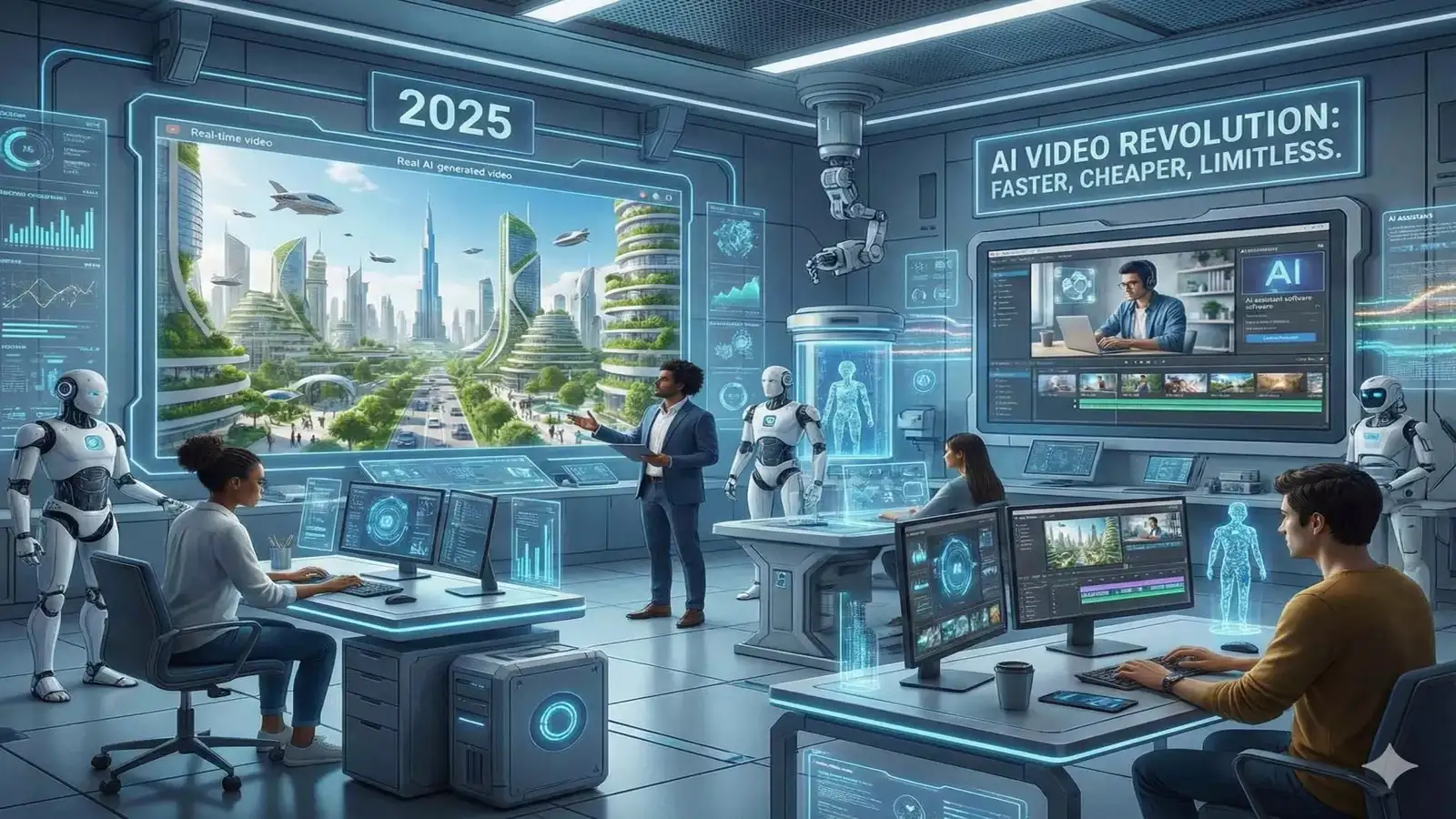
The topic is informational and evergreen, centred on how global advances such as AI video generation from platforms like Runway are influencing Indian content creators and small production houses. The tone focuses on practical industry impact, emerging opportunities and long term shifts in workflows.
AI video generation is moving rapidly from an experimental tool to a production asset. Tools like Runway, Pika, Sora type models and open source video diffusion frameworks now create high quality clips from text prompts, reference images or storyboard shots. For Indian creators operating with limited budgets and lean teams, these technologies can significantly change how videos are ideated, shot and delivered.
Why AI video generation is becoming disruptive for creators
AI video tools reduce dependence on costly equipment, large crews and extended shooting schedules. For creators in cities like Indore, Kochi, Nagpur, Surat or Bhubaneswar, access to professional grade production has historically been limited by budget constraints. AI generated visuals provide an alternative path to achieve cinematic output without heavy capital investment.
Creators can now produce concept teasers, moodboards, advertisements, short films, animated explainers and social content using synthetic footage. This reduces the need for elaborate sets and multiple retakes. It also expands creative possibilities. A creator can generate futuristic cityscapes, story driven shots, animated sequences or visuals that would normally require VFX teams.
The speed of iteration is a major advantage. AI video tools allow creators to revise script ideas, modify scenes or test styles within hours rather than days, enabling rapid experimentation.
How small production houses can integrate AI into their workflows
For small production houses operating in Tier 2 and Tier 3 cities, AI video is less a replacement and more a multiplier. Many teams adopt a hybrid workflow. Scripts and storyboards are conceptualised with AI references. Previsualisation is generated through AI clips to pitch ideas to clients. This improves clarity and accelerates approvals.
During production, AI assists with quick transitions, background creation, replacement shots or stylised overlays. It also reduces dependency on stock footage, which is often expensive and not always suited to Indian contexts. AI can generate local looking visuals, Indian settings or region specific compositions with appropriate prompting.
In post production, AI helps with colour grading, motion tracking, rotoscoping and noise cleanup. These improvements allow smaller studios to take on more projects at competitive rates.
Impact on regional creators and Tier 2 creative ecosystems
Regional creators benefit the most because AI compresses the gap between metro level production capabilities and smaller city realities. Instead of relying on big city studios, youth in Tier 2 markets can now produce branded content, music videos, wedding highlights, short documentaries or promotional videos using AI assisted processes.
Local businesses such as real estate developers, coaching centres, restaurants or retail brands often look for creative low cost campaigns. Production houses and freelancers equipped with AI video tools can provide high quality output with faster turnaround, creating new revenue channels.
College creators, independent filmmakers and influencers also gain leverage. They can craft professional visuals without needing to travel to metros or rent expensive equipment. This decentralises India’s content ecosystem and expands opportunities across non metro regions.
Why AI video enhances creativity rather than replacing creators
AI video generation supports high level creativity but still requires human direction. The quality of output depends on scripting, prompt design, visual planning and editorial judgement. Indian creators who understand narrative flow, cultural relevance and platform style still hold strong advantages.
AI may automate repetitive technical tasks, but storytelling, emotional nuance, and culturally contextual visual identity remain human led. Creators who learn prompt engineering, AI assisted editing and hybrid workflows will outperform those relying purely on manual processes.
Small production houses can use AI to scale. Instead of replacing staff, they can redeploy team members toward scripting, cinematography, client communication or creative direction while AI handles labour intensive tasks.
Cost, timelines and scalability improvements from AI adoption
AI video generation significantly reduces cost per project. Production houses no longer need multiple shoots, complex lighting setups or VFX outsourcing for many types of content. This allows them to deliver high quality videos within tight budgets. For creators working with social media influencers or small brands, AI reduces dependency on location availability and unpredictable logistics.
Timelines shrink dramatically. A concept video that once took two weeks can now be delivered in two to three days when paired with agile workflows. Faster delivery improves retention, allowing creators to handle more assignments.
The scalability benefit is substantial. A small two person team can now produce four to five videos per week with AI assistance, compared to one or two videos through traditional methods.
Ethical, creative and skill based challenges in the AI video era
Despite its advantages, AI video brings challenges. Creators must be careful about originality, licensing, and ethical use of likenesses. Some global AI models have restrictions on commercial usage that creators need to verify.
There is also a learning curve. Tools produce the best results when creators master prompt writing, reference input and iterative refinement. Without the right creative direction, AI outputs can look generic or inconsistent.
Production houses must differentiate their output through storytelling, branding and local authenticity. As AI generated content becomes more common, audiences will value creators who maintain cultural nuance and emotional depth.
Long term impact on India’s digital content economy
AI video tools will expand India’s creator base, enabling more youth to enter filmmaking, advertising, and digital production. Regional industries will benefit as culturally rich local narratives gain easier production pathways.
Small agencies and freelancers will compete effectively against larger studios for certain categories of work. Meanwhile, high end production will move toward hybrid models where human direction, live action shoots and AI augmentation blend to create richer content.
The broader effect will be democratisation. Talent will no longer be concentrated in metros. Cities with strong educational ecosystems, affordable living and creative communities will become active video production hubs.
Takeaways
AI video tools reduce production cost and improve creative speed
Small studios in Tier 2 cities gain metro level output capabilities
Creators need prompt engineering and hybrid workflow skills to excel
The future of content will be human creativity amplified by AI tools
FAQs
Will AI replace video creators and small production teams
No. AI enhances workflows but depends on human storytelling, cultural nuance and creative direction.
How can small studios use AI effectively
By integrating AI into previsualisation, editing, VFX cleanup, background generation and fast concept development.
Is AI video affordable for individual creators
Yes. Most platforms offer entry level plans, making high quality visuals accessible to freelancers and students.
What skills should creators develop for the AI era
Prompt design, narrative planning, video editing, visual composition and hybrid production workflows.











Leave a comment