

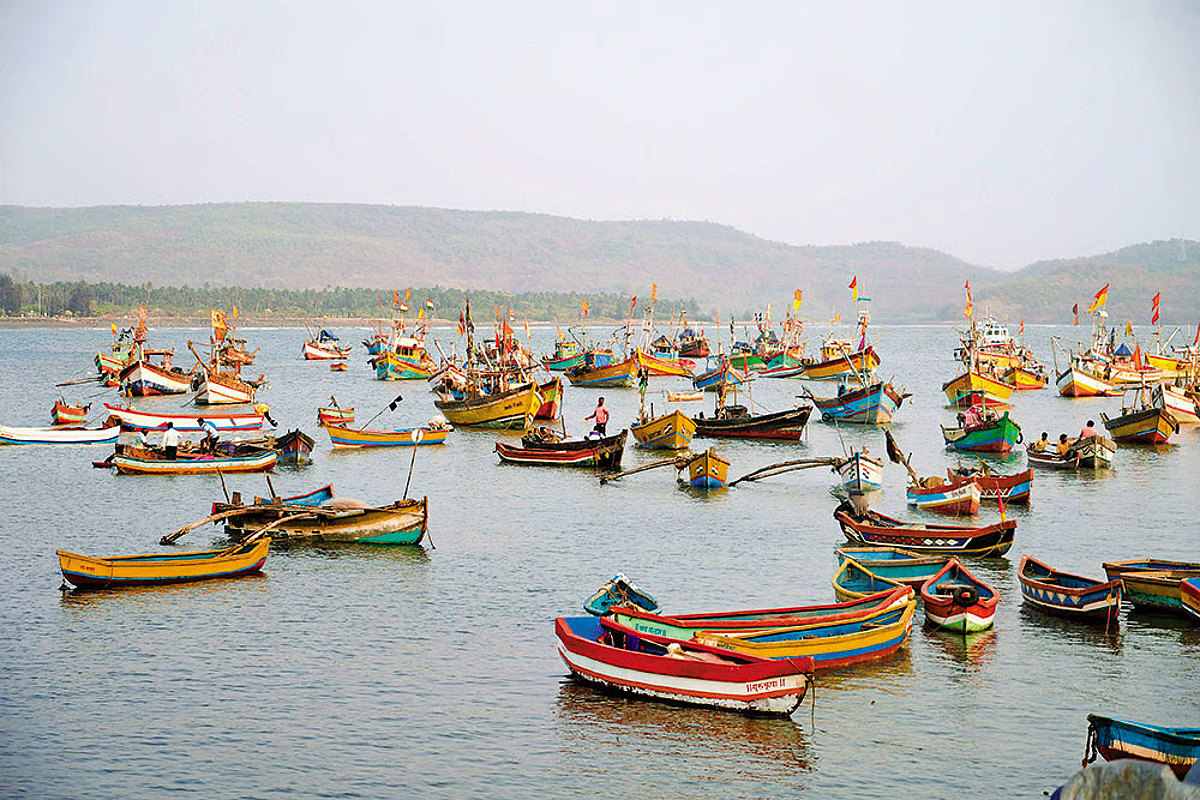
The promotion of inland fishing over sea fishing in Maharashtra is a time sensitive policy shift and the main keyword appears naturally here. The move signals a strategic attempt to strengthen rural incomes, diversify fish production and bring economic activity closer to interior districts that have long been dependent on agriculture alone.
State policy focus and changing aquaculture priorities
Maharashtra has abundant inland water resources including reservoirs, canals and large irrigation tanks spread across districts such as Bhandara, Gondia, Nagpur, Chandrapur, Yavatmal and parts of Marathwada. These regions have traditionally engaged in small scale fishing but have not reached the productivity levels seen in coastal belts. The government’s renewed push to promote inland aquaculture addresses this gap by expanding lease periods, simplifying cooperative registrations and encouraging scientific fish farming.
Officials have highlighted that inland fisheries can be scaled faster and with lower risk than marine fishing. Sea fishing depends on climate cycles, fuel costs and deep sea vessel capacity, while inland ponds and reservoirs offer controlled environments for stocking, feeding and harvesting. This predictability improves income stability for rural households that have faced fluctuating returns from agriculture.
Economic opportunities and localised employment potential
A major impact of promoting inland fishing is the potential for job creation in small towns and hinterlands. Inland systems require labour for pond preparation, seed stocking, feeding, harvesting, transport and basic processing. These tasks align well with local workforce availability and do not require heavy technical expertise at the entry level.
As cooperatives expand, youth and women’s groups gain more opportunities to participate in income generating activities. Regions like Bhandara already show high engagement due to established fisheries cooperatives. With policy support, similar models may strengthen across other districts. Employment is not limited to fishing alone. Ice production, transport, hatchery operations, net making and feed supply all create secondary business opportunities in smaller markets.
The policy also aims to reduce dependence on coastal supply chains. By boosting local production, towns in Vidarbha and Marathwada can supply nearby markets without relying on fish transported from Mumbai, Ratnagiri or Raigad. This shortens supply routes and reduces spoilage, making prices more favourable for both producers and consumers.
Technology adoption and training to improve productivity
Secondary keyword: freshwater fisheries
The success of inland fisheries depends heavily on the quality of seed, feed management and water monitoring. The state plans to increase the number of hatcheries and training centres to make scientific practices accessible in rural regions. Many small scale fishers currently depend on traditional methods which limit yield and increase disease risk.
Training programs help farmers learn improved stocking density management, feeding schedules and oxygen level monitoring. In recent years, low cost aeration devices and portable water testing kits have become more common, making modern practices viable for small pond operators. Colleges and research centres in Nagpur and Akola have already begun outreach efforts to demonstrate practical aquaculture techniques.
Digital advisory systems are also finding relevance. Interactive apps and hotline services guide fish farmers on best practices, weather conditions and disease symptoms. Such tools reduce information gaps that previously forced farmers to rely on middlemen for technical advice.
Market access, value addition and long term income stability
Secondary keyword: fisheries value chain
Inland fishing generates consistent volumes of species like rohu, catla, mrigal and pangasius, which have strong demand in local and regional markets. As production increases, value addition becomes critical. Filleting, packaging, drying and ready to cook products allow small fishing communities to capture higher margins.
Cold storage expansion under state initiatives will reduce post harvest losses, a major challenge in interior districts where transport infrastructure is still improving. Better shelf life enables suppliers to access urban markets like Nagpur, Aurangabad and Nashik at competitive rates.
The shift towards inland fishing also aligns with national priorities for increasing domestic fish production and reducing pressure on marine ecosystems. With well managed stocking and harvesting cycles, inland fisheries can offer predictable income for families that depend on seasonal agriculture. For drought prone regions, this additional income stream can be especially stabilising.
Takeaways
Inland fishing offers predictable conditions and lower risk compared to marine fishing.
Small towns benefit from new job opportunities across the fisheries value chain.
Training and technology adoption can significantly improve inland productivity.
Stronger local markets reduce reliance on coastal supply and increase rural incomes.
FAQs
Why is Maharashtra promoting inland fishing now
The state sees untapped potential in reservoirs and canals, along with higher income stability compared to sea fishing, which faces climate and fuel related uncertainties.
How will small towns benefit from this shift
They gain new employment avenues, local production capacity and improved market access through cooperatives and better infrastructure.
Does inland fishing require large investment
No. Most systems can begin with moderate investment, especially when supported by cooperatives and government training programs.
Can inland fisheries compete with marine fish supply
Yes, especially for freshwater species that have strong regional demand. Inland systems also offer stable year round output.











Leave a comment