

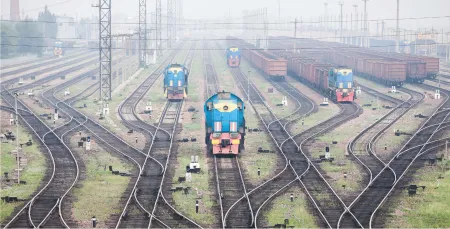
The Tier-2 city rail renewal targets under Indian Railways’ 8,000 km track renewal plan mark a major infrastructure push aimed at improving safety, speed, and connectivity beyond metros. The nationwide rollout directly affects regional mobility, freight efficiency, and economic integration across smaller cities.
This topic is time sensitive and news driven. The tone below reflects active policy rollout and near term impact.
What the 8,000 km rail renewal plan involves
Indian Railways’ 8,000 km track renewal plan focuses on replacing aging rails, sleepers, and ballast across high density and semi high density routes. A significant share of this renewal is concentrated in Tier-2 and Tier-3 city corridors where passenger volumes are high but infrastructure has lagged behind demand.
Many of these routes were laid decades ago and now face speed restrictions due to wear and safety concerns. Track renewal allows trains to operate at higher permissible speeds while reducing derailment risk. It also improves ride comfort and reduces maintenance related disruptions.
Unlike headline projects such as high speed rail, this plan focuses on core network reliability. For daily commuters, students, and small traders, these upgrades matter more than premium services.
Why Tier-2 cities are central to the rollout
Tier-2 cities act as regional hubs connecting rural districts to state capitals and metros. Cities such as Gwalior, Jhansi, Saharanpur, Guntur, Hubballi, Erode, and Katihar handle heavy passenger traffic and mixed freight movement. Yet many of these sections face chronic congestion and operational delays.
The rail renewal targets prioritize routes with high footfall, frequent passenger trains, and strategic freight importance. By upgrading these sections, Indian Railways aims to reduce travel time variability rather than just headline journey time.
This focus also supports regional equity. Infrastructure investment in smaller cities improves access to jobs, education, healthcare, and markets, reducing pressure on metros and supporting balanced urban growth.
Impact on regional connectivity and travel times
For passengers, renewed tracks translate into smoother rides, fewer unscheduled halts, and more reliable timetables. Speed restrictions imposed due to track condition are lifted after renewal, allowing trains to maintain consistent speeds across sections.
This improves connectivity between Tier-2 cities and nearby industrial clusters, pilgrimage centers, and educational hubs. Overnight and intercity trains become more dependable, which directly affects business travel and tourism.
Freight movement also benefits. Faster and safer tracks improve turnaround time for goods trains carrying agricultural produce, cement, steel, and consumer goods. This strengthens supply chains serving smaller cities and rural markets.
Cost structure and funding approach
Track renewal is capital intensive. Costs include rails, concrete sleepers, ballast, mechanized track laying, and labor. While exact per kilometer costs vary based on terrain and traffic density, large scale procurement allows cost optimization.
Funding is largely routed through Indian Railways’ capital expenditure allocation, with support from internal resources and budgetary backing. Unlike station redevelopment or private train projects, track renewal remains a core public investment due to its safety critical nature.
From a cost benefit perspective, renewed tracks reduce long term maintenance expenses and accident related losses. This makes the investment economically justified even without immediate revenue gains.
Timelines and execution challenges
The 8,000 km renewal target is planned as an annual execution goal rather than a single project deadline. Work is staggered across zones to minimize service disruption. Sections are typically taken up during low traffic windows or night blocks, though temporary cancellations are unavoidable.
Execution challenges include managing train schedules during renewal, availability of skilled manpower, and weather disruptions in monsoon prone regions. In high traffic corridors, coordinating renewal without affecting daily commuters is complex.
Despite these challenges, mechanization and standardized processes have improved execution speed compared to earlier years. Monitoring systems track progress zone wise to ensure targets are met.
Broader economic and safety implications
Rail renewal directly affects safety outcomes. Improved track geometry reduces the risk of fractures and derailments. For passengers in Tier-2 regions, this enhances confidence in rail travel, especially for overnight journeys.
Economically, better rail connectivity lowers logistics costs for small manufacturers and farmers. Faster access to markets improves price realization and reduces spoilage for perishable goods. Over time, this strengthens regional economies and supports job creation.
The plan also complements station redevelopment and new train services. Upgraded stations without reliable tracks fail to deliver full benefits. Track renewal ensures that capacity and comfort upgrades are matched by operational reliability.
What this signals for Indian Railways strategy
The focus on Tier-2 city rail renewal signals a shift from visibility driven projects to system strengthening. It reflects an understanding that network health determines passenger experience more than isolated premium offerings.
If executed consistently, the 8,000 km plan can reduce regional disparities in rail quality. It also prepares the network for future demand growth driven by urbanization and industrial expansion beyond metros.
For passengers and businesses in smaller cities, this may be one of the most consequential rail investments of the decade, even if it attracts less public attention.
Takeaways
- The 8,000 km rail renewal plan prioritizes safety and reliability in Tier-2 cities
- Improved tracks enhance passenger comfort and freight efficiency
- Investment focuses on core network strength rather than premium projects
- Consistent execution can significantly boost regional connectivity
FAQs
What is track renewal in railways?
Track renewal involves replacing old rails, sleepers, and ballast to restore safety standards and allow higher operating speeds.
Why are Tier-2 cities a priority in this plan?
They handle high passenger volumes and act as regional hubs but often operate on aging infrastructure.
Will trains be cancelled during renewal work?
Some temporary cancellations or rescheduling may occur, but work is planned to minimize disruption.
How does this benefit freight movement?
Renewed tracks reduce delays, improve load handling, and lower logistics costs for goods transport.











Leave a comment