

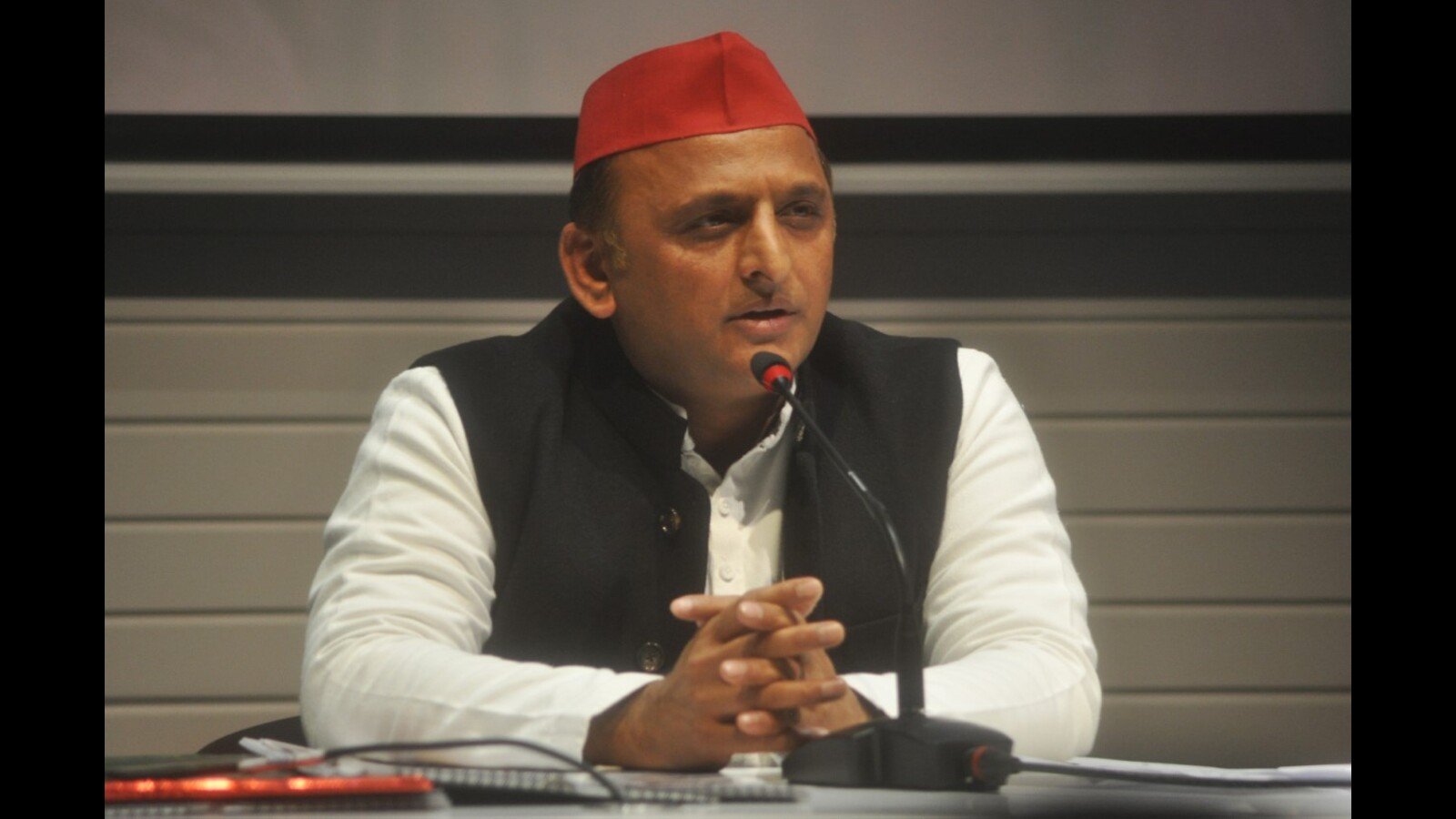
UP law and order debate has intensified after Akhilesh Yadav delivered a sharp critique of the current governance model in Uttar Pradesh. His remarks have reignited political confrontation over crime control, policing effectiveness and public safety, placing governance credibility at the centre of state level discourse.
The UP law and order debate is a time sensitive political development shaped by recent statements, administrative responses and public perception. With crime data, local incidents and policing claims under scrutiny, the issue has moved beyond rhetoric into a broader assessment of how security and justice are being delivered on the ground.
Akhilesh Yadav has questioned the ruling establishment’s claims of improved law and order, alleging that ground realities do not match official narratives. He pointed to recurring reports of violent crime, delayed justice and fear among certain communities, arguing that governance messaging masks systemic gaps. His critique has found traction among opposition supporters and sections of civil society concerned about safety and accountability.
What triggered the renewed law and order debate
The UP law and order debate gained momentum following Akhilesh Yadav’s public remarks highlighting recent criminal incidents and administrative responses. While the government has consistently asserted that crime rates have declined and policing has become stricter, opposition leaders argue that selective data presentation overlooks unreported cases and social impact.
Yadav’s critique focused on everyday safety rather than headline statistics. He referenced issues such as women’s safety, rural policing challenges and delayed investigation outcomes. By shifting the discussion from aggregate numbers to lived experiences, the opposition reframed the debate in human terms.
The timing of the remarks is also significant, coming amid heightened political mobilisation and preparation for future electoral contests. Law and order remains a decisive issue for voters across urban and rural Uttar Pradesh.
Government response and counter narrative
The ruling establishment has responded strongly, rejecting allegations and reiterating its commitment to strict law enforcement. Officials cite faster response times, modernised policing systems and a tougher stance against organised crime as evidence of progress.
Government representatives argue that visible actions such as encounters, asset seizures and digitisation of police services reflect improved governance. They also claim that the opposition selectively amplifies isolated incidents to undermine public confidence.
This clash of narratives highlights a core tension in the UP law and order debate. While authorities focus on measurable enforcement outcomes, critics emphasise perception, access to justice and trust in institutions.
Crime data versus public perception
A central aspect of the UP law and order debate is the gap between official crime statistics and public perception. While reported crime figures may show decline in certain categories, fear of crime can persist due to media coverage, social media amplification and personal experiences.
Opposition leaders argue that underreporting remains a challenge, particularly in cases involving vulnerable groups. They contend that fear of reprisal or lack of confidence in police discourages formal complaints. This claim complicates reliance on statistics alone to assess governance performance.
The government counters that improved reporting mechanisms and digital complaint systems have actually increased transparency. This disagreement underscores how law and order is evaluated not just by numbers but by citizen confidence.
Political strategy behind the critique
Akhilesh Yadav’s intervention in the UP law and order debate is also a calculated political strategy. Law and order is one of the ruling party’s strongest claimed achievements. By challenging this narrative, the opposition aims to weaken a key pillar of governance credibility.
The critique allows the Samajwadi Party to position itself as attentive to grassroots concerns. It also provides a platform to connect crime issues with broader themes such as unemployment, social inequality and administrative responsiveness.
For the ruling side, defending law and order is essential to maintaining its image of decisive governance. This makes the debate sharper and more sustained rather than episodic.
Impact on local administration and policing
The renewed focus on law and order places additional pressure on district administrations and police units. Senior officials are expected to ensure visible enforcement, faster case resolution and improved public communication.
Local police leadership may increase outreach efforts to counter negative perception. This includes public briefings, community engagement and quicker grievance redressal. In the short term, political spotlight often accelerates administrative action.
However, critics warn that reactive measures driven by political debate may not address deeper structural issues such as manpower shortages, training gaps and judicial delays.
Voter relevance and electoral implications
For voters, especially in tier two towns and rural areas, law and order directly affects daily life. Safety during travel, access to timely police help and fairness in dispute resolution shape voting decisions.
The UP law and order debate could influence undecided voters who evaluate governance through personal experience rather than political allegiance. Youth and women voters are particularly sensitive to safety related messaging.
As political exchanges intensify, both sides will likely amplify narratives that resonate locally. The debate may evolve from general claims to constituency specific examples as campaigns progress.
Broader governance questions raised
Beyond immediate political rivalry, the UP law and order debate raises broader questions about governance measurement. It highlights the challenge of balancing enforcement visibility with rights protection and due process.
The discussion also points to the need for independent assessment mechanisms that go beyond political claims. Sustainable law and order depends on institutional trust, judicial efficiency and social equity, not just policing actions.
Akhilesh Yadav’s critique has reopened these questions, ensuring that law and order remains a central theme in Uttar Pradesh’s political conversation.
Takeaways
- Akhilesh Yadav’s remarks have intensified the UP law and order debate
- Opposition challenges government claims using public perception and local incidents
- Authorities defend governance through enforcement data and policing reforms
- The issue holds strong voter relevance and electoral significance
FAQs
Why has the UP law and order debate resurfaced now?
Recent political statements and upcoming electoral dynamics have renewed focus on governance performance.
What is Akhilesh Yadav’s main criticism?
He argues that official claims of improved law and order do not reflect ground realities for citizens.
How has the government responded?
The government has rejected the allegations and highlighted crime control measures and policing reforms.
Will this debate impact elections?
Law and order is a key voter concern and can influence electoral outcomes depending on public perception.











Leave a comment