

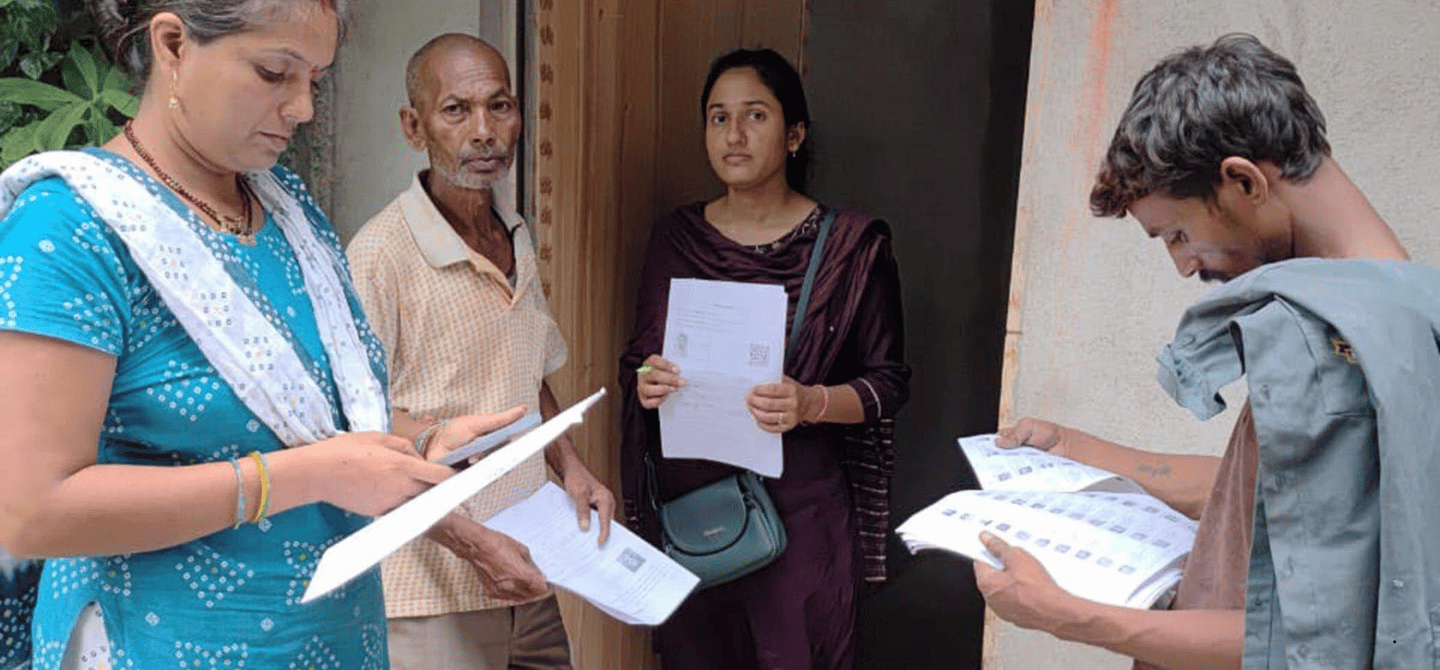
Voter list revisions ahead of state polls have become a critical political exercise in Uttar Pradesh, with the Bharatiya Janata Party focusing heavily on booth-level data correction, voter outreach, and micro-targeting to consolidate its electoral base before voting begins.
As election timelines approach, voter list updates are no longer treated as a routine administrative process. For major parties, especially the BJP, these revisions directly influence campaign planning, candidate deployment, and turnout management across urban wards and rural polling booths.
Why voter list revisions matter ahead of state polls
Voter list revisions ahead of state polls determine who can vote, where they vote, and how easily they can be mobilised on polling day. In a state like Uttar Pradesh, where margins can be narrow and booth-wise variations significant, even small discrepancies in voter rolls can impact outcomes.
Revisions typically involve deletion of duplicate or deceased voters, addition of first-time voters, and correction of address changes. Politically, this phase allows parties to audit the electoral landscape at a granular level.
For the BJP, which relies on high booth-level turnout and disciplined voter mobilisation, updated rolls help identify gaps in supporter registration, migration-related voter loss, and shifts in demographic composition, particularly in urban and semi-urban seats.
BJP’s UP strategy and the booth-level focus
The BJP’s UP strategy during voter list revisions is centred on booth committees, a structure refined over multiple election cycles. Each booth committee is tasked with verifying voter lists, flagging errors, and ensuring eligible supporters are registered correctly.
Party workers are trained to cross-check electoral rolls against ground realities. This includes identifying families that have relocated, new housing clusters, and youth voters turning eligible since the last election.
The emphasis is not only on inclusion but also on accuracy. Correct booth mapping ensures that voters are not misassigned to distant polling stations, a factor known to reduce turnout. The BJP views this phase as groundwork rather than campaign activity, keeping the focus organisational and data-driven.
Data-driven politics and voter segmentation
Voter list revisions ahead of state polls feed directly into the BJP’s data analytics efforts. Updated rolls allow the party to segment voters by age, locality, and voting history without breaching electoral rules.
At the booth level, this helps prioritise outreach. Areas with high first-time voter additions receive targeted youth engagement, while booths showing voter deletions trigger follow-up verification.
This data-backed approach also informs candidate selection and messaging. Constituencies with changing voter profiles may see adjustments in campaign themes, local leadership emphasis, or welfare scheme communication.
The strategy reflects a broader shift in Indian elections where organisational strength increasingly depends on accurate voter databases rather than mass rallies alone.
Impact on opposition parties and electoral competition
The BJP’s booth-centric approach during voter list revisions puts pressure on opposition parties to match organisational intensity. Smaller parties and alliances often lack comparable booth-level manpower, making them more vulnerable to roll inaccuracies affecting their support base.
Opposition leaders have raised concerns about exclusion errors and uneven awareness among voters regarding revision timelines. However, the Election Commission’s procedures provide equal opportunity for corrections, placing responsibility on parties to mobilise their cadres effectively.
In constituencies with high migration, such as industrial belts and expanding urban centres, voter list updates can significantly alter the electoral map. Parties failing to engage actively during this phase risk discovering voter losses only after nominations close.
Administrative process and Election Commission oversight
While political parties operate on the ground, voter list revisions ahead of state polls remain under the Election Commission’s supervision. The process follows a fixed calendar, with draft rolls published, objections invited, and final lists released after verification.
Booth Level Officers play a central role in implementing revisions, conducting field checks, and updating records. Political parties are permitted to assist voters in filing claims but cannot directly alter rolls.
For voters, this period is often the last chance to correct errors before elections. Awareness campaigns by the administration aim to reduce last-minute disputes and ensure smoother polling.
What this means for the upcoming UP elections
The intensity around voter list revisions signals how closely contested the upcoming state polls are expected to be. For the BJP, early investment in roll accuracy strengthens its traditional advantage in voter mobilisation and polling day management.
For voters, the focus on booth-level details increases the likelihood of smoother voting experiences, provided administrative safeguards function as intended.
As campaigns move from preparation to public outreach, the effects of current voter list revisions will quietly shape turnout patterns, booth performance, and ultimately, seat outcomes across Uttar Pradesh.
Takeaways
- Voter list revisions are a strategic phase, not a routine formality, ahead of state polls.
- The BJP’s UP strategy relies heavily on booth committees and data verification.
- Accurate voter rolls directly influence turnout and campaign planning.
- Parties that underinvest at this stage risk electoral disadvantages later.
FAQs
Why are voter list revisions important before elections
They ensure eligible voters are correctly registered and reduce errors that can affect turnout.
How is the BJP using voter list updates in UP
The party verifies rolls at booth level to strengthen mobilisation and data accuracy.
Can political parties change voter lists
No, only the Election Commission can make changes, but parties can help voters file claims.
Who benefits most from accurate voter rolls
Voters, administrators, and parties all benefit from smoother polling and fair competition.











Leave a comment