

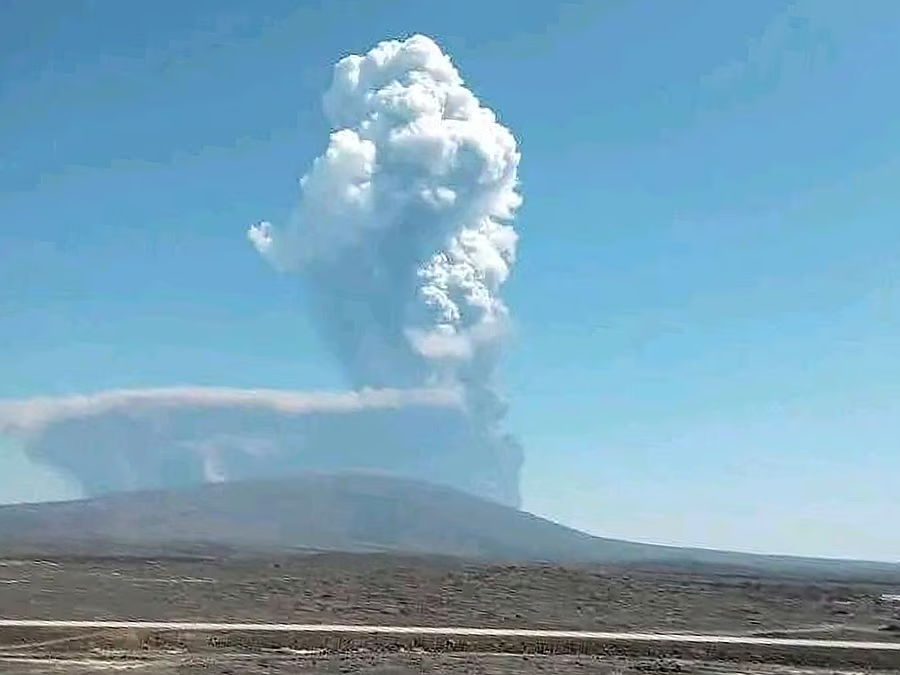
A sudden advisory by the Directorate General of Civil Aviation (DGCA) warning airlines about volcanic ash from Ethiopia has immediate ramifications for regional flight connectivity across India. Airports outside the major metros are facing unexpected delays and route diversions as the ash plume drifts across air-corridors.
Summary
High-altitude volcanic ash from the eruption of Ethiopia’s Hayli Gubbi volcano has trailed eastwards into Indian airspace, triggering a DGCA advisory that compels airlines to adjust flight planning, fuel loads and routing. Regional airports and non-metro routes are now experiencing ripple effects in connectivity.
What triggered the advisory and what it involves
An eruption of the Hayli Gubbi volcano in Ethiopia launched ash and sulphur-rich plume up to around 14 km altitude. The ash cloud entered Indian airspace via the Arabian Sea and western states, moving rapidly across Gujarat, Rajasthan, Maharashtra, Delhi-NCR and Punjab. The DGCA issued its advisory to airlines and airports to avoid designated ash-affected areas, adjust flight altitudes and be alert to engine anomalies, cabin smoke or odour.
Because ash can degrade jet engines, affect sensors and damage fuselages, the advisory instructed operators to inspect aircraft and runways, and if necessary suspend operations in ash-affected zones.
Impact on regional connectivity beyond metros
While international hubs such as Delhi and Mumbai naturally draw attention, the advisory has immediate knock-on effects for regional and Tier-2 airports. Several flights were cancelled or rerouted—not just international but domestic routes linking smaller cities. For example, a flight from Kannur to Abu Dhabi was diverted to Ahmedabad while carriers grounded services to Gulf destinations from regional airports such as Kochi.
Smaller airports may not have the infrastructure for rapid runway cleaning, ash detection, or alternative routing. Fuel and scheduling disruptions trickle down: a diverted flight from a non-metro city may cascade into delays for feeder flights, charter operations, and regional connectivity plans. For carriers operating from Tier-2 hubs, the uncertainty introduces cost and scheduling stress.
Furthermore, passengers from smaller towns often face fewer alternate flights, so cancellations from regional airports can have disproportionately higher inconvenience.
Operational challenges for airlines and airports
The DGCA’s instructions cover route avoidance, altered fuel planning and immediate reporting of any ash encounter. For regional airports this means: ramping up monitoring of meteorological data, coordinating with carriers for sudden diversions, ensuring runway surfaces are free from ash particles and maintaining contingency fleets.
Fuel planning becomes trickier: longer flight paths to bypass ash zones means higher fuel consumption and possible constraints on regional aircraft with limited range. Also, crew duty-times, passenger accommodation and ground handling get stressed when flights are rescheduled or cancelled.
Regional carriers that link smaller towns may not habitually carry the slack margins of major operators, so these disruptions can hit harder. The variability of ash plume movement (100-120 km/h winds, changing altitude bands) means unpredictability in routing—adding strain on scheduling for non-metro services.
Downstream effects on passengers and local economies
For travelers from smaller cities, the disruption means cancelled connections, increased wait times and limited alternate flights. Regional business travel, medical travel, and cargo/express services linking non-metros to metros could see delays or cost spikes.
Local economies in Tier-2 cities relying on air connectivity (tourism, business conferences, seasonal workforce movement) may feel a temporary impact. When regional airports lose slot reliability, it can dent confidence in planning flight-linked events or movements.
Moreover, airlines may triage non-critical routes, focusing first on major hubs, which means smaller airports could face longer wait times before services resume to normal.
What needs monitoring as the situation evolves
Key watch-points include the actual path of the ash plume (how fast and how far east/west it moves), airports’ ability to respond (runway inspections, cleaning), and airlines’ re-scheduling of regional connections.
Another element: if the plume shifts or lingers, non-metro airports might face extended disruption or operational constraints. Carriers may choose to cancel or postpone flights from smaller bases if the cost/complexity outweighs the revenue.
In the longer term, there may be a review of risk-mitigation plans for regional airports: ash detection equipment, alternative routing buffers, staff training for sudden air-space hazards.
Takeaways
- The ash-advisory has a broad ripple effect beyond metros: regional airports and non-metro routes are already experiencing cancellations and re-routing.
- Operational stress is greater in smaller hubs: limited alternate flights, fewer resources for rapid runway inspections and less slack in scheduling.
- Passengers from Tier-2/3 cities face disproportionate impact: fewer backup options, higher inconvenience and potential knock-on delays.
- Ongoing monitoring is critical: how the plume moves, how airports respond, and how airlines adjust will determine whether the disruption remains short-lived or extends into a broader regional connectivity issue.
FAQs
Q: Why is volcanic ash such a concern for aviation?
Volcanic ash contains fine glass-like particles and sulphur compounds which can damage aircraft engines, impair sensors, scratch windshields and contaminate flight instruments. At high altitudes, ash clouds pose a serious hazard.
Q: Which airports and flights are most affected in this scenario?
Airports in western and northern India—including Gujarat, Rajasthan, Punjab and Maharashtra—are most impacted as the ash plume drifted across those regions. Flights to/from cities not directly in those corridors but using affected air routes may also be disrupted.
Q: How long will the disruption last?
The timing depends on the plume’s path, wind speeds and altitude. Meteorological and aviation authorities estimate clearance within days if the ash disperses. However, residual impact on smaller airports’ schedules may persist until normal routing resumes.
Q: What should passengers from smaller cities do?
Passengers should check flight status proactively, allow buffer time for connections, and consider alternate airports/routes if available. Stay informed of airline alerts and be prepared for schedules to change at short notice.












Leave a comment